

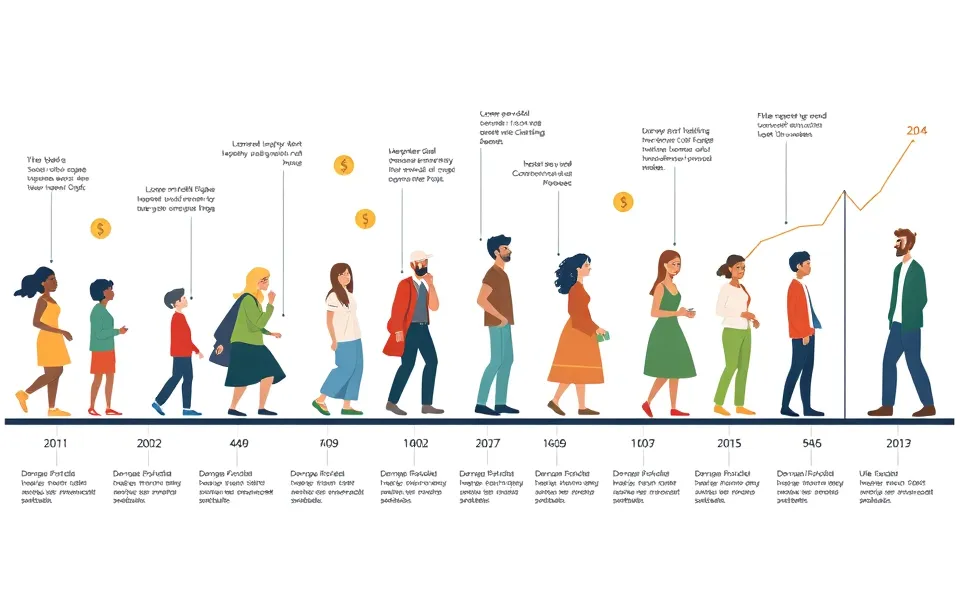
Why your approach to money must evolve as you age
Think of your money as a toolkit. When you first start your career, your toolkit might only have a few basic tools. You are learning how to use them, and you are mostly focused on fixing small, immediate problems. As the years go by, your life becomes more complex. You might need heavy machinery for a house, specialized tools for a family, and protective gear for the future. You cannot use a hammer to do the job of a crane, and you cannot use the same money strategy at age twenty-five that you use at age fifty-five.
Setting savings goals is not a one-time event. It is a continuous process of adjusting your sails to match the weather. If you try to save for retirement with the same mindset you use to pay for a weekend trip, you will likely find yourself unprepared when the big moments arrive. Understanding that your financial needs shift through different life stages is the first step toward real stability. It is about recognizing that your priorities today will not be your priorities tomorrow, and that is perfectly okay.
The modern drive toward personal autonomy
If you look around, you will notice that people are talking about money differently than they did twenty years ago. There is a massive surge in interest regarding financial independence and the ability to control one’s own time. People are no longer just looking to earn a paycheck; they are looking to build a foundation that allows them to make choices.
This trend is growing because the traditional safety nets of the past are not as reliable as they once were. With the rise of the gig economy and more frequent career shifts, people feel a greater sense of responsibility for their own security. They are searching for ways to navigate inflation, rising living costs, and unpredictable job markets. This shift has turned personal finance from a boring chore into a vital tool for freedom. Everyone wants to know how to build a life that isn’t dictated solely by a monthly budget.
How the way we manage wealth has changed
To understand why we focus so much on individual financial planning today, we have to look at how things used to work. In previous generations, many workers relied on company pensions. You could work for one employer for thirty years, and they would take care of your income once you stopped working. The burden of saving was largely on the employer.
That era has mostly passed. Today, the responsibility has shifted from the corporation to the individual. This change means that we have more freedom to move between jobs and follow our passions, but it also means we have to be our own chief financial officers. We have to learn about investment strategies, understand how to manage debt, and decide how much to set aside for our own futures. We have moved from a system of collective security to one of individual agency.
A roadmap for every stage of your life
The most significant impact of understanding these shifts is the ability to create a personalized plan. Because everyone’s life looks different, your financial goals should be too. Here is how those goals typically evolve through the different seasons of life.
The early career foundation
When you are just starting out, your primary mission is to build stability. You might have more energy than money, and that is fine. The focus here should be on two main things: debt reduction and building an emergency fund. If you can tackle high-interest loans early, you free up much more cash for your future self.
At this stage, practical budgeting tips are your best friend. It is not about deprivation, but about awareness. You want to know where your money is going so you can direct it toward your foundation. Having even a small amount of cash set aside for unexpected car repairs or medical bills can prevent a minor hiccup from becoming a major crisis. This is the time to start small, but start now.
The mid-life balancing act
As you move into your thirties and forties, life often gets much busier. You might be managing a household, raising children, or even supporting aging parents. This is the season of wealth accumulation. Your goals often expand to include things like college savings for your children or paying down a mortgage.
This stage requires a more sophisticated approach to financial planning. You are no longer just surviving; you are building. You have to balance the immediate needs of your family with the long-term necessity of growing your assets. It is a delicate dance of allocating funds to different buckets, ensuring that you are covering today’s expenses while still fueling the engine of your future wealth.
The transition to retirement
As you approach the later stages of your career, the focus shifts from growth to preservation. This is where retirement planning becomes the star of the show. The goal is to ensure that the wealth you have accumulated can sustain you for decades to come.
During this time, your investment strategies might become more conservative. You want to protect what you have built while still ensuring your money keeps pace with inflation. The focus is on creating a steady, reliable stream of income that allows you to enjoy the fruits of your labor without the stress of wondering if the money will last. It is about moving from the phase of gathering to the phase of enjoying.
The digital future of managing your money
Looking ahead, the way we interact with our money is set to become even more seamless. We are already seeing the rise of automated tools that can manage savings goals without us having to think about it every single day. In the future, we can expect even more personalized, data-driven insights that help us make better decisions in real time.
Artificial intelligence and advanced technology will likely make sophisticated financial planning accessible to everyone, not just those who can afford high-priced consultants. This will empower more people to reach financial independence by removing the guesswork and the emotional biases that often lead to poor money decisions. The future of finance is not just about having more money, but about having better tools to manage it.
Common questions about your money
How do I begin setting effective savings goals?
Start by looking at your current lifestyle and identifying your upcoming needs. Break your savings goals into short-term, medium-term, and long-term categories. This makes large numbers feel much less intimidating and gives you a clear path to follow.
Why is an emergency fund so important for personal finance?
An emergency fund acts as a shock absorber for your life. It prevents you from having to take on high-interest debt when unexpected expenses arise, which keeps your overall personal finance health stable during difficult times.
How does debt reduction help me reach my financial goals?
Every dollar you spend on interest is a dollar that is not working toward your financial goals. By prioritizing debt reduction, you essentially give yourself a raise by freeing up more of your income to be used for savings and investments.
What are the basic investment strategies for wealth accumulation?
Most successful investment strategies for wealth accumulation involve diversification and consistency. Instead of trying to time the market, many people find success by investing regular amounts over long periods to take advantage of compound growth.
When should I start focusing on retirement planning?
The best time to start retirement planning is as early as possible. Even small amounts contributed during your early career can grow significantly over time, making it much easier to achieve financial independence later in life.











