

A Big Move To Protect Kids Online
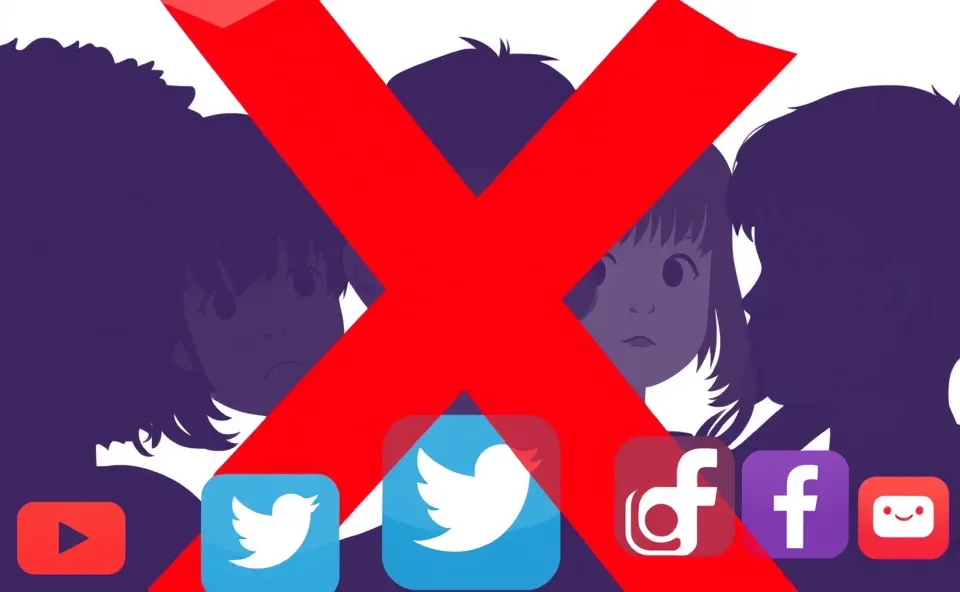
Imagine a world where the digital playground has a strict age limit. For a long time, the internet was like a giant open park where anyone could wander in. But lately, some governments have decided that the park is too dangerous for the youngest visitors. One of the most talked about moves comes from Australia, where the government is pushing for a social media ban for children. This is not just a suggestion or a set of guidelines. It is a serious attempt to keep kids off platforms like TikTok, Instagram, and Snapchat until they reach a certain age.
The idea is simple. By setting a legal age limit, the government wants to create a buffer between early childhood and the high pressure world of social feeds. They are not trying to kill technology, but they are trying to change how children interact with it. Instead of letting an algorithm decide what a ten year old sees, they want to push that responsibility back to parents and the real world. It is a bold step that has sent shockwaves through the tech industry and sparked a massive global conversation about who is actually responsible for a child’s digital life.
Why This Is Suddenly a Huge Deal
You might wonder why this is trending now when social media has been around for nearly two decades. The truth is that we have just finished a massive, unplanned social experiment. For years, we let children use these apps without really knowing the long term effects. Now, the data is coming in, and it is not looking great. People are searching for a social media ban in various countries because the problems have become too big to ignore.
There are a few key reasons why the alarm bells are ringing right now:
- Youth mental health: There is a clear link between endless scrolling and rising rates of anxiety and depression among teens.
- The dopamine loop: Apps are designed to be addictive. For a developing brain, the constant hit of likes and views can lead to serious social media addiction.
- The rise of cyberbullying: Harassment no longer ends when the school bell rings. It follows children into their bedrooms, making it impossible to escape.
- Online predators: Despite safety filters, bad actors still find ways to reach children through direct messages and fake profiles.
When you combine these factors, it becomes clear why governments are stepping in. It is no longer just about “too much screen time.” It is about a fundamental shift in how a whole generation grows up. The urgency comes from a feeling that we have reached a breaking point.
How We Got To This Point
To understand why countries are now considering a social media ban, we have to look back at how these platforms grew. In the beginning, social media was about connection. It was a way to share photos with family or keep in touch with old friends. It felt innocent. But as these companies grew, their business model changed. They stopped focusing on connection and started focusing on attention.
The goal became simple: keep the user on the app for as long as possible. To do this, they created algorithms that feed users content that triggers strong emotions. For adults, this can be annoying. For children, whose emotional regulation is still developing, it can be overwhelming. We saw a shift from children using the internet as a tool to children being used by the internet as a product.
For years, the solution was always parental controls. We were told that parents just needed to monitor their kids or set timers. But the reality is that the technology evolved faster than our parenting skills. The apps became too sophisticated for a simple timer to fix. The battle between a parent and a billion dollar algorithm is a fight the parent usually loses. This gap in protection is what led governments to realize that individual parental controls were not enough. They decided that tech regulation needed to happen at a systemic level.
What This Means For Everyone Involved
A social media ban for children is not just a legal change. It has a massive ripple effect on technology, business, and daily life. First, let’s talk about the tech companies. For them, this is a nightmare. Their entire growth strategy relies on getting users early and keeping them for life. If a whole group of children is locked out, the growth numbers drop.
More importantly, it forces companies to solve a very hard problem: age verification. Currently, most apps just ask for a birthday, and kids simply lie. To enforce a real ban, companies might have to use biometric scans, government IDs, or third party verification. This brings up huge concerns about privacy. How much of our personal data are we willing to give to a tech giant just to prove we are old enough to use an app?
For the children, the impact is more social. We might see a return to “analog” childhoods, where kids hang out in person more often. However, there is also a risk of creating a “digital underground.” If the official apps are banned, kids might move to less regulated, more dangerous corners of the internet to stay connected. This could actually make child safety harder to manage.
For parents, this could be a huge relief. It removes the daily battle over the phone and gives them a legal backing to say no. It shifts the social norm. If no one in the class has an account, the pressure to be online vanishes. This could significantly improve digital well-being for millions of families.
Where We Go From Here
Australia is leading the charge, but they are unlikely to be the only ones. We are seeing a global shift in how we view the internet. It is no longer seen as a lawless frontier, but as a utility that needs safety standards, much like food or medicine. It is very likely that other countries will look at the Australian model and try to implement their own versions of a social media ban.
In the coming years, we will probably see a move toward “age appropriate” design. Instead of a total ban, we might see versions of apps that have no algorithms, no likes, and no direct messaging for younger users. The goal will be to move away from addiction and toward utility.
We can also expect a surge in new technologies focused on child safety. Companies that can prove they can verify age without stealing privacy will become very valuable. The tech industry will be forced to pivot from “engagement at all costs” to “safety by design.” The era of the open, unregulated digital playground is ending, and a more structured, protected era is beginning.
Common Questions About Social Media Bans
Why are some countries implementing a social media ban for children?
Governments are acting to protect youth mental health and prevent social media addiction. They want to reduce the prevalence of cyberbullying and protect children from online predators by limiting access to these platforms during critical developmental years.
How will governments actually enforce a social media ban?
Enforcement is the hardest part. It will likely involve stricter tech regulation requiring platforms to use robust age verification systems. This could include using government IDs or AI based age estimation tools to ensure children cannot simply lie about their birth date.
Can parental controls replace the need for a social media ban?
While parental controls are helpful, they are often not enough to fight the addictive design of modern apps. A legal ban creates a social standard that removes the peer pressure from children, making it easier for parents to maintain boundaries.
What is the link between social media and youth mental health?
Research shows that the constant comparison to curated lives on social media can lead to low self esteem and anxiety. The addictive nature of these apps can also disrupt sleep and focus, which negatively impacts a child’s ability to learn and grow emotionally.
Will a social media ban actually improve child safety?
It can reduce exposure to harmful content and predators on mainstream platforms. However, the effectiveness depends on whether children migrate to unmonitored sites. The goal is to delay entry into these environments until the child has the maturity to navigate them safely.











