

The Unseen Ripples: How Birth Rate Forecasts Are Shaking Social Security
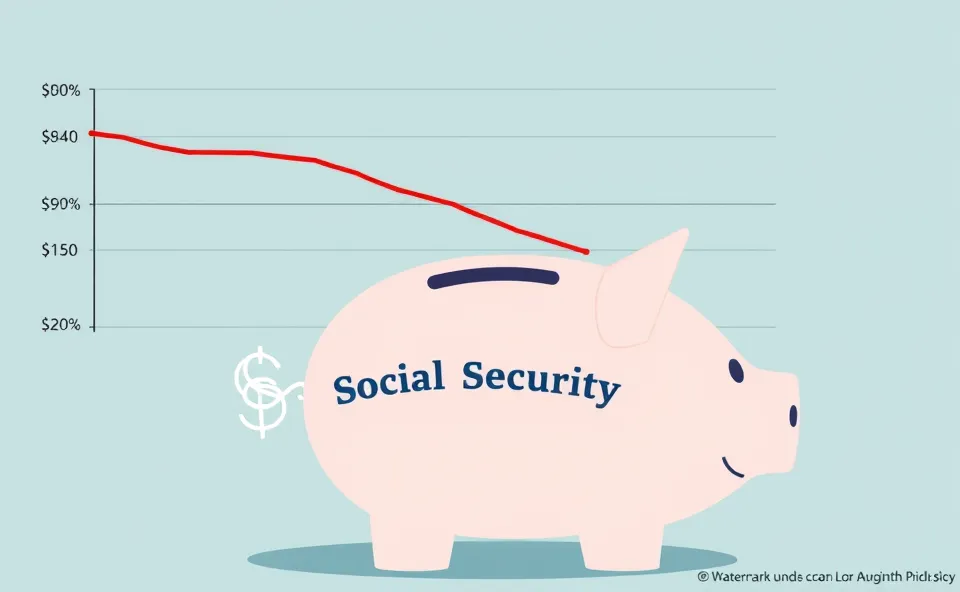
Imagine the government’s retirement plan, Social Security, as a giant piggy bank. It’s funded by the money working folks put in today to help pay for those already retired. But what if the number of people who are supposed to be putting money into the piggy bank tomorrow isn’t quite what we expected? That’s essentially the puzzle facing Social Security’s financial stability, and it’s deeply tied to something as fundamental as the birth rate. Recent discussions highlight a growing concern: Social Security’s financial projections might be built on a shaky foundation of birth rate miscalculations, and the long-awaited ‘baby boom’ to save the day isn’t materializing.
Why Are We Talking About Birth Rates and Social Security Now?
You might be wondering why birth rates, a topic that feels pretty far removed from daily finances, are suddenly a hot button issue for Social Security. It’s all about the numbers and the ticking clock. Economists and government agencies constantly update their economic projections for Social Security’s future. When these updated projections come out, they often reveal a widening gap between what the system expects to take in and what it needs to pay out in retirement benefits. The lack of a significant increase in birth rates, a key factor influencing future workforce size, is a major reason why these projections are looking less rosy. People are paying close attention because the long-term financial solvency of this crucial government benefit program is on the line, and the current demographic trends aren’t offering an easy fix.
A Look Back: The Assumptions That Shaped Our Retirement Safety Net
To understand the current predicament, we need to rewind a bit. For decades, Social Security’s financial forecasts have relied on certain assumptions about the future population. A key assumption has been the eventual return to higher birth rates, perhaps a resurgence of a ‘baby boom’ generation like the one that followed World War II. The idea was simple: more babies born today mean more workers contributing to Social Security in the future, which in turn helps support a growing number of retirees. These economic projections are vital for ensuring the program can continue to offer retirement benefits for generations to come. However, what’s actually happened over the past few decades is a steady decline or stagnation in birth rates in many developed countries, including the United States. This divergence between the projected ‘baby boom’ and the reality of lower birth rates has created a growing shortfall in the program’s expected income.
The Ripple Effect: What This Means for Us All
So, what does this social security crisis, driven by a miscalculation in birth rate projections, really mean for everyday people, businesses, and the broader economy? For individuals, the most direct impact is the uncertainty surrounding the future of their retirement benefits. If Social Security faces financial challenges, it could mean a few things down the line: either benefits might be reduced, taxes to fund the program might increase, or a combination of both. This creates anxiety for current workers planning for their retirement and for those already receiving payments. Businesses are also impacted. A shrinking workforce due to lower birth rates can lead to labor shortages, affecting productivity and economic growth. Furthermore, the trust fund that holds Social Security’s reserves is funded by payroll taxes. If fewer people are working and paying into the system, the rate at which this trust fund is drawn down accelerates. The entire structure of government benefits relies on these demographic underpinnings, and when they shift, the entire system feels the pressure.
Looking Ahead: Navigating the Demographic Shift
Given these demographic trends and the financial solvency concerns, what’s next for Social Security? It’s unlikely that a sudden, massive ‘baby boom’ is on the horizon. Instead, policymakers are faced with the challenge of adapting the system to a new demographic reality. Several paths are being discussed, though none are without their own set of complexities:
- Adjusting Retirement Age: Gradually increasing the age at which people can claim full retirement benefits is a common proposal. This allows workers more time to contribute to the system and reduces the number of years individuals receive payments.
- Modifying Benefit Formulas: Changes to how retirement benefits are calculated could help bring costs more in line with incoming revenue. This might involve altering the way average earnings are indexed or adjusting the formula for calculating benefits.
- Increasing Payroll Taxes: A straightforward, though often politically difficult, solution is to raise the percentage of income that workers and employers contribute to Social Security.
- Broadening the Taxable Earnings Cap: Currently, Social Security taxes only apply to earnings up to a certain limit each year. Removing or raising this cap would bring more revenue into the system from higher earners.
- Exploring Other Revenue Sources: While less common, discussions sometimes include whether other government revenue streams could supplement Social Security’s funding.
The key takeaway is that addressing the social security crisis will likely involve a multi-pronged approach that acknowledges the persistent reality of lower birth rates and the resulting demographic trends. The goal is to ensure the program’s financial solvency and its ability to provide essential retirement benefits for decades to come.
Frequently Asked Questions About Social Security and Birth Rates
What is the primary concern regarding Social Security and birth rate miscalculations?
The main concern is that Social Security’s financial solvency is threatened because past economic projections likely overestimated future birth rates. This means fewer workers are entering the workforce than anticipated to contribute to the program, potentially impacting the ability to pay full retirement benefits to a growing number of retirees. The social security crisis is exacerbated by this demographic mismatch.
How do declining birth rates affect Social Security funding?
Declining birth rates directly impact Social Security funding because the system relies on a steady influx of workers paying payroll taxes. When fewer babies are born, there are fewer people to become future workers. This reduces the number of contributors relative to the number of beneficiaries, putting a strain on the program’s finances and its trust fund.
Can a ‘baby boom’ solve the Social Security crisis?
While a significant increase in birth rates a ‘baby boom’ could certainly help alleviate the financial pressures on Social Security by increasing the future workforce, current demographic trends suggest this is unlikely to happen on a scale needed to fully resolve the social security crisis. The focus remains on adapting the system to the reality of lower birth rates.
What are the long-term implications of current demographic trends for retirement benefits?
The long-term implications of current demographic trends, including lower birth rates and an aging population, for retirement benefits include potential adjustments to benefit levels, increases in the retirement age, or higher taxes to ensure the program’s financial solvency. These changes aim to balance the program’s obligations with its incoming revenue.
How are economic projections for Social Security impacted by birth rate assumptions?
Economic projections for Social Security are heavily influenced by birth rate assumptions because they directly shape forecasts for the size of the future workforce and the number of individuals receiving retirement benefits. Incorrect birth rate assumptions can lead to underestimation of future financial shortfalls and challenges in maintaining the program’s financial solvency.











