

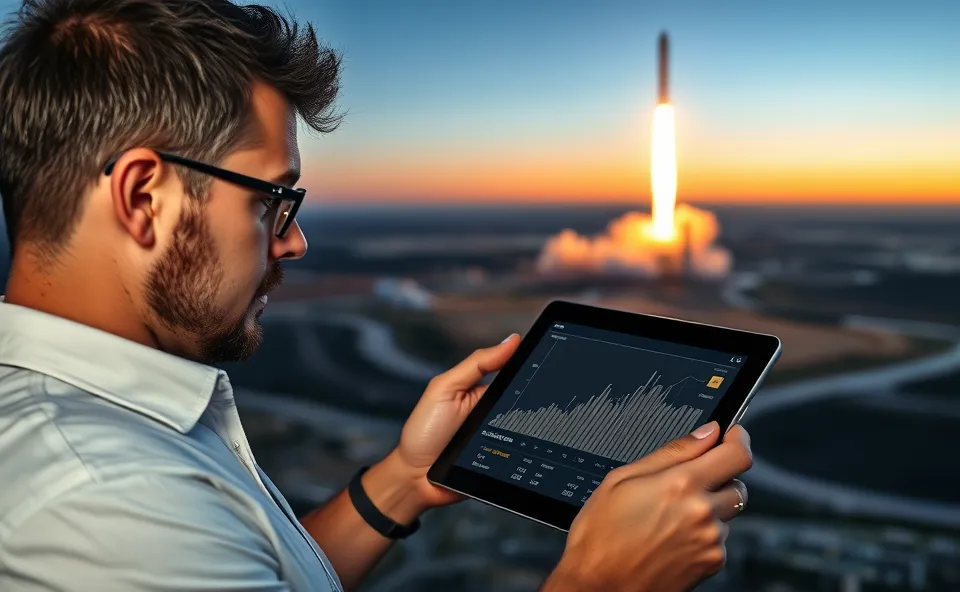
The Big Move Toward the Public Market
For years, SpaceX has been the crown jewel of private companies. It is the firm that makes reusable rockets and aims to put people on Mars. For a long time, the only way to own a piece of this company was to be an early employee or a very wealthy venture capitalist. However, the conversation around a SpaceX IPO is growing louder. An initial public offering is the moment a private company decides to sell shares to the general public for the first time.
For the average person, this is an exciting prospect. It means the doors are finally opening. Instead of watching from the sidelines, retail investors can potentially buy stock and grow their wealth alongside the company’s success. But here is the catch. Moving from a private company to a public one is not a simple open door. It is more like a crowded room where only a few people get to enter first. For small investors, the process of actually getting IPO shares can be a bit of a struggle.
Why Everyone Is Talking About the SpaceX IPO
You might wonder why there is so much noise about this specific company. It is not just about rockets. SpaceX represents the frontier of technology. Between its Starship program and the massive Starlink satellite network, the company is doing things that feel like science fiction. This creates a massive amount of hype.
Many retail investors saw what happened with Tesla. Those who got in early saw life changing gains. There is a strong feeling that SpaceX could be the next big opportunity. People are searching for ways to get in early because they do not want to miss the boat. This fear of missing out drives the search for pre IPO opportunities and makes the eventual public launch a major event in the stock market.
Additionally, the world is shifting. We are seeing more interest in space tourism and satellite internet. As these industries grow, the financial appeal of SpaceX grows too. It is no longer just a niche science project. It is a business empire that controls how we launch things into orbit.
The Road to Going Public
To understand where we are going, we have to look at where SpaceX started. For most of its existence, the company has stayed private. This was a deliberate choice. Staying private allows a company to take big risks and fail fast without having to report every tiny detail to shareholders every three months. It gives the leadership room to breathe and innovate without the pressure of short term stock price swings.
Over the years, SpaceX has raised billions of dollars through private funding rounds. These rounds were reserved for institutional investors. These are the big banks and hedge funds that can write checks for millions of dollars. While these big players were building their positions, small investors had to wait. Some tried to find shares through secondary markets where employees sell their vested options, but these platforms are often restricted to accredited investors.
This history creates a tension. By the time the SpaceX IPO actually happens, the company will already be a giant. The early, cheap shares are gone. The retail public will be entering a market where the valuation is already incredibly high, which changes the risk and reward balance.
The Reality for Small Investors
This is where things get tricky. When a highly anticipated company goes public, the share allocation is rarely equal. Most of the initial shares are snatched up by big institutions. These banks get to buy in at the offering price before the stock ever hits the exchange. By the time the stock is available to retail investors on apps like Robinhood, the price has often already jumped.
This creates a tough call for the small investor. If you buy the moment it hits the market, you might be buying at the peak of the hype. This is often called the IPO pop. Once the initial excitement dies down, the price can dip, leaving late buyers in the red.
Another major factor is the lockup period. This is a window of time, usually six months, where company insiders and early investors are not allowed to sell their shares. This sounds like a good thing because it prevents a mass sell off. However, the moment the lockup period ends, a flood of shares often hits the market. This sudden increase in supply can drive the price down significantly.
To navigate this, some retail investors use different trading strategies:
- Waiting for the dip: Instead of buying on day one, some wait for the initial hype to cool off or for the lockup period to end.
- Dollar cost averaging: Buying small amounts over time to average out the purchase price.
- Watching the Starlink factor: Keeping an eye on whether Starlink becomes its own public company, which could change the value of SpaceX shares.
What Comes After the First Day of Trading
Once the SpaceX IPO is complete, the company enters a new era. It will no longer be the private playground of a few billionaires. It will be subject to the whims of the stock market. This means that every rocket launch, every failed test, and every government contract will cause the stock price to move in real time.
We can expect a lot of volatility. SpaceX is not a boring utility company. It is a high growth, high risk venture. The stock will likely swing wildly as investors try to figure out the true value of the company. For the small investor, this means the ride will be bumpy.
Looking ahead, the real story will be how the company manages its growth. If they can successfully colonize Mars or make satellite internet the global standard, the long term outlook is bright. But the transition to being a public company requires a different kind of discipline. They will have to balance their wild dreams with the demands of public shareholders who want to see profit.
Common Questions About Getting into SpaceX
How can small investors get SpaceX IPO shares?
Most retail investors cannot buy shares directly from the company before the IPO. Instead, they usually buy shares on the open stock market through a brokerage app once the trading begins. Some specialized platforms offer pre IPO shares, but these are often limited to accredited investors with high net worths.
What is share allocation and why does it matter?
Share allocation is the process of deciding who gets to buy the initial shares at the offering price. Big banks and institutional investors usually get the largest allocation. This means retail investors often have to buy shares from those institutions at a higher price once the stock starts trading publicly.
Will the SpaceX IPO be available on Robinhood?
While it depends on the underwriters, most major public stocks eventually become available on popular trading apps. If the company goes through a traditional initial public offering, it will likely be tradable on major exchanges, making it accessible via apps like Robinhood.
What is the risk of the lockup period for retail investors?
The lockup period prevents insiders from selling their shares immediately. The risk is that once this period ends, those insiders may sell large amounts of stock to take their profits. This increase in supply can lead to a sharp drop in the stock price.
Are there better trading strategies than buying on day one?
Many experienced investors avoid the first day of trading to avoid the IPO pop. They prefer to watch the stock for a few weeks or months to see if the price stabilizes. This helps them avoid buying at an emotional peak driven by hype.











