

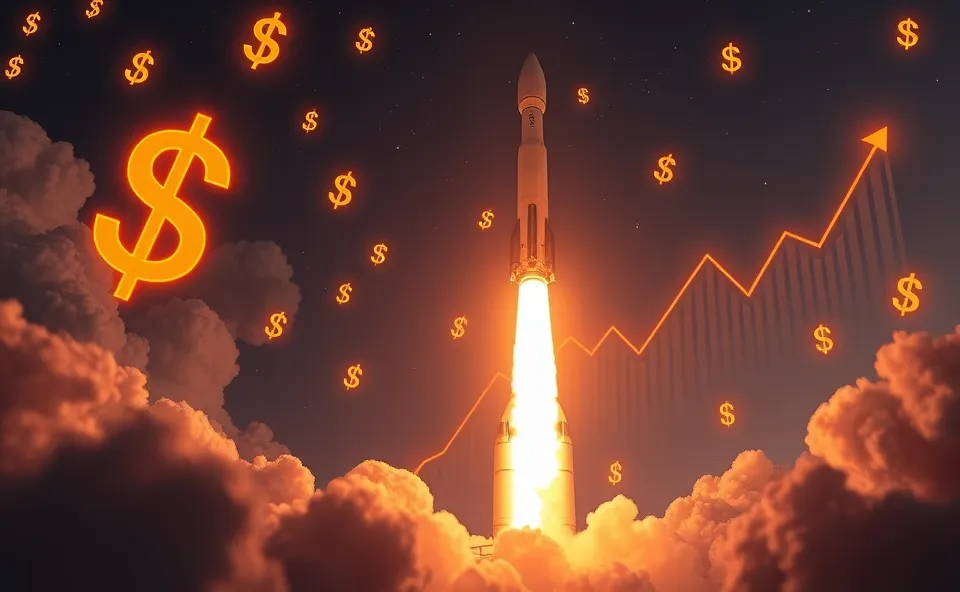
The Eye-Watering Price Tag on SpaceX’s Future
So, let’s talk about SpaceX. You’ve probably heard the name, especially with all the buzz around Elon Musk and his ambitious space ventures. Recently, there’s been a lot of chatter because SpaceX’s valuation has hit an astonishing $1.75 trillion. That’s a one with twelve zeros after it, folks. It’s a number so big it’s hard to wrap your head around. Think of it this way: this valuation means investors believe SpaceX is worth more than many of the world’s largest and most established companies combined. But here’s the kicker: to justify this astronomical number, SpaceX needs to achieve some truly massive growth. We’re talking about a level of expansion that redefines what’s possible, not just in the aerospace industry but across global markets.
Why the Sudden Urgency for SpaceX IPO Talk?
The reason this $1.75 trillion SpaceX valuation is making waves right now is tied to the persistent whispers about a potential SpaceX IPO, or Initial Public Offering. When a private company reaches such a staggering valuation, the pressure mounts to go public. Going public allows early investors to cash out and provides the company with access to public markets for raising even more capital. This huge valuation sets a new benchmark and naturally fuels discussions about when and how SpaceX might transition from a private entity, funded by venture capital and private equity, to a publicly traded company. The market is essentially asking, “When can we buy a piece of this future?” and the immense valuation is a huge part of that conversation, making the idea of a SpaceX IPO feel more imminent than ever.
From Humble Launchpads to Trillion-Dollar Dreams
To truly grasp the significance of this valuation, we need to rewind a bit. SpaceX didn’t start out as a trillion-dollar entity. It was founded by Elon Musk in 2002 with a bold vision: to revolutionize space technology and make space travel more accessible, ultimately aiming for the colonization of Mars. In the early days, SpaceX was all about proving it could launch rockets reliably and affordably. Many doubted whether a private company could compete with government space agencies. However, through sheer grit, innovation, and a willingness to take risks, SpaceX achieved remarkable milestones. They developed reusable rockets, slashed launch costs, and started ferrying supplies and astronauts to the International Space Station. This consistent demonstration of capability and ambitious goals, coupled with successful missions and contracts with NASA and other commercial entities, has steadily built investor confidence and driven up its private market valuation over the years, setting the stage for today’s extraordinary numbers.
What This Massive Valuation Means for Everyone
A $1.75 trillion SpaceX valuation isn’t just a number on a spreadsheet; it has real implications. For starters, it signals a profound shift in the aerospace industry. Private spaceflight, once a fringe idea, is now a dominant force. This valuation suggests that investors see a future where space is not just for scientific exploration but a vast commercial frontier for everything from satellite internet to space tourism and resource extraction. For potential SpaceX IPO investors, it means buying into a company that is arguably leading this new space race. It also puts immense pressure on SpaceX itself. To live up to this valuation, the company must continue its aggressive expansion. This means successfully launching its Starship program, scaling its Starlink satellite internet service globally, and potentially finding new revenue streams in areas we haven’t even thought of yet. The success of SpaceX is becoming a key indicator of the broader market growth in private spaceflight and its potential to reshape our technological landscape.
The Road Ahead: Can SpaceX Reach Orbit for Investors?
The question on everyone’s mind is whether SpaceX can actually deliver on the promise embedded in its $1.75 trillion valuation. The path forward is undeniably challenging, but also filled with incredible potential. For the valuation to be justified, SpaceX needs to demonstrate sustained, exponential growth. This includes:
- Successfully commercializing its Starship system for cargo and crew transport to Earth orbit, the Moon, and Mars.
- Expanding Starlink’s subscriber base and profitability, becoming a dominant player in global internet access.
- Securing more lucrative government and commercial launch contracts.
- Potentially exploring new ventures in space resource utilization or advanced satellite services.
The ongoing development of Starship, in particular, is seen as a critical catalyst. Its success could unlock entirely new markets and dramatically reduce the cost of space access. For investors, the potential reward is immense, but the risk is equally significant. They are betting on SpaceX’s ability to innovate faster and farther than anyone else, turning ambitious goals into tangible profits and delivering exceptional investor returns. It’s a high stakes game where the sky is no longer the limit, but just the beginning.
Your Burning Questions About SpaceX’s Future
What does a $1.75 trillion SpaceX valuation mean for the aerospace industry?
It signifies a massive shift, highlighting the immense growth and potential of private spaceflight. It suggests that space is rapidly becoming a viable and lucrative commercial frontier, pushing innovation and competition to new heights.
How does SpaceX’s valuation compare to other aerospace companies?
At $1.75 trillion, SpaceX’s valuation far surpasses that of most traditional aerospace companies, positioning it as a leader in the burgeoning private spaceflight sector and setting a new valuation benchmark.
When might a SpaceX IPO happen given this valuation?
While there’s no official timeline, a valuation this high often precedes a company’s move towards an Initial Public Offering. It indicates readiness for public markets and potential investor returns.
What are the biggest challenges for SpaceX to achieve this valuation?
Key challenges include the successful development and deployment of Starship, scaling Starlink profitably, securing consistent launch revenue, and managing the immense operational and technical complexities of its ambitious goals.
Can Elon Musk’s vision for SpaceX justify this enormous SpaceX valuation?
Elon Musk’s track record for innovation and achieving seemingly impossible goals fuels confidence. However, the valuation ultimately rests on SpaceX’s ability to translate its technological advancements and ambitious goals into sustained financial success and market growth.











