

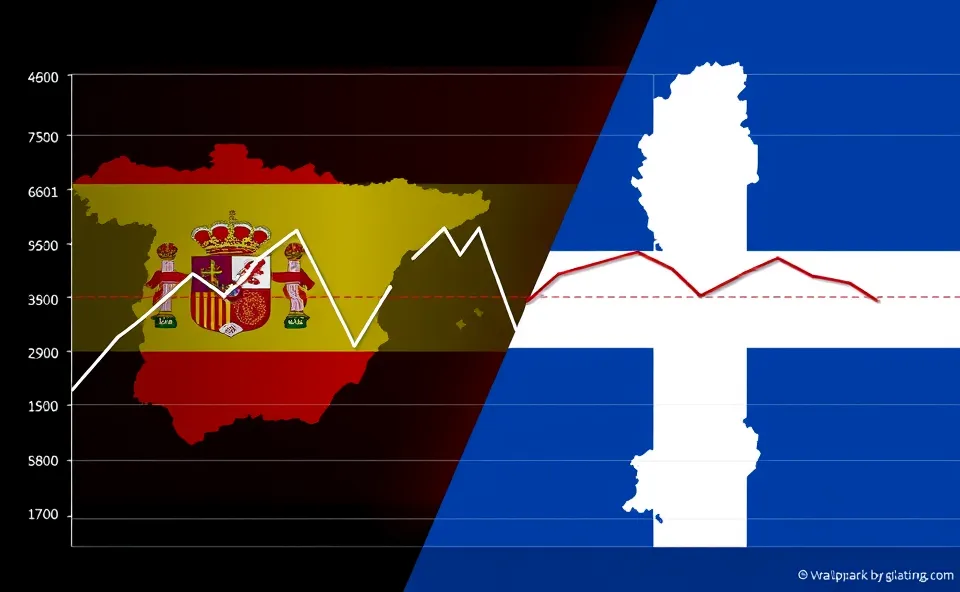
Spain and Finland’s Jobless Rates: A Surprising Union
You know how sometimes two things that seem totally different end up moving in the same direction? Well, that’s kind of what’s happening with the unemployment rate in Spain and Finland. For a long time, these two countries had pretty different stories when it comes to how many people were out of work. Spain often battled higher joblessness, while Finland usually had a smoother ride. But lately, something interesting has occurred: their unemployment rates have started to get closer, or converge. It’s like they’re walking towards each other on a long road. This shift is catching the eye of people following economic trends and EU labor markets.
Why Are We Talking About This Now?
This convergence is a hot topic right now because it signals a significant shift in the economic landscape of these two important European nations. For anyone watching employment statistics, understanding how and why these rates are becoming more similar offers valuable insights. It prompts questions about what’s working, what’s not, and how these changes might affect the broader EU labor markets. People are curious about the underlying causes and what this means for the future of joblessness in these regions.
A Look Back: Different Paths, Different Challenges
To really get what’s happening now, we need to rewind a bit. For years, Spain has grappled with a notoriously high Spain unemployment rate. Factors like a highly regulated labor market, cyclical economic downturns that hit the country hard, and issues in specific sectors like construction contributed to this. On the other hand, Finland, while not immune to economic bumps, generally managed to keep its joblessness figures lower. Their economy often relies on technology and innovation, and their social safety nets and labor market reforms have historically been designed differently.
Think of it like this: Spain was often dealing with a persistent, deep-seated challenge in its job market, while Finland faced more moderate ups and downs. Their approaches to managing their economies and supporting workers have traditionally been quite distinct.
The Forces Bringing Them Together
So, what’s been nudging these two countries’ employment figures closer? It’s a fascinating mix of policy decisions and economic forces, particularly when we look at migration policy and labor market reforms.
Migration Policy: A Shifting Landscape
Migration policy plays a surprisingly big role in unemployment rates. For a while, Spain, with its larger population and different geographic position, often experienced more significant flows of migrants. Integrating these newcomers into the job market can be a complex process, sometimes affecting headline unemployment statistics. Finland, however, has also seen shifts in its migration patterns, especially in recent years. How each country has managed the influx and integration of foreign workers, through their specific migration policies, has had an impact on their labor supply and demand dynamics.
- Spain’s approach has often focused on absorbing a diverse range of workers, but challenges in formalizing employment and skills matching have existed.
- Finland’s response has also evolved, with policies aimed at both managing arrivals and facilitating the entry of skilled workers into its specialized economy.
These differing yet evolving migration policies have subtly influenced the number of available jobs and the number of people seeking them in both countries, contributing to the convergence we see in their Spain unemployment rate and Finland unemployment rate figures.
Labor Market Reforms: Seeking Efficiency
Both Spain and Finland have undertaken significant labor market reforms in an effort to boost employment and reduce joblessness. These aren’t small tweaks; these are often deep dives into how their economies function.
- In Spain, reforms have often aimed at making the labor market more flexible. This can involve changes to hiring and firing regulations, the types of contracts available, and ways to encourage entrepreneurship. The goal is to make it easier for businesses to create jobs and for people to find them, thereby lowering the Spain unemployment rate.
- Finland has also been proactive, with reforms sometimes focusing on areas like unemployment benefits, active labor market policies (like training and job search assistance), and making it simpler for businesses to operate. Their reforms often seek to adapt to a rapidly changing global economy and maintain their competitive edge, influencing the Finland unemployment rate.
The effectiveness and specific nature of these labor market reforms, while coming from different starting points and with different goals, have ultimately contributed to a more synchronized movement in their employment statistics. It’s a testament to how governments try to steer their economies, and sometimes their efforts lead to unexpected similarities.
What This Means for Us
This convergence isn’t just an abstract economic concept; it has real-world impacts for people, businesses, and even the technology sector. For individuals, it can mean a changing job market landscape. Businesses might find new opportunities or face new competition. Technology companies, always looking for growth areas, might see different demands for their services or products based on evolving employment trends in these significant EU markets.
- For Job Seekers: The convergence might signal a more level playing field in terms of job opportunities across different EU countries, or it could highlight specific sectors that are thriving or struggling in both regions. Understanding these economic trends is key for career planning.
- For Businesses: Changes in unemployment rates can affect labor costs, the availability of skilled workers, and consumer spending power. Businesses operating internationally need to stay attuned to these shifts.
- For Economic Analysts: This comparative analysis provides valuable data for understanding broader EU labor market dynamics and the impact of policy interventions on joblessness.
Essentially, as the Spain unemployment rate and Finland unemployment rate move closer, it suggests a potential harmonization of economic challenges and policy responses within the EU. This can lead to more predictable patterns across the bloc, impacting investment decisions and economic forecasting.
What’s Next on the Horizon?
Looking ahead, it’s unlikely that Spain and Finland will become identical economic twins overnight. However, the factors that have driven this convergence will likely continue to shape their paths. We might see further fine-tuning of labor market reforms in both countries as they seek to maintain or improve their employment figures. Migration policies will continue to be a critical element, influenced by both national needs and broader European Union discussions.
The key will be how effectively each country adapts to global economic shifts, technological advancements, and demographic changes. Will they continue to move in parallel, or will new diverging pressures emerge? Continued monitoring of their employment statistics and policy implementations will be crucial for understanding their individual and collective futures within the EU labor markets.
Frequently Asked Questions
What are the current trends in the Spain unemployment rate?
The Spain unemployment rate has seen significant shifts over the years, influenced by economic cycles and labor market reforms. Recent trends show an effort to reduce joblessness through policy changes aimed at increasing flexibility and creating more stable employment opportunities.
How does Finland’s unemployment rate compare to Spain’s?
Historically, Finland’s unemployment rate has generally been lower than Spain’s. However, there has been a recent convergence, meaning the rates have become more similar, suggesting shared economic influences and policy impacts within the EU labor markets.
What kind of labor market reforms are influencing joblessness in Spain and Finland?
Both countries have implemented various labor market reforms. Spain has focused on increasing flexibility and reducing duality in its job market, while Finland has explored changes to its social security system and active labor market policies to boost employment and address joblessness.
How does migration policy affect unemployment statistics in these countries?
Migration policy can influence unemployment statistics by affecting the supply of labor. How effectively countries integrate migrants into their workforce through their specific migration policies can impact both overall employment levels and the perceived Spain unemployment rate and Finland unemployment rate.
What does the convergence of their employment statistics mean for EU labor markets?
The convergence of employment statistics between countries like Spain and Finland suggests that broader economic trends and policy approaches within the EU might be leading to more similar outcomes in joblessness. This comparative analysis provides insights into the evolving EU labor markets.











