

“`html
Understanding the Stock-Bond Premium Vanishes
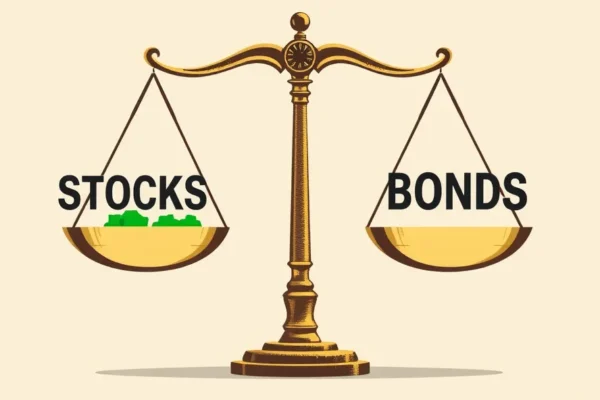
Imagine you have two main ways to invest your money: stocks and bonds. For a long time, stocks were seen as the riskier but potentially more rewarding option, while bonds were considered safer with a steadier, though lower, return. The difference in these expected returns is what financial experts call the equity risk premium. It’s essentially the extra reward investors expect for taking on the extra risk of owning stocks compared to safer investments like government bonds. Recently, however, this historical difference has shrunk dramatically, meaning the extra reward for choosing stocks over bonds is nearly gone. This shift in the financial markets has significant implications for how people approach investing and saving for their future.
Understanding why this premium has shrunk is crucial. It helps explain why some traditional investment strategies might not work as well as they used to and can influence decisions about asset allocation. For instance, if the extra return you expect from stocks is no longer significantly higher than from bonds, it might make you reconsider how much of your portfolio should be in each. This topic touches on fundamental concepts of investing, risk, and expected return, making it essential for anyone navigating the world of personal finance.
How the Stock-Bond Premium Works
Think of it like choosing between buying a small, independent bakery or investing in a large, established government bond. The bakery (stocks) has the potential for big profits if it becomes very popular, but it also carries a higher risk of failing. The government bond, on the other hand, is like lending money to a very reliable entity; you’re almost certain to get your money back with a little bit of interest, but you won’t get rich overnight. The equity risk premium is the extra profit you’d expect from the bakery to compensate you for the chance it might go out of business.
Historically, investors demanded a higher expected return from stocks to justify the greater risk. If a stock offered a 7% expected return and a safe treasury bond offered 3%, the equity risk premium was 4%. This 4% difference was the incentive to bear the volatility of the stock market. This mechanism is driven by investor sentiment and the perceived riskiness of each asset class. When investor sentiment is optimistic, they might accept a lower premium. Conversely, when fear dominates financial markets, the premium might widen as investors demand more compensation for risk.
Let’s consider a simple scenario. Person A has $1,000 to invest. They could buy shares in a company, hoping its value increases significantly, or they could buy a U.S. Treasury bond, which is considered very safe. If, historically, stocks were expected to return 10% per year on average, and treasury bonds 4%, Person A would expect to earn $100 from stocks and $40 from bonds over a year. The $60 difference, or 6%, is the equity risk premium they are earning for taking on the higher risk of stocks. This extra expected return is the core of why stocks have traditionally been a key component of long-term investment portfolios.
Why the Shrinking Premium Matters
The shrinking equity risk premium directly impacts your personal financial decisions, especially when it comes to retirement planning and long-term savings. If the extra return you can expect from stocks over bonds is minimal, it becomes harder to grow your wealth significantly over time through traditional asset allocation strategies. For example, someone relying on investment growth to fund their retirement might need to save more if the expected returns from their investment portfolio are lower.
On a broader economic level, a diminished premium can influence investment flows and corporate borrowing. Companies might find it cheaper to issue stocks if investors are willing to accept lower returns. Conversely, if the premium is very low, investors might shift away from stocks and towards bonds, potentially lowering stock prices and raising bond prices. This can affect overall market analysis and the general health of financial markets. It can also affect the cost of capital for businesses, potentially impacting job creation and economic expansion. The low return difference means that the traditional trade-off between risk and reward is less pronounced, forcing investors to rethink their strategies.
Those who are heavily invested in stocks may see slower growth than in previous decades. On the other hand, investors who prioritize safety and have a larger allocation to bonds might not be sacrificing as much potential return as they once did. This can be a positive for risk-averse individuals but a challenge for those seeking aggressive growth.
Historical Context of the Stock-Bond Premium
For much of the 20th century and into the early 21st century, the equity risk premium was a well-established concept. Historical data, often analyzed by institutions like Ibbotson Associates (now part of Morningstar) and academic researchers, consistently showed that stocks provided a significant return advantage over risk-free assets like government bonds. For instance, in the U.S., the average equity risk premium over the 20th century was estimated to be around 4-7% per year, though it varied considerably across different decades.
However, in recent years, particularly since the 2008 financial crisis and even more so in the post-pandemic era, this premium has compressed. Recent market analysis suggests that the expected difference in returns between stocks and bonds has fallen to levels not seen in decades. For example, some analyses in the past few years have shown the expected equity risk premium to be closer to 1-2%, or even less. This dramatic shift has been attributed to several factors.
One trigger for this renewed interest is the sustained period of low interest rates set by central banks worldwide. When the central bank lowers interest rates, it makes borrowing cheaper and often leads to higher bond prices and lower bond yields (the return you get from holding a bond). Simultaneously, low rates can boost stock valuations. Another factor is the shift in investor sentiment, with some believing that companies are more stable and less risky than in the past, thus demanding less of a premium. The prevalence of large technology companies with strong cash flows and perceived stability also plays a role in modern market dynamics.
Practical Implications for Your Investments
Given the diminished equity risk premium, investors need to adjust their expectations and potentially their strategies. A common misconception is that the historical premium will automatically continue. This is rarely the case in financial markets. Instead, it’s important to understand that past performance is not indicative of future results.
One practical insight is to consider a more diversified asset allocation. If the premium is low, relying solely on stocks for growth might be insufficient. Exploring other asset classes or strategies that offer different risk-return profiles could be beneficial. Another insight is the importance of understanding the current yield curve, which plots the yields of bonds with different maturities. A flatter yield curve can sometimes signal a lower expected return environment across the board.
When you see news about the stock market performing strongly but bond yields remaining low, it often points to this shrinking premium. It doesn’t necessarily mean stocks are a bad investment, but it does mean the “easy” extra return from simply owning stocks over bonds is less available. You might need to be more discerning about which stocks you buy or consider a longer time horizon for your investments.
Connecting to Other Financial Concepts
The concept of the shrinking equity risk premium is closely linked to several other important financial ideas. Understanding the yield curve is vital, as the level of bond yields directly influences the premium. A higher yield curve generally means a wider potential premium, all else being equal. Similarly, understanding investor sentiment and how it drives market analysis is key; shifts in optimism or pessimism can significantly alter risk premiums.
This topic also connects to asset allocation, which is the process of deciding how to divide your investment portfolio among different asset classes like stocks, bonds, and real estate. If the equity risk premium is low, your optimal asset allocation might change compared to a period when the premium was high. Furthermore, discussions around the equity risk premium often touch upon the expected return of different investments and how risk is priced within financial markets. A deeper understanding of market analysis techniques can help investors better assess current and future expected returns.
Common Questions About the Shrinking Stock-Bond Premium
What is the equity risk premium and why is it important for investing?
The equity risk premium is the extra return investors expect to earn from investing in stocks compared to a risk-free asset like government bonds. It’s important because it represents the compensation for taking on the higher risk associated with stocks, guiding investment decisions and asset allocation.
Why has the historical stock premium over bonds nearly disappeared?
This has happened due to a combination of factors, including sustained low interest rates set by central banks, which lower bond yields, and shifts in investor sentiment that may perceive stocks as less risky than in the past. This has led to a very small difference between the expected returns of stocks and bonds.
How does this affect my personal savings and retirement planning?
A diminished equity risk premium means that the traditional way of growing wealth through higher expected returns from stocks might be less effective. You may need to save more or adjust your investment strategy to achieve your financial goals, such as retirement.
What are treasury bonds, and how do they fit into this discussion?
Treasury bonds are debt securities issued by the U.S. government, considered among the safest investments. They serve as a benchmark for risk-free returns, and their yield (interest rate) directly influences the calculation of the equity risk premium. Lower treasury bond yields mean a smaller gap between stock and bond returns.
Can individual investors directly control the equity risk premium?
No, individual investors cannot directly control the equity risk premium. It is determined by broad market forces, investor sentiment, economic conditions, and monetary policy set by central banks.
What are the risks associated with a low stock-bond premium environment?
The primary risk is that investors may not achieve their desired investment growth, potentially leading to underfunded retirement plans or other financial goals. It also complicates asset allocation decisions, as the traditional risk-reward trade-off is less clear.
This content is for educational purposes only and does not constitute financial advice. Financial situations vary; consult a professional for personal advice.
“`











