

The Big Legal Roadmap for the Coming Months
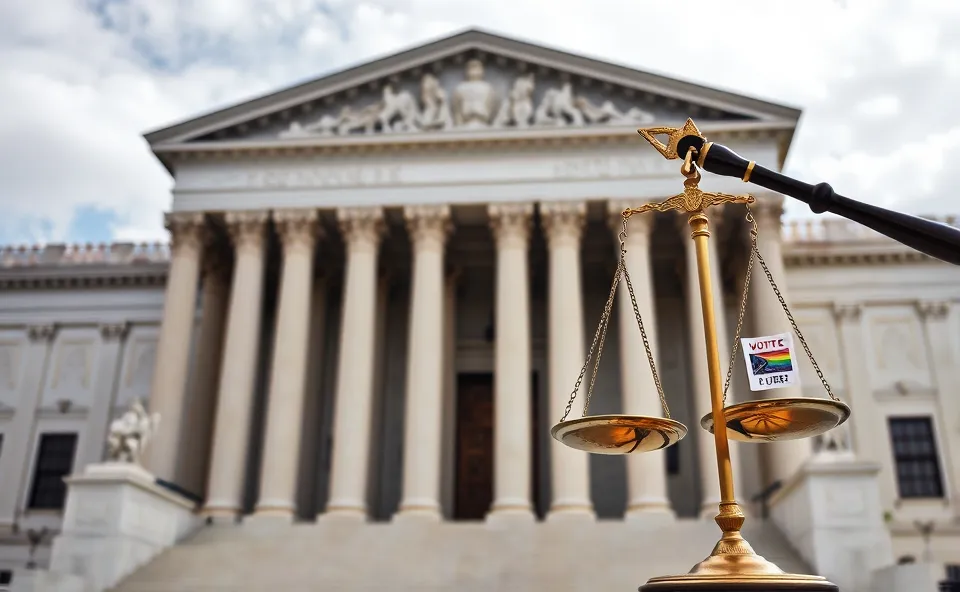
Every year, the US Supreme Court sets its schedule for which cases it will hear. This list is not just a set of legal files. It is essentially a roadmap for how the country will function. For the Supreme Court next term, the focus is shifting toward some of the most debated topics in American life. We are looking at a heavy concentration of gun rights cases, LGBT rights cases, and voting rights cases.
In simple terms, the court is acting as the final referee. When two lower courts disagree on a law, or when a state law seems to clash with the Constitution, the highest court steps in to make a final call. This time around, the cases are not just about technicalities. They are about who can carry a weapon, who is protected from discrimination, and who gets to decide how elections are run.
These decisions happen through a process called judicial review. This is where the justices look at a law and decide if it fits within the boundaries of the Constitution. If it does not, the law is tossed out. Because the US Supreme Court has the final word, these decisions change the rules of the game for millions of people overnight.
Why Everyone is Talking About These Cases Now
You might wonder why these specific topics are dominating the conversation right now. The reason is that we are living through a period of massive legal shifts. Many states have passed new laws that directly challenge previous understandings of civil rights. This has created a patchwork of rules across the country. In one state, a certain action might be a protected right, while in the state next door, it could be a crime.
People are searching for answers because the stakes are incredibly high. We are seeing a surge in legal challenges because the current makeup of the court is different than it was a decade ago. There is a strong lean toward a philosophy that looks at the original meaning of the Constitution. This shift makes people anxious about whether long standing protections will remain or if the court will carve out new exceptions.
Furthermore, the timing is critical. With major elections always on the horizon, the voting rights cases are particularly hot. Anyone who wants to influence the outcome of an election knows that the rules of the ballot box are just as important as the candidates themselves. This intersection of law and power is why the world is watching the US Supreme Court so closely.
How We Got to This Point
To understand where we are going, we have to look at the foundation. Most of these disputes boil down to how we interpret the amendments to the Constitution. For example, gun rights cases usually center on the Second Amendment. For years, there was a lot of debate over whether this amendment protected an individual right or a collective right related to militias. Recent court decisions have firmly moved toward the individual right, which has opened the door for new challenges against local gun restrictions.
When it comes to LGBT rights cases, the battle is often fought over the Fourteenth Amendment. This amendment guarantees equal protection under the law. For a long time, this was used to expand marriage and employment rights. However, we are now seeing a clash between these equality rights and the First Amendment, which protects religious freedom. The court is now trying to figure out where one person’s right to be free from discrimination ends and another person’s right to practice their religion begins.
Voting rights cases have a different history. They often lean on the Voting Rights Act of 1965, which was designed to stop racial discrimination at the polls. Over time, SCOTUS has limited the power of this act, arguing that some of its rules are outdated. This has shifted more power back to the states, leading to the current wave of legal battles over how districts are drawn and how voters identify themselves.
What This Means for the Real World
While these cases happen in a courtroom, the impact spreads far beyond the legal community. For businesses and markets, legal uncertainty is a major risk. Companies often build their HR policies, diversity programs, and corporate governance around existing court rulings. If the US Supreme Court suddenly changes the interpretation of LGBT rights, companies may find themselves caught between conflicting state laws and federal rulings.
The political impact is even more direct. When the court decides on voting rights cases, it can effectively change the map of political power. A decision on redistricting or voter ID laws can shift which party holds a majority in Congress. For investors and market analysts, this is a critical variable. Political stability usually leads to market stability. When the rules of democracy are in flux, it creates a volatile environment for long term planning.
There are also social issues at play that affect the economy. For instance, rulings on gun rights can influence the insurance industry, security sectors, and local commerce. If the court makes it harder for states to regulate firearms, we might see shifts in how public spaces are managed and how safety technology is deployed.
- Business Risk: Companies must navigate a confusing web of state and federal laws.
- Market Volatility: Major legal shifts can lead to political instability, which scares off investors.
- Operational Costs: Businesses may need to spend more on legal compliance to ensure they follow new rulings.
- Social Dynamics: Court decisions can spark public protests or shifts in consumer behavior.
Where the Legal Needle Might Move
Looking ahead, it is likely that the court will continue its trend of returning power to the states. We can expect a move away from broad federal mandates and toward a more localized approach to constitutional law. This does not mean the court will be inactive. Rather, it means the battles will likely move to state courts, with the US Supreme Court acting as a final check only in the most extreme cases.
In the realm of gun rights, the court will probably continue to strike down laws that it feels are too restrictive based on historical precedent. For LGBT rights, the focus will likely shift toward specific conflicts between private business owners and anti discrimination laws. We can expect the court to carve out more protections for religious objections.
Regarding voting rights, the trend suggests a higher threshold for proving discrimination. This means it will be harder for challengers to overturn state voting laws unless they can provide very specific evidence of intent. The result will be a legal landscape where states have a huge amount of freedom to design their own election processes, provided they do not explicitly violate the letter of the law.
Common Questions About the Court’s Path
What is the role of the US Supreme Court in gun rights cases?
The court examines whether state or federal gun laws violate the Second Amendment. It uses judicial review to decide if a restriction is consistent with the historical tradition of firearm regulation in the United States.
How do LGBT rights cases reach the highest court?
These cases usually start in lower courts when a person or business claims their rights were violated. If the lower courts provide conflicting rulings, or if the issue is of national importance, SCOTUS may agree to hear the case to set a final precedent.
Why are voting rights cases so important for the Supreme Court next term?
These cases determine the rules for how elections are conducted. Because they can influence who wins an election, they have a massive political impact on the balance of power in the government.
What is judicial review in the context of civil rights?
Judicial review is the power of the court to look at a law and declare it unconstitutional. In civil rights cases, this is the primary tool used to protect minorities or strike down laws that are seen as discriminatory.
How do court decisions affect constitutional law?
When the court issues a ruling, that decision becomes a precedent. Other courts must follow that precedent in future cases. This effectively evolves the meaning of the amendments without needing to formally rewrite the Constitution.











