

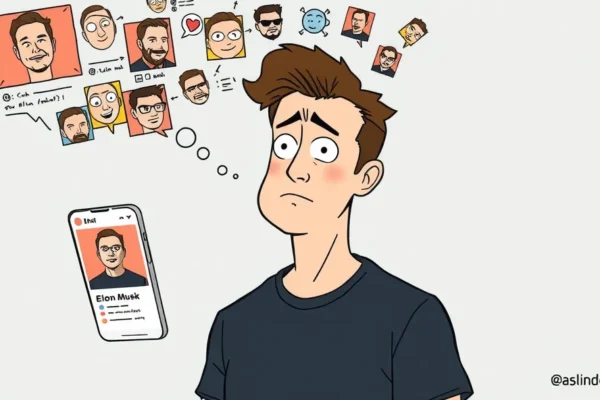
The Shift in the Silicon Valley Archetype
For decades, the cultural image of the successful man in the tech industry was relatively stable. He was often portrayed as the “nerdy innovator”—the quiet, socially awkward, but brilliant engineer who spent more time with code than with people. This archetype, exemplified by early pioneers in Silicon Valley, suggested a person who was perhaps unpolished in social settings but possessed a genuine, almost childlike curiosity about building the future. This persona held a certain romantic charm; it suggested a depth of character and a focus on creation over ego.
However, a significant cultural shift is currently underway. The “innovator” is increasingly being replaced by a new figure: the “tech bro.” This development represents a move away from collaborative, product-focused engineering toward a persona defined by hyper-individualism, aggressive disruption, and a specific brand of polarizing masculinity. This is not just a change in fashion or slang; it is a fundamental shift in the social identity of the tech industry.
This shift is significant because it directly impacts the social fabric of major tech hubs. As the industry moves from the era of software-as-a-service to an era of high-stakes ideological battles, the personality types that thrive in these environments are changing. This transition has profound implications for how these individuals interact with the world, particularly within the sphere of modern dating. The “innovation” here is not a piece of software, but a new, highly optimized—and increasingly controversial—social identity that is reshaping the tech industry’s relationship with the broader public.
How the Tech Bro Persona Operates
To understand why this shift is happening, one must look at how the engineering mindset is being applied to human personality and social hierarchies. Think of the “tech bro” persona as an operating system that has been optimized for a single, narrow task: the maximization of individual status and influence. While the old nerd archetype was a “beta” version—unstable and unpolished but capable of massive upgrades—the modern tech bro is a highly tuned, albeit rigid, piece of software.
The core mechanism of this persona is “optimization.” In the tech industry, optimization means making a process as efficient as possible by removing unnecessary friction. When this mindset is applied to a person’s romantic life or social interactions, the results can be problematic. Instead of viewing relationships as complex, unpredictable systems requiring empathy and patience, the “tech bro” often views them as puzzles to be solved or hierarchies to be climbed. They apply the logic of growth hacking and data analysis to human connection.
This often manifests through the adoption of “red-pilled” ideologies—a term borrowed from internet subcultures that suggests a person has “woken up” to a perceived reality of social and gender dynamics. This mindset utilizes a pseudo-scientific approach to human behavior, much like how a company might use Palantir to analyze vast datasets to find patterns. However, instead of using data to solve global problems, this approach uses simplified, often flawed, sociological theories to “optimize” one’s standing in the dating market. The goal is not connection, but winning a perceived game of social competition.
The Current State of Dating in Tech Hubs
Today, this shift is visible across the major centers of technological development, from San Francisco to Austin. The dating culture in these areas has become increasingly polarized. While the tech industry continues to drive global economic growth, the social environment within these hubs is experiencing a period of intense friction. We are currently in a phase of “mass adoption” of this new persona, as the visibility of high-profile figures like Elon Musk provides a blueprint for what “success” looks like in the modern era.
In many tech-centric social circles, the “disruptor” mentality has bled into everyday life. We see this in the rise of specialized dating apps and the heavy use of data-driven “dating advice” that treats romantic partners as metrics to be managed. The maturity level of this phenomenon is currently in a state of high volatility. While many in the industry are still attempting to navigate traditional relationship models, a significant subset has fully embraced the hyper-optimized, ideological approach to social interaction.
This is not limited to a single company or a specific sub-sector. Whether in cybersecurity, fintech, or artificial intelligence, the “tech bro” archetype is becoming a recognizable demographic. The availability of these ideas is near-universal due to the influence of social media algorithms that prioritize high-conflict, high-engagement content, effectively acting as a delivery mechanism for these new social ideologies.
The Competitive Landscape of Social Archetypes
In the realm of social identity, we can see a clear competition between two distinct models of the tech professional. On one side, we have the “Collaborative Builder”—the traditional engineer focused on community, open-source contribution, and solving shared problems. This model prioritizes long-term stability and social cohesion. On the other side is the “Individualist Disruptor”—the modern tech bro who prioritizes personal brand, market dominance, and the subversion of existing social norms.
The Individualist Disruptor currently holds a significant advantage in terms of visibility and perceived power. In an era where “attention is currency,” the provocative and often controversial stances taken by this group garner more media coverage and social media engagement. This creates a feedback loop: the more they disrupt, the more they are seen, and the more they are perceived as successful leaders.
However, the Collaborative Builder maintains a long-term advantage in terms of sustainable relationship building and organizational health. While the disruptor may win the “attention game,” they often struggle with high turnover in teams and high volatility in personal relationships. The differentiator lies in the goal: one seeks to master a system, while the other seeks to belong to a community. This fundamental difference is what creates the widening gap in dating appeal.
Implications for Relationships and Society
The transformation of the tech professional has wide-ranging implications for both the industry and society at large. In the short term, we are seeing a significant shift in dating culture within millennial dating circles. The “tech bro” approach to romantic life—often characterized by a lack of emotional intelligence and an obsession with “game” or “optimization”—is creating significant friction in the dating market. This can lead to increased social isolation among men in the industry and a growing disillusionment among potential partners.
From an economic perspective, this shift may impact how companies recruit and retain talent. As the “tech bro” persona becomes more synonymous with certain sectors, companies may find it increasingly difficult to attract diverse talent or to maintain a culture of psychological safety, which is essential for high-level innovation. A culture dominated by aggressive individualism can stifle the collaborative spirit necessary for complex problem-solving.
Socially, the rise of these polarized identities contributes to the broader fragmentation of modern society. When the leaders of the most influential industries adopt ideologies that are inherently divisive, it sets a precedent for the rest of the culture. The long-term concern is the creation of “echo chambers” not just in our digital feeds, but in our physical social circles and romantic lives, making it harder to build the cross-disciplinary and cross-ideological connections that drive human progress.
Limitations and Challenges of the Optimization Mindset
The primary limitation of the modern tech bro approach is a fundamental misunderstanding of human complexity. The attempt to apply algorithmic logic to romantic life suffers from what engineers might call “overfitting.” In machine learning, overfitting occurs when a model is so finely tuned to a specific set of training data that it fails to generalize to new, real-world scenarios. Similarly, a person who applies rigid, “red-pilled” social rules to dating will find that these rules fail the moment they encounter the unpredictable, non-linear nature of human emotion.
There are several key challenges that this persona cannot easily overcome:
- The Empathy Gap: Logic-based optimization often comes at the expense of emotional resonance. In relationships, being “right” is often less important than being “connected.”
- The Complexity Problem: Human beings are not static datasets. They are dynamic, evolving systems that cannot be fully captured by simplified social theories.
- Social Scalability: While an aggressive, disruptive persona might work in a small, high-stakes startup environment, it is notoriously difficult to scale into a healthy family life or a stable community.
- Adoption Barriers: The polarizing nature of this identity creates a high barrier to entry for many people, effectively shrinking the individual’s “social market” and limiting their opportunities for meaningful connection.
The Future Trajectory of Tech Culture
Where is this heading? Based on current social trajectories, we are likely to see a period of significant “correction.” As the social costs of the “tech bro” archetype become more apparent—manifesting in broken relationships, social isolation, and workplace toxicity—there is a growing counter-movement. We are already seeing the emergence of a “post-disruption” mindset, where the value of emotional intelligence (EQ) is being recognized as being just as critical as technical intelligence (IQ).
In the next five to ten years, we may see a bifurcation of the industry. One segment may continue to lean into the high-conflict, high-reward model of the disruptor, while another segment moves toward a “Human-Centric Tech” model. This second group would prioritize sustainable growth, ethical implications, and social integration. This movement would likely see a resurgence of the “collaborative builder” archetype, but with more modern, sophisticated social tools.
Key developments to watch include the ways in which artificial intelligence is integrated into social platforms and whether it reinforces these polarized identities or provides tools for better emotional understanding. The evolution of the tech industry’s social identity will be a critical indicator of its long-term stability and its ability to continue contributing positively to global society.
Frequently Asked Questions
Is the decline in dating appeal for tech men a permanent trend?
It is likely a cyclical phenomenon rather than a permanent one. Cultural archetypes tend to swing between extremes, and as the social costs of the current “tech bro” persona become more apparent, a move toward more empathetic and collaborative identities is expected.
How does the influence of Elon Musk affect dating culture in Silicon Valley?
Elon Musk serves as a high-profile symbol for the “disruptor” archetype, which can validate certain aggressive and polarizing social behaviors. This influence can create a localized culture in tech hubs that prioritizes dominance and disruption over traditional social norms.
What are the risks of applying a “data-driven” approach to relationships?
The primary risk is the loss of genuine emotional connection. When people treat dating as an optimization problem, they often ignore the nuances of empathy, vulnerability, and unpredictability that are essential for healthy, long-term relationships.
Does the “tech bro” identity impact the tech industry’s ability to innovate?
Yes, potentially. While disruption can drive rapid change, a culture that lacks social cohesion and psychological safety can stifle the collaborative creativity required for deep, complex innovation.
What is the difference between a “nerdy innovator” and a “tech bro”?
The “nerdy innovator” typically focuses on the creation of products and community contribution, often with a more humble social presence. The “tech bro” is more focused on personal status, social hierarchy, and the application of disruptive ideologies to all aspects of life.
Note: This article is a sociological analysis of cultural trends within the technology sector and should be viewed as an observation of shifting social patterns rather than a definitive scientific study.











