

Navigating Startup Growth The TechCrunch Founder Summit Way
The journey of building a startup is often a thrilling, yet challenging, endeavor. Founders face a constant barrage of decisions, from securing the crucial funding that fuels growth to attracting the right talent and leveraging the latest technological advancements. Recognizing these complex startup challenges, the TechCrunch Founder Summit has emerged as a vital platform, offering actionable insights tailored specifically for entrepreneurs. This year’s summit agenda, heavily focused on fundraising, hiring, and the transformative power of Artificial Intelligence (AI), promises to equip founders with the knowledge and strategies needed to thrive.
The TechCrunch Founder Summit Agenda What Founders Need to Know
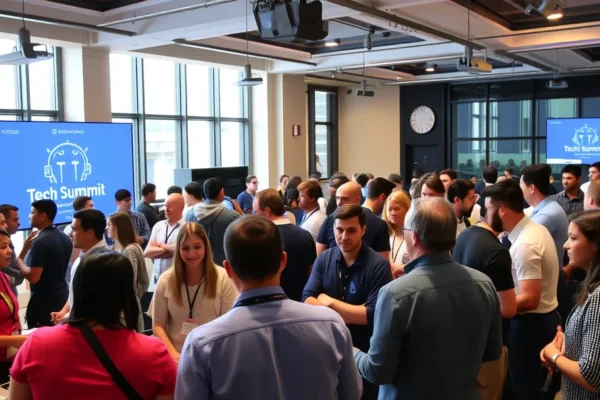
The TechCrunch Founder Summit isn’t just another tech conference; it’s a curated experience designed to provide founders with practical, real-world advice. The core of this year’s event revolves around three critical pillars for startup success: fundraising, talent acquisition, and the strategic integration of AI. These areas represent the most significant hurdles and opportunities for startups aiming for sustainable growth and market impact. The summit aims to demystify complex processes, share lessons learned from seasoned entrepreneurs and investors, and highlight emerging trends that can offer a competitive edge. This focused approach ensures that attendees leave with tangible takeaways, rather than just abstract concepts.
Fundraising Strategies for Growth
Securing venture capital and other forms of funding is a perennial challenge for startups. The TechCrunch Founder Summit agenda dedicates significant time to dissecting the fundraising landscape. Sessions explore everything from crafting a compelling pitch deck to understanding the nuances of term sheets and navigating different stages of investment, from seed rounds to Series A and beyond. Discussions often feature prominent venture capitalists, offering direct insights into what they look for in potential investments and how founders can best position themselves. The goal is to move beyond the fear of fundraising and equip founders with a clear roadmap for securing the financial resources necessary for scaling their operations and executing their growth strategies.
Talent Acquisition in a Competitive Market
Hiring the right team is paramount to any startup’s success. The summit addresses the complexities of talent acquisition, particularly in today’s competitive tech market. Founders gain insights into building a strong company culture from the ground up, effective strategies for recruiting top talent, and the legal and practical aspects of managing a growing team. This includes understanding different hiring models, from remote workforces to in-office teams, and how to foster an environment that attracts and retains skilled professionals. The emphasis is on building a cohesive and motivated team that can drive innovation and execute the company’s vision, tackling key startup challenges related to human capital.
Leveraging AI for Startup Advantage
Artificial Intelligence (AI), particularly machine learning, is no longer a futuristic concept but a tangible tool that can revolutionize how startups operate. The TechCrunch Founder Summit highlights the practical applications of AI across various business functions. Sessions delve into how AI can be used for product development, customer engagement, operational efficiency, and data analysis. Founders learn about different AI tools and platforms available, how to identify opportunities where AI can provide a significant advantage, and the ethical considerations associated with its implementation. The aim is to demystify AI for founders, showing them how to harness its power to gain a competitive edge and innovate more effectively within their respective industries.
Understanding the Mechanics of AI in Startups
Artificial Intelligence, at its core, involves creating systems that can perform tasks typically requiring human intelligence, such as learning, problem-solving, and decision-making. For startups, understanding how AI works isn’t about becoming computer scientists, but about recognizing its potential applications.
AI as a Smart Assistant
Think of AI like a highly sophisticated assistant that can process vast amounts of information much faster than a human. For example, in customer service, AI-powered chatbots can handle common queries instantly, freeing up human agents for more complex issues. This is achieved through natural language processing (NLP), a subfield of AI that allows computers to understand and respond to human language. The AI learns from countless conversations to provide increasingly accurate and helpful responses.
Machine Learning for Predictive Power
Machine learning (ML), a subset of AI, is particularly relevant for startups. Instead of being explicitly programmed for every task, ML algorithms learn from data. Imagine training a spam filter: you show it thousands of emails, some spam and some not, and it learns to identify patterns associated with spam. This allows startups to build predictive models for sales forecasting, identifying customer churn risk, or optimizing marketing campaigns. The more data these systems process, the better they become at making predictions or decisions, driving operational efficiency and informing growth strategies.
AI’s Current State and Real-World Startup Applications
The integration of AI into the startup ecosystem is rapidly evolving, moving from experimental stages to mainstream adoption. Founders at the TechCrunch Founder Summit are exposed to numerous real-world applications demonstrating AI’s current capabilities.
Automating Processes and Enhancing Efficiency
Many startups are already leveraging AI to streamline operations. Companies in e-commerce use AI-powered recommendation engines to personalize product suggestions for customers, significantly boosting sales. In the realm of software development, AI tools are being used for code generation and bug detection, speeding up development cycles. For instance, tools like GitHub Copilot, powered by OpenAI’s Codex model, assist developers by suggesting code snippets in real-time, demonstrating the practical application of machine learning in everyday development tasks.
Improving Customer Experience
AI is revolutionizing customer interactions. Many fintech startups utilize AI for fraud detection and risk assessment, providing more secure and personalized financial services. In marketing, AI analyzes customer behavior to deliver targeted advertisements and personalized content, improving engagement rates. Consider how streaming services use AI to recommend movies and shows; this same principle is being applied by startups to enhance user experience across various platforms, aiming to reduce churn and increase customer loyalty.
Data Analysis and Insights
Startups are awash in data, and AI provides the tools to make sense of it. AI-powered analytics platforms can identify trends and patterns that human analysts might miss, offering critical insights for business strategy. This is especially valuable for early-stage companies trying to understand their market and customer base. Companies are accessing these AI capabilities through cloud-based services and specialized software, making them more accessible than ever before, though the complexity of implementation can still be a barrier.
The Competitive Landscape of AI and Startup Enablement
The race to develop and deploy advanced AI solutions is fierce, with numerous companies and approaches vying for attention. The TechCrunch Founder Summit often features discussions that highlight this competitive landscape.
Big Tech’s Dominance and Open Source Alternatives
Major technology players like Google, Microsoft, and Amazon are investing billions in AI research and development, offering comprehensive AI platforms and services. These companies provide powerful tools and cloud infrastructure that many startups rely on. However, there’s also a vibrant open-source AI community, with projects like TensorFlow (developed by Google) and PyTorch (developed by Meta) enabling developers to build and train their own AI models without being locked into proprietary systems. This fosters innovation and provides more cost-effective options for startups.
Specialized AI Solutions for Niche Markets
Beyond the giants, a host of startups and established companies are developing specialized AI solutions for specific industries. For example, AI is being tailored for healthcare diagnostics, agricultural optimization, and legal document analysis. These specialized solutions often offer deeper domain expertise and more tailored functionalities than broad-based platforms, catering to specific startup challenges within those sectors. The differentiation often lies in the dataset used for training and the specific algorithms optimized for niche problems.
The Advantage of Agility
While big tech has resources, startups often have an advantage in agility. They can adapt more quickly to new AI developments and integrate them into their products and services with less organizational inertia. A startup focused on a specific AI application can often outmaneuver a larger company that has to consider a broader market. The key differentiator for startups is often their ability to identify a unique problem and apply AI in a novel way to solve it.
Implications and Impact of AI on the Startup World
The increasing adoption of AI by startups has profound implications for industries, economies, and user behavior. The discussions at the TechCrunch Founder Summit aim to unpack these wider impacts.
Reshaping Industries and Business Models
AI is fundamentally altering how businesses operate. Industries that were once labor-intensive are becoming more automated, leading to increased efficiency and potential cost reductions. For example, AI in logistics can optimize delivery routes, reducing fuel consumption and delivery times. New business models are emerging that are built entirely around AI capabilities, such as personalized learning platforms or AI-driven creative tools. This transformation creates new market opportunities and disrupts established players.
Economic and Employment Shifts
The economic impact of AI is multifaceted. While AI can create new jobs in areas like AI development, data science, and AI ethics, it also has the potential to displace workers in roles that can be automated. This necessitates a focus on reskilling and upskilling the workforce. The growth of AI-powered startups is also driving innovation and investment, contributing to economic growth. The timeline for these shifts is ongoing, with some industries already experiencing significant automation.
Social Implications and Ethical Considerations
Beyond economics, AI raises significant social questions. Issues around data privacy, algorithmic bias, and the ethical use of AI are paramount. For instance, if an AI hiring tool is trained on biased historical data, it might perpetuate discrimination. Startups must navigate these ethical minefields responsibly. The potential benefits include improved accessibility for people with disabilities, enhanced medical diagnoses, and more personalized education. However, the responsible development and deployment of AI are crucial to ensure these benefits are realized equitably and without unintended negative consequences.
Limitations and Challenges of AI Adoption for Startups
Despite its transformative potential, AI is not a magic bullet, and startups face significant limitations and challenges in its adoption.
Data Dependency and Quality
Many AI algorithms, especially in machine learning, require vast amounts of high-quality data to train effectively. Startups often struggle with acquiring sufficient relevant data, and the data they do have may be incomplete, inaccurate, or biased. This data dependency is a significant bottleneck. For example, an AI trained on a small, unrepresentative dataset might perform poorly in real-world scenarios.
Cost and Complexity of Implementation
Developing, deploying, and maintaining AI systems can be expensive and technically demanding. The cost of specialized hardware, software, and skilled personnel can be prohibitive for many early-stage startups. While cloud-based AI services have lowered the barrier to entry, integrating these tools effectively still requires significant expertise and resources. The learning curve for effectively leveraging these technologies can be steep.
Ethical and Regulatory Hurdles
As mentioned earlier, ethical considerations, such as bias and privacy, are major challenges. Furthermore, the regulatory landscape for AI is still developing, creating uncertainty for businesses. Startups need to be mindful of evolving regulations concerning data usage, AI decision-making, and accountability. Ensuring transparency and fairness in AI systems is an ongoing technical and ethical challenge.
The Future Trajectory of AI in Startup Ecosystems
The trajectory of AI in the startup world points towards increasingly sophisticated and integrated applications. Expert consensus suggests a continued acceleration of AI’s role.
AI Becoming More Accessible and User-Friendly
The trend is towards making AI tools more accessible to a wider range of users, not just AI experts. Low-code and no-code AI platforms are emerging, enabling founders and teams with limited technical backgrounds to leverage AI capabilities. This democratizing trend will empower more startups to experiment with and deploy AI solutions.
Hyper-Personalization and Predictive Capabilities
Future AI applications will likely offer even deeper levels of personalization and predictive accuracy. Imagine AI that can anticipate a customer’s needs before they even realize them, or systems that can predict market shifts with unprecedented precision. This will be driven by advancements in areas like deep learning and reinforcement learning, enabling AI to understand context and adapt more dynamically.
AI for Enhanced Creativity and Problem-Solving
Beyond automation, AI is poised to become a powerful co-pilot for human creativity and complex problem-solving. Tools that assist in artistic creation, scientific discovery, and strategic planning will become more prevalent. Research into generative AI, capable of creating new content like text, images, and music, is rapidly advancing, suggesting a future where AI is a partner in innovation. The timeline for widespread adoption of these more advanced creative AI tools is still a few years out, but early demonstrations are highly promising.
Key Questions and Answers About AI in Startups
Founders often have pressing questions about how to navigate the evolving landscape of AI and its impact on their ventures.
Is AI technology mature enough for my startup to rely on?
AI capabilities vary significantly by application. Core AI technologies like machine learning for data analysis and natural language processing for chatbots are relatively mature and widely used. However, more advanced AI, such as general-purpose artificial intelligence or highly specialized predictive models, may still be in development or early adoption phases. It’s crucial to assess the maturity of the specific AI solution you intend to use for your startup’s needs.
Who benefits most from AI in the startup world?
Startups that can effectively leverage AI to solve specific problems, enhance customer experiences, or gain operational efficiencies stand to benefit the most. This includes companies in sectors like e-commerce, fintech, healthcare, and software development. However, any startup that can identify a data-rich problem and has a strategy for implementing AI can potentially gain a significant competitive advantage.
What are the biggest risks associated with AI adoption for startups?
The primary risks include the potential for biased AI systems leading to unfair outcomes, data privacy breaches, over-reliance on technology that may fail, and the significant cost and complexity of implementation. Ethical considerations and the potential for job displacement also present significant societal risks that startups must be mindful of.
How long until AI becomes a standard tool for most startups?
Many AI tools are already standard for a growing number of startups, particularly in areas like marketing automation and customer service. For more advanced AI applications in R&D or complex decision-making, widespread adoption is likely a few years away, dependent on further technological advancements and cost reductions. The pace of innovation suggests this timeline could accelerate.
How can a startup without a deep AI bench effectively use AI?
Startups can leverage AI through readily available cloud-based platforms (e.g., AWS AI services, Google Cloud AI), specialized AI-powered software solutions, and by partnering with AI consultancies or development firms. Focusing on specific, well-defined problems where AI can provide a clear benefit is key.
What is the difference between AI and machine learning?
Artificial Intelligence (AI) is the broad concept of creating machines capable of performing tasks that typically require human intelligence. Machine Learning (ML) is a subset of AI that enables systems to learn from data without being explicitly programmed. Think of AI as the overall goal, and ML as one of the primary methods to achieve it.
This article provides an overview of the TechCrunch Founder Summit’s focus on fundraising, hiring, and AI, aiming to offer a balanced perspective on the technology’s current state, potential, and challenges for entrepreneurs. The information presented is based on general industry trends and the stated objectives of such tech events; specific agenda details may vary year to year.











