What Is The Tesla Cybercab And Why Does It Matter Now
The Tesla Cybercab is a vision of the future that aims to change how we move around our cities. In simple terms, it is a dedicated, fully self-driving taxi designed without a steering wheel or pedals. Think of it as a personal chauffeur that doesn’t actually have a person in the driver’s seat. The vehicle is built from the ground up to be part of an autonomous ride-hailing network, effectively making car ownership optional for many people.
This product solves the frustration of daily commuting, parking difficulties, and the rising costs of owning a vehicle. By utilizing Tesla autonomous technology, it promises a cheaper way to travel from point A to point B. It is designed for city dwellers who are tired of traffic and suburbanites looking to reclaim their time. You should care about this right now because it represents a major shift in how we might view transportation in the next few years, moving away from “owning” to “accessing” mobility.
Daily Life With An Autonomous Taxi
If the Tesla Cybercab becomes a reality, your daily routine could change drastically. Imagine you have a busy morning commute. Instead of stressing over traffic or hunting for a parking spot, you simply open an app, request a ride, and a sleek, compact vehicle pulls up to your curb. You step inside, finish your morning emails, or relax with a podcast, and step out right at the door of your office. The stress of the road is completely removed.
For families managing a household, this could be a lifesaver. If you need to shuttle kids to soccer practice while simultaneously getting yourself to an appointment, the robotaxi acts as an automated transport service. You could potentially coordinate multiple trips through a single account, allowing the service to handle the logistics. It essentially turns travel into a utility, similar to how we pay for electricity or high-speed internet, rather than a chore we have to manage ourselves.
Who Should Keep An Eye On This Innovation
The Cybercab is best for urban professionals and city residents who spend significant amounts of time behind the wheel in heavy traffic. It is also good for tech-forward households that already use ride-sharing services regularly and want to reduce their environmental footprint and monthly automotive expenses. However, you should skip this if you live in a rural area where infrastructure for high-tech, self-driving fleets is unlikely to exist for many years. If you enjoy the mechanical process of driving or have specific storage needs that require a large truck or SUV, this vehicle is not for you.
How It Measures Up Against The Competition
The Cybercab competes with established players like Waymo and Zoox, which have already started operating robotaxis in select cities. Where Tesla aims to differ is in its “vision-only” approach. While competitors often use expensive hardware like LiDAR—which acts like a laser-based radar—Tesla relies on cameras and their proprietary AI robot software. This approach is intended to lower costs, but critics point out that it remains to be seen if cameras alone can match the safety record of sensor-heavy alternatives in every weather condition. Value-wise, the Cybercab is marketed as an ultra-affordable transit option, potentially undercutting current Uber or Lyft prices once it scales.
The Reality Of The Recent Austin Event
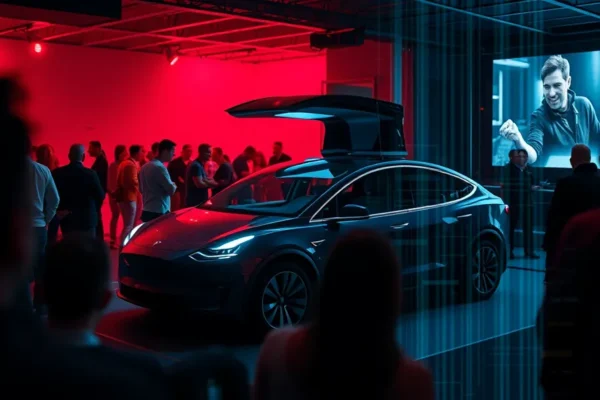
The recent Austin event for the Tesla Cybercab debut was unconventional, to say the least. It was an invite-only gathering that felt more like an exclusive showcase than a traditional product launch. Many fans noticed an online blackout, with very limited live streaming and a heavy emphasis on curated interactions. Along with the Cybercab, the company showcased the latest Tesla bot, Optimus, which is designed to be a humanoid AI robot for household tasks. The quiet, controlled nature of this launch suggests the technology is still in the development phase, requiring more testing before it is ready for the general public.
Real World Pros Of The Cybercab Concept
- Significant Time Savings: You gain back the time usually spent focusing on the road, turning your commute into productive or leisure time.
- Lowered Travel Costs: By removing the human driver and maximizing vehicle efficiency, the cost per mile could drop significantly compared to traditional car ownership.
- Minimalist Interior: Without the need for a driver station, the interior is spacious and designed purely for passenger comfort, acting like a small, private lounge.
- Integrated AI: The Tesla AI system is constantly learning from a massive fleet of vehicles, which is intended to improve its safety and decision-making over time.
Real World Cons And Limitations To Consider
- Development Hurdles: The technology is still unproven in all weather conditions, such as heavy snow or blinding rain, which often frustrates users of current autonomous systems.
- Regulatory Uncertainty: Even if the car is ready, local and state laws regarding self-driving taxis are still evolving, which could delay availability in your city.
- Exclusivity Issues: The invite-only nature of recent demonstrations has left many potential users feeling like the timeline for real-world access is vague or intentionally obscured.
Price And Value Proposition
Tesla has suggested a price point under $30,000 for the Cybercab, which is an aggressive target for a vehicle featuring this level of technology. If this holds, it would make it an incredibly high-value proposition for those who can rely on it as their primary mode of transport. However, there are hidden costs to consider, such as charging infrastructure, ride-hailing service fees, and the potential for a subscription-based model to access the autonomous network. It is not currently available for individual purchase, so evaluating its long-term value requires waiting for the service to launch publicly.
Verdict And Recommendations
The Tesla Cybercab is an exciting glimpse into a future where driving is optional. For those who live in tech-forward urban hubs, it holds the potential to make life significantly easier and cheaper. However, because this was a quiet, invite-only debut, it is best to treat this as an “early-stage concept” rather than a product you can buy today. If you are looking for a reliable transport solution right now, stick to your current vehicle. Wait to see how the software performs in real-world, non-controlled environments before shifting your entire lifestyle around this promise.
Common Questions About The Tesla Cybercab
Is the Tesla Cybercab available to buy right now? No, the Cybercab is currently in the development and testing phase following its invite-only Austin event. There is no official release date for the general public yet.
Do I need a driver license to use this? Since the Cybercab is designed to be a fully autonomous self-driving taxi, the goal is for users to simply request a ride through an app, meaning no personal driving requirements.
How does the Tesla autonomous system compare to Waymo? Tesla relies on a camera-based, AI-driven approach, while many competitors use a mix of cameras and laser-based sensors. Each has different strengths regarding how they perceive the world.
What is the purpose of the Tesla bot shown at the event? The Optimus AI robot is designed to handle repetitive, dangerous, or boring physical tasks in homes or factories, complementing the autonomous travel ecosystem.
Will this work in my small town? It is unlikely in the near term. Autonomous ride-hailing networks are currently focused on dense, high-traffic urban areas where the infrastructure and data map density are strongest.
Product prices and availability vary by region. Verify current pricing before purchase.