The Strategic Pivot Toward Autonomous Transportation
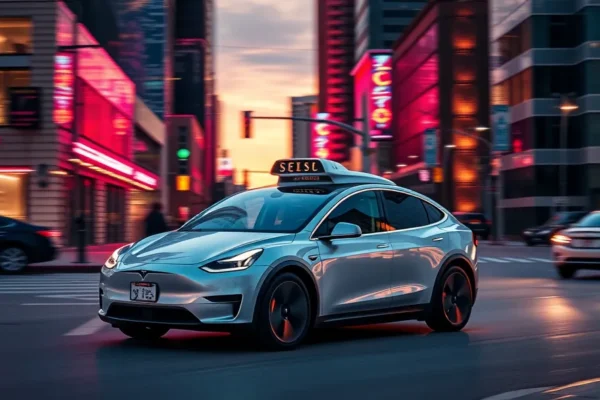
Tesla has officially shifted its long-term growth narrative toward autonomous vehicle technology, moving beyond its traditional identity as an electric vehicle (EV) manufacturer. During recent earnings calls and investor communications, CEO Elon Musk acknowledged a widening gap between Tesla production capabilities and consumer demand for its core lineup. To address this, the company is prioritizing the development of the Cybercab, a dedicated robotaxi designed to operate exclusively with the company’s Full Self-Driving (FSD) software.
This development follows Tesla’s recent public demonstrations and a heightened emphasis on artificial intelligence integration. By moving toward a product built solely for autonomy, Tesla aims to pivot from selling individual hardware units to capturing value through a software-defined transportation network.
The Rationale Behind the Cybercab Strategy
The decision to lean into the Cybercab is a direct response to maturing demand in the broader EV market. As the market for personal electric vehicles becomes increasingly crowded and price-sensitive, Tesla faces a dilemma regarding its traditional production targets. Musk’s focus on the Cybercab represents an attempt to redefine the company’s growth trajectory by moving into the “mobility-as-a-service” sector, where a vehicle can generate revenue throughout its entire lifecycle rather than providing a one-time point-of-sale profit.
Strategically, this serves to solve a growth problem. Selling cars is a capital-intensive business with shrinking margins due to fierce global competition. Operating a fleet of autonomous vehicles, however, offers the potential for high-margin software recurring revenue. By focusing on FSD technology, Tesla is betting that the transition to driverless transport will create a massive new market segment where they can achieve “first-mover advantage,” which is a competitive edge gained by being the first to enter a market.
Competitive Context and Market Positioning
Tesla’s pivot places it in direct competition with companies like Alphabet’s Waymo and various Chinese EV manufacturers that are also aggressively testing autonomous platforms. While Tesla has historically relied on a camera-only approach to autonomy—avoiding the expensive light-detection sensors known as LiDAR—competitors have largely taken the opposite route, arguing that sensor redundancy is safer.
Who gains the most from this? Tesla stands to gain if its massive fleet of consumer cars currently on the road provides enough real-world data to “train” its neural networks faster than rivals. However, the company is threatened by the public perception of its FSD brand. If Tesla cannot prove that its system is statistically safer than a human driver, it faces significant regulatory hurdles that could leave it behind more cautious, localized robotaxi deployments currently operating in major cities.
Broader Industry Implications of the Autonomous Push
The aggressive timeline for the Cybercab launch signals a shift in the automotive industry from hardware-centric design to software-centric platforms. Traditional automakers are watching closely, as the success of this strategy could validate the idea that the car of the future is merely a physical platform for high-end AI software.
Industry peers are likely to accelerate their own R&D budgets in response, potentially leading to a period of consolidation. If Tesla succeeds, it could force a fundamental rethink of vehicle ownership models. If it fails, the industry may return to a more conservative, incremental approach to driver-assistance technology. This trend highlights a sector-wide pivot where legacy manufacturers are struggling to compete with the rapid iteration cycles of tech-focused firms like Tesla.
Financial and Operational Impact
The financial shift involves moving from a model defined by vehicle deliveries to one defined by FSD take-rates and subscription revenue. In the short term, this is costly. R&D spending on artificial intelligence and hardware prototypes like the Cybercab places immense pressure on free cash flow. In the long term, however, a successful robotaxi network could drastically improve profit margins.
Operationally, this is a massive transition. Tesla must move from building vehicles meant for human drivers to designing durable, simple vehicles meant to be cleaned, maintained, and operated as public utilities. Investors should track the “cost per mile” of the Cybercab versus traditional taxi and ride-hailing services. If the cost of operating the fleet exceeds the revenue generated, the model will struggle to scale beyond niche urban environments.
Execution Risks and Realistic Challenges
The primary execution risk lies in the gap between the vision for Full Self-Driving and the current reality of the technology. History shows that autonomous driving timelines are notoriously difficult to predict. Tesla has frequently missed self-imposed deadlines for “Level 5” autonomy, which is the stage where a vehicle requires no human intervention under any conditions.
Regulatory risk remains the biggest roadblock. Even if the technology works perfectly in simulation, governments are unlikely to permit large-scale autonomous fleets until there is clear, transparent safety data. Furthermore, the company faces internal organizational challenges; shifting resources from mass-market passenger EVs to specialized robotic platforms requires a fundamental change in manufacturing and corporate culture.
Stakeholder Implications
For employees, this shift means a focus on AI and data science roles over traditional automotive engineering. For customers, the impact is mixed; early adopters of FSD technology may see their investment pay off, but general owners may wonder if the focus on the Cybercab will lead to fewer updates or reduced focus on the hardware features of their existing Tesla EVs.
Investors are caught between two narratives: the current valuation based on car sales and the potential valuation based on a future software-driven monopoly. Market sentiment is volatile, often swinging based on updates from the Dallas launch site and other test centers where the technology is currently undergoing refinement.
Outlook and Next Steps
If the Cybercab strategy succeeds, the next few years will see a gradual rollout of autonomous taxi fleets in major markets. Success will be measured by the “miles per intervention” metric, which calculates how often the car requires a human driver to take control. If this number moves toward zero, the strategy is working. Key milestones to watch include regulatory approvals in major jurisdictions and the scaling of the specialized manufacturing lines needed for the Cybercab’s unique design.
Strategic Questions and Answers
Will the shift in Tesla demand force the company to abandon its core EV business?
Unlikely. The current EV business remains the primary engine for the cash flow needed to fund the development of the Cybercab. Rather than abandoning it, the company is using it as a data-collection engine to refine the autonomy software required for future products.
Why is Full Self-Driving essential to the Cybercab launch?
Without fully autonomous capability, a vehicle like the Cybercab—which lacks traditional driver controls—cannot function. FSD is the core “operating system” that enables the vehicle to move passengers, making it the single most important component of the business model.
What are the biggest risks to this strategy?
The primary risks are regulatory rejection and technological plateau. If the software cannot overcome the “edge cases” of driving—rare, complex situations like extreme weather or construction zones—the business model of a driverless fleet cannot be realized at scale.
How long until we see measurable results?
While testing is ongoing in places like the Dallas launch area, meaningful financial impact will not occur until there is a commercially viable, permitted fleet on the road. Analysts typically estimate this is several years away, contingent on both software breakthroughs and legal frameworks.
What competitive pressure does Tesla face from other EV makers?
Chinese manufacturers are producing high-quality EVs at lower price points, which puts downward pressure on Tesla’s profit margins. By pivoting to the Cybercab and autonomous services, Tesla is attempting to move into a market segment where it can differentiate itself from these low-cost hardware rivals through proprietary software.
All business outcomes discussed in this analysis are subject to significant execution risk. Technological development, regulatory changes, and competitive responses are unpredictable, and actual financial performance may differ materially from stated company goals or market expectations.