

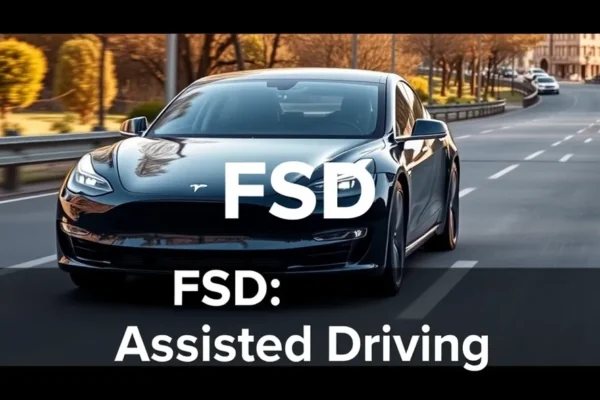
Tesla’s Name Change: What “Assisted Driving” Means for You in Europe
You might have heard that Tesla is changing the name of its advanced driver-assistance system from “Full Self-Driving” (FSD) to “Assisted Driving” in Europe. This isn’t just a marketing tweak; it’s a significant shift driven by regulators and has real implications for how we understand and use these complex car features. For everyday drivers, this means a clearer picture of what the technology can and cannot do, and crucially, who is ultimately in control behind the wheel.
Tesla’s Assisted Driving Europe initiative, formerly known as Tesla Full Self-Driving, aims to make driving easier and safer. It’s designed to help with tasks like steering, braking, and accelerating, especially on highways. But the big question is: does it actually drive itself? In Europe, the answer is now officially and emphatically no, at least in name. This change is important because it directly impacts driver perception and expectation, moving away from the idea of full autonomy towards advanced driver assistance.
Why should you care about this name change now? Because as more Teslas hit the road with these systems, understanding their capabilities and limitations is vital for safety. The shift in naming signals a global trend toward stricter oversight of AI driving technology, ensuring that drivers remain engaged and aware of their responsibilities. It’s about managing expectations and ensuring that cutting-edge automotive tech doesn’t outpace our understanding of it.
Putting Assisted Driving to the Test in Your Daily Drive
So, what does “Assisted Driving” actually feel like on the road? Imagine you’re on a long, monotonous highway commute. With Tesla FSD (now Assisted Driving in Europe), the car can handle the steering and keep a safe distance from the car in front. It works like a very attentive co-pilot, smoothly accelerating and braking to match traffic flow. You still need to keep your hands on the wheel and your eyes on the road, of course. Think of it as having a super-helpful cruise control that also steers.
Here are a couple of real-world scenarios where this system shines:
- Long Road Trips: If you frequently travel between cities or on extended journeys, Assisted Driving Europe can significantly reduce driver fatigue. It takes over the constant micro-adjustments needed for highway driving, allowing you to focus more on navigating and enjoying the scenery, while still being ready to intervene instantly.
- Navigating Busy Highways: On a packed highway during rush hour, the system can manage lane changes (when prompted by the driver) and maintain a consistent speed. This can feel like a weight lifted off your shoulders, as the car handles the stop-and-go traffic, making your commute less stressful.
It’s crucial to remember that this is driver assistance, not autonomous driving. You are always the pilot, and the system is there to support you, not replace you.
Who is Tesla Assisted Driving For?
Best for: Tesla owners in Europe who frequently drive on highways and are looking for features that can reduce fatigue and enhance comfort during long journeys. Drivers who understand and accept that they are still fully responsible for operating the vehicle and are willing to actively supervise the system.
Good for: Tech-savvy drivers who appreciate advanced ADAS (Advanced Driver-Assistance Systems) and want to experience the latest in automotive technology. Those who are comfortable with a learning curve and understand that the capabilities are still evolving and subject to driver oversight.
Skip if: You’re expecting a car that drives itself completely, allowing you to sleep or be distracted. If you primarily drive in complex urban environments with lots of unpredictable traffic, or if you’re uncomfortable with the idea of actively monitoring and supervising a sophisticated driving system, this might not be for you. Also, if the FSD Europe cost is a significant barrier without clear perceived daily benefits for your specific driving habits, it’s worth reconsidering.
How Does Tesla Assisted Driving Compare?
When we talk about Tesla FSD, it’s important to see it within the broader landscape of driver assistance features offered by other car manufacturers. Most modern cars come with some form of adaptive cruise control and lane-keeping assist, which are standard ADAS. Tesla’s system, even under the new “Assisted Driving” banner, aims to go further, offering more sophisticated lane changes and navigation on limited-access roads. However, companies like Mercedes-Benz, BMW, and Volvo also offer advanced driver-assistance systems that are nearing the capabilities of what Tesla offers, and some have even received regulatory approval for conditional Level 3 autonomous driving in specific regions.
The key difference, particularly with the European renaming, is Tesla’s explicit move away from implying full autonomy. While competitors might use terms like “Autopilot” or “Super Cruise,” Tesla’s previous “Full Self-Driving” nomenclature was often seen as more ambitious. In terms of practical features, Tesla’s system is known for its strong integration with its navigation system, aiming to handle complex highway interchanges automatically. However, critics often point out that the performance can be less consistent in adverse weather or complex traffic situations compared to some other advanced systems. Price-wise, Tesla’s FSD Europe package is a significant upfront investment, often costing several thousand dollars or euros, whereas some competitors offer advanced features as part of higher trim levels or optional packages.
Getting Started with Assisted Driving
Setting up Tesla’s Assisted Driving is generally straightforward for Tesla owners. The software is integrated into the car’s existing system. Once you’ve purchased the feature, it’s usually activated via the car’s touchscreen. There’s no physical installation required beyond ensuring your car’s software is up to date. The learning curve comes less from the setup and more from understanding the system’s nuances.
Tesla provides tutorials and documentation within the car’s interface, and there are many user videos online. The core functions, like engaging the system or disengaging it, are typically controlled by simple stalks or steering wheel buttons. However, mastering how to use it effectively, understanding when it’s most useful, and knowing its limitations requires practice and attentive observation. It’s intuitive in its basic operation but requires a period of getting acquainted with its capabilities and potential quirks, especially in different driving conditions.
What’s Great About Assisted Driving in Europe?
- Reduced Driver Fatigue: As noted, on long highway drives, the system can significantly lessen the mental load of constant steering and speed adjustments. This means you arrive at your destination feeling less tired.
- Smoother Highway Driving: The system’s ability to smoothly manage acceleration and deceleration in traffic flow makes highway travel feel more relaxed and less jerky than manual driving.
- Potential for Increased Safety: When used correctly and with constant driver supervision, advanced driver assistance systems can help prevent accidents by reacting faster than a human in certain situations, such as maintaining distance from the car ahead.
- Cutting-Edge Technology Experience: For enthusiasts, owning a Tesla with these features means experiencing some of the most advanced automotive tech available, offering a glimpse into the future of driving.
User feedback on platforms like Reddit and various automotive forums often highlights the convenience factor on long highway stretches. Many users report a noticeable difference in their energy levels after trips where the system was actively used.
The Downsides and What to Watch Out For
- Still Requires Full Driver Attention: The most significant limitation, reinforced by the name change, is that this is not autonomous driving. You must always be attentive and ready to take over immediately. Failure to do so can be dangerous.
- Performance Variability: While generally good, the system’s performance can be inconsistent. It may struggle in heavy rain, snow, or fog, or in areas with unclear lane markings or complex intersections.
- Costly Investment: The Tesla Full Self-Driving package, even rebranded, represents a substantial upfront cost that may not provide proportionate daily benefits for all drivers, particularly those who don’t do a lot of highway driving.
- Misinterpretation Risk: Despite the name change, there’s still a risk that some drivers may overestimate the system’s capabilities, leading to complacency and potentially dangerous situations.
User reviews frequently mention instances where the system disengages unexpectedly or makes jerky movements, requiring immediate driver intervention. This underscores the need for constant vigilance.
Value for Money: Is Assisted Driving Worth It?
The price for Tesla’s advanced driver assistance package (formerly FSD) in Europe is a significant financial commitment, often running into thousands of euros as an add-on to the vehicle purchase. As of late 2023, this could range from €6,000 to over €10,000 depending on region and specific package options. This makes it one of the more expensive ADAS options on the market.
Is it worth the premium? For drivers who spend a large percentage of their time on highways and value reduced fatigue and a smoother driving experience, the long-term benefits might justify the cost. However, for those who primarily navigate city streets or rarely undertake long journeys, the investment may be harder to recoup in terms of daily utility. Cheaper alternatives exist in the form of standard adaptive cruise control and lane-keeping assist found in many other vehicles, which offer basic assistance at a much lower cost or as part of a standard vehicle package.
The long-term value also depends on Tesla’s continued software development and the eventual realization of its fully autonomous driving ambitions, which remain uncertain and subject to regulatory approval. For now, it’s an advanced assistance feature, and its value should be assessed based on current capabilities, not future promises.
The Final Word: Who Should Buy This Now?
Tesla’s move to rename Full Self-Driving to Assisted Driving in Europe is a sensible step that brings the marketing language more in line with the technology’s current capabilities and regulatory realities. For drivers in Europe, this means a clearer understanding that the system is a sophisticated helper, not a replacement for the driver.
You should consider buying Tesla Assisted Driving if: You own a Tesla, frequently drive long distances on highways, and are willing to pay a premium for advanced driver assistance that can reduce fatigue. You understand and accept the responsibility of actively supervising the system at all times.
You should probably wait or look elsewhere if: Your driving is mostly in urban areas, you’re on a tight budget, or you’re seeking a fully autonomous driving experience. If you’re uncomfortable with the idea of constantly monitoring a complex system, or if the current feature set doesn’t align with your daily driving needs, it’s best to skip this for now.
Ultimately, Tesla Assisted Driving Europe offers a compelling, albeit expensive, glimpse into advanced driver assistance. It works best as a highway companion, making long drives more manageable, but it’s crucial to approach it with realistic expectations and a constant focus on the road.
Got Questions About Tesla Assisted Driving?
Is “Assisted Driving” the same as “Full Self-Driving”?
No, the name change from “Full Self-Driving” to “Assisted Driving” in Europe is significant. It emphasizes that the system is designed to assist the driver, not replace them, and requires constant driver supervision. It’s a step towards clearer communication about driver assistance capabilities.
Do I still need to keep my hands on the steering wheel?
Yes, absolutely. Even with Assisted Driving Europe, Tesla’s system is classified as Level 2 ADAS. You are expected to keep your hands on the wheel and your eyes on the road at all times, ready to take over control instantly.
How much does Tesla Assisted Driving cost in Europe?
The price for the package varies by country in Europe but is generally a significant upfront cost, often several thousand euros. It’s recommended to check Tesla’s official website for the most current pricing in your specific region.
What’s the difference between Tesla’s system and other cars’ advanced driver assistance?
Tesla’s system, even as Assisted Driving, is known for its integration with navigation and its ambition to handle more complex maneuvers. However, other manufacturers are also developing highly advanced ADAS features, some of which have received regulatory approval for conditional hands-off driving in specific scenarios. Tesla’s naming shift reflects a more cautious approach to public messaging in Europe.
Can I use Assisted Driving in the city?
While the system has some city-driving capabilities, it is primarily designed for and most effective on highways and limited-access roads. Navigating complex city traffic with unpredictable elements is still best handled by the human driver.
What happens if I don’t pay attention while Assisted Driving is on?
Tesla’s system is designed to detect if the driver is not paying attention and will issue warnings. If the driver continues to ignore these warnings, the system will disengage. Persistent inattention can lead to the system being temporarily disabled or, in more serious cases, could have safety implications.
Product prices and availability vary by region. Verify current pricing before purchase.











