

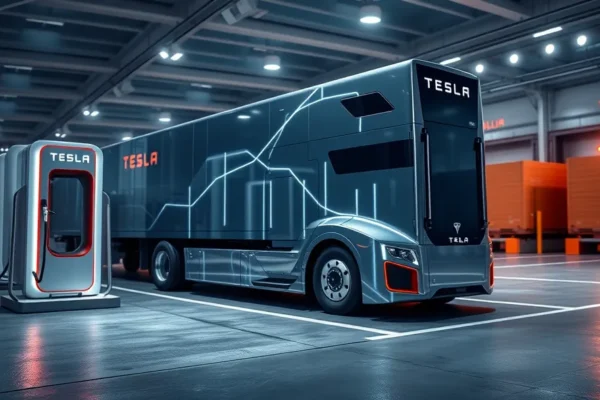
Tesla Semi Deliveries Officially Begin, Ushering in a New Era for EV Logistics
After years of anticipation and development, Tesla has officially begun deliveries of its much-discussed Tesla Semi all-electric semi trucks. The initial handovers, marked by an event at the Tesla Nevada plant, saw the first vehicles delivered to global food and beverage giant PepsiCo. This milestone signifies a critical step forward for Tesla’s ambitious plans in the commercial electric vehicles sector and holds significant implications for the future of sustainable transport within the logistics industry.
Why Now? Tesla’s Strategic Push into Heavy-Duty Electric Transport
The commencement of Tesla Semi deliveries addresses a dual strategic imperative for the company. Firstly, it moves Tesla into a new, high-value segment of the automotive market, aiming to replicate its success in passenger EVs with heavy-duty trucks. Secondly, it aligns with the growing global demand for zero-emission trucking solutions, driven by environmental regulations and corporate sustainability goals. PepsiCo, a major player in supply chain logistics, has been a vocal proponent of sustainable transport and is integrating these electric semi trucks into its fleet, a move announced and tracked through their ongoing corporate initiatives and public statements on sustainability targets. This timing is influenced by increasing regulatory pressure on emissions from diesel-powered trucks and a widening gap in available charging infrastructure for heavy-duty electric vehicles, which Tesla aims to fill with its expanding Supercharger network.
The Competitive Landscape of Electric Semi Trucks
Tesla Semi enters a competitive field that is rapidly evolving. While Tesla was an early mover in publicizing its intentions, established commercial vehicle manufacturers like Freightliner (Daimler Truck), Volvo Trucks, and PACCAR (Kenworth, Peterbilt) are also investing heavily in their own electric semi truck offerings. These legacy players benefit from extensive dealer networks, established service infrastructure, and deep relationships with fleet operators. Tesla’s advantage lies in its brand recognition, advanced battery technology, and its proprietary charging solutions. The initial deliveries to a high-profile customer like PepsiCo offer Tesla significant validation and a crucial reference case. However, competitors are not standing still; Freightliner has already begun deliveries of its eCascadia model, and other manufacturers are expected to ramp up production of their electric heavy-duty trucks, creating a multi-faceted competitive dynamic.
Reshaping the Future of EV Logistics
The widespread adoption of electric semi trucks, spearheaded by developments like the Tesla Semi deliveries, represents a significant shift in EV logistics. This transition from diesel to electric power promises substantial reductions in greenhouse gas emissions and air pollution along transportation corridors. For the logistics industry, this means potential operational cost savings through lower fuel and maintenance expenses, although upfront purchase prices and charging infrastructure investment remain key considerations. The success of Tesla Semi and similar vehicles could accelerate the development of specialized charging depots and grid upgrades necessary to support a fully electric heavy-duty trucking sector. This move signals a broader trend towards electrification across all vehicle classes, pushing the entire transportation ecosystem towards more sustainable practices.
Financial and Operational Ramifications
Financially, the Tesla Semi represents a substantial new revenue stream for Tesla, albeit one with potentially high initial manufacturing costs. While specific financial projections for the Semi program have not been detailed in recent earnings reports, the commercial vehicle market is vast. Successful production and sales could significantly contribute to Tesla’s top-line growth. Operationally, the Tesla Nevada plant, where production is centered, is undergoing expansion to accommodate this new line of business. The logistics of producing and servicing these large vehicles will require significant operational scaling. The long-term financial impact hinges on achieving economies of scale in battery production and manufacturing efficiency, which are critical for making electric semi trucks cost-competitive with diesel alternatives over their lifecycle.
Execution Risks and Navigating Challenges
Despite the celebratory start, the road ahead for Tesla Semi is not without its hurdles. Execution risk remains a significant factor. The history of Tesla’s product launches, while often successful, has been punctuated by production ramp-up delays and challenges in scaling manufacturing. Key challenges include ensuring consistent battery supply, optimizing charging speeds for long-haul trucking, and building out a robust service and maintenance network capable of supporting commercial fleets. Regulatory hurdles, particularly concerning driver weight restrictions with batteries, and the availability of sufficient and reliable charging infrastructure across major trucking routes, also present considerable challenges. Furthermore, the upfront cost of electric semi trucks, even with potential long-term savings, can be a barrier for many smaller trucking companies.
Impact on Stakeholders: From Drivers to Investors
For employees at the Tesla Nevada plant, the Semi program signifies job creation and the opportunity to work on cutting-edge technology. For customers like PepsiCo, it represents a tangible step towards achieving their sustainability commitments and potentially improving operational efficiency. Truck drivers may experience a different driving experience with quieter operation and new control systems. Investors will be closely watching production volumes and any accompanying financial performance of the Semi division. The success of the Tesla Semi could bolster investor confidence in Tesla’s diversification beyond passenger cars, while any significant production setbacks could temper enthusiasm. The broader trucking industry, including established manufacturers and service providers, will need to adapt to this evolving technological landscape.
Looking Ahead: Milestones and What’s Next
The next critical milestones for the Tesla Semi will be the scaling of production beyond initial limited deliveries and securing more large fleet orders. Investors and industry observers will be monitoring quarterly production numbers from Tesla and announcements of new customers beyond PepsiCo. Key indicators of success will include Tesla’s ability to meet projected delivery targets, achieve competitive total cost of ownership for fleet operators, and the expansion of its charging infrastructure to support commercial trucking routes. A key development to watch is the progress of other manufacturers in bringing their own electric semi trucks to market in significant volumes, as this will determine the pace of broader industry adoption.
Key Questions and Answers
What is the significance of the Tesla Semi deliveries beginning?
The start of Tesla Semi deliveries marks Tesla’s official entry into the heavy-duty electric truck market, a crucial segment for achieving widespread zero-emission trucking and advancing EV logistics.
Why is PepsiCo an important initial customer for the Tesla Semi?
PepsiCo’s adoption of the Tesla Semi demonstrates real-world application of electric semi trucks for a major logistics operator, validating the technology and its potential for sustainable transport in large-scale operations.
How does the Tesla Semi compare to electric semi trucks from competitors like Freightliner?
While Tesla Semi is a highly anticipated entrant, competitors like Freightliner (Daimler Truck) have already begun deliveries of their electric semi trucks, creating a competitive race to capture market share in the burgeoning commercial electric vehicles sector.
What are the biggest challenges facing the Tesla Semi program?
Key challenges for the Tesla Semi include scaling manufacturing efficiently, ensuring adequate charging infrastructure for long-haul routes, and achieving a competitive total cost of ownership compared to traditional diesel trucks.
How long until we see widespread adoption of electric semi trucks like the Tesla Semi?
Widespread adoption will depend on several factors, including continued improvements in battery technology, infrastructure development, regulatory support, and the ability of manufacturers to produce electric semi trucks at scale and competitive price points.
Will the Tesla Semi truly revolutionize EV logistics?
The Tesla Semi has the potential to be a significant catalyst for the adoption of electric semi trucks and revolutionize EV logistics by proving the viability and benefits of zero-emission trucking on a large scale.
Please note that all business outcomes are subject to execution risk and market dynamics.











