

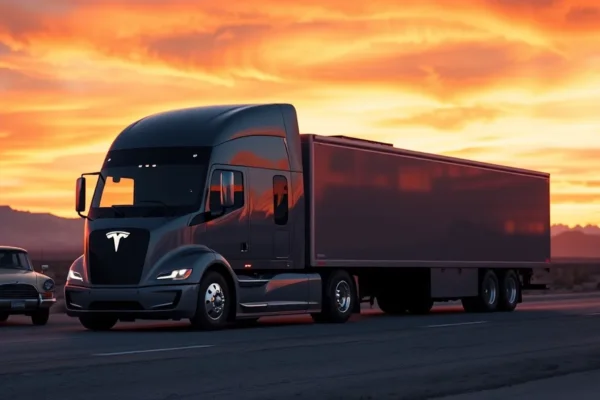
The hum of innovation is getting louder, and for the world of commercial trucking, that hum might just be the sound of the future arriving. After years of anticipation, the electric Tesla Semi truck is finally rolling out to customers, marking a significant moment for both fleet managers and the broader push towards clean transportation. But what does this mean for the everyday person and the companies that keep our goods moving?
The Electric Truck Revolution is Here
Simply put, the Tesla Semi is an electric semi-trailer truck designed to replace traditional diesel big rigs. Think of it as a giant, all-electric vehicle built for the demanding job of hauling goods across long distances. Its main goal is to tackle the huge environmental impact of diesel trucks and offer a cleaner, potentially more cost-effective way to move freight. This isn’t just a concept anymore; it’s a real vehicle being put to work, and its arrival is a big deal for anyone involved in commercial trucking, from the companies that own the trucks to the drivers behind the wheel.
What Does This Electric Giant Actually Do?
For fleet managers and business owners, the Tesla Semi promises to change how they operate. Imagine trucks that don’t need to stop at a diesel pump for minutes at a time, but instead can recharge their batteries while drivers take breaks or during scheduled downtime. This could lead to more efficient routes and less time wasted on refueling. For drivers, the experience might be quieter and smoother than a rumbling diesel engine. It’s like upgrading from a noisy old car to a sleek, quiet electric vehicle, but on a massive scale. 🚚💨
Here are a couple of scenarios to paint a clearer picture:
- Scenario 1: A Food Distributor’s Fleet. A company that delivers fresh produce across state lines could use the Tesla Semi to reduce its carbon footprint, potentially meeting new environmental regulations and appealing to customers who value sustainable logistics. They could plan routes that incorporate Tesla’s Supercharger network for electric trucks, ensuring their deliveries stay on schedule.
- Scenario 2: A Long-Haul Logistics Company. For a business that relies on trucking for its supply chain, the Semi could offer lower operating costs over time due to cheaper electricity versus diesel and reduced maintenance. This means their products could potentially arrive at stores and warehouses more affordably.
Who Should Be Excited About the Tesla Semi?
Best for: Large fleet operators and businesses heavily invested in commercial trucking who are looking to transition to zero-emission trucks and reduce their environmental impact. Companies that can leverage charging infrastructure and have predictable, long-haul routes will benefit the most.
Good for: Businesses that are early adopters of electric vehicles and want to be at the forefront of sustainable logistics. Also, companies that are already exploring or mandated to move towards cleaner transportation solutions.
Skip if: You’re a small independent trucker with very irregular routes or limited access to reliable charging, or if your primary concern is the absolute lowest upfront purchase price. The initial investment and infrastructure needs might be too much for some.
The Electric Truck Landscape: How Does it Stack Up?
The Tesla Semi isn’t the only electric truck on the horizon. Competitors like Volvo Trucks (with their VNR Electric), Nikola Motors, and Freightliner are also developing and rolling out their own electric semi-trailer trucks. Tesla’s advantage often lies in its brand recognition and established charging network, though competitors are rapidly building their own solutions. In terms of approach, Tesla emphasizes cutting-edge design and integrated technology, aiming for a seamless driver experience. Other manufacturers might focus more on incremental upgrades and integrating electric options into their existing, proven diesel truck platforms. The price point for these electric trucks is generally higher than comparable diesel models, but the long-term savings on fuel and maintenance are the key value proposition. For now, the Tesla Semi is a prominent contender in this burgeoning market.
Getting Started with an Electric Truck
For fleet managers and mechanics, adopting the Tesla Semi involves a learning curve, but Tesla aims to make it as streamlined as possible. The setup isn’t like plugging in a phone; it involves integrating these massive vehicles into existing logistics and maintenance operations. Charging infrastructure is a major consideration. This means assessing where and how trucks will charge, which could involve installing high-speed chargers at depots or utilizing Tesla’s growing network of electric truck Superchargers. While the driving experience itself is designed to be intuitive – similar to driving an electric car, just much larger – the operational aspects, like managing charging schedules and understanding range on long hauls, require careful planning and training. There’s no complex software to install like with a new PC, but rather a shift in operational strategy.
The Real-World Advantages of the Tesla Semi
One of the biggest wins for the Tesla Semi is its potential for reduced operating costs. Electricity is generally cheaper per mile than diesel, and electric powertrains have fewer moving parts, meaning less frequent and less expensive maintenance. Owners report significant savings on fuel compared to their diesel counterparts. 💰 Also, the quiet operation can lead to a better driving environment for truckers and less noise pollution in communities. Tesla’s focus on a sleek, modern cab and advanced driver-assist features can also improve driver comfort and safety on long journeys. For businesses, the ability to operate zero-emission trucks can enhance their brand image and meet sustainability goals, as seen with early adopters like PepsiCo.
Drawbacks and Limitations to Consider
Despite the excitement, there are real limitations. The upfront cost of the Tesla Semi is substantial, making it a significant investment. 💸 Range anxiety, while decreasing with battery tech, is still a factor for very long or unpredictable routes; Tesla claims up to 500 miles on a full charge for certain configurations, but real-world performance can vary significantly based on load, terrain, and weather. Charging times, while faster than early EVs, still take longer than filling up a diesel tank, requiring careful route and schedule planning. Availability is also a factor; the production ramp-up means deliveries are still limited compared to the vast demand in the commercial trucking industry. Not all areas have the necessary high-speed charging infrastructure readily available yet.
Price, Value, and Who It’s For
Pricing for the Tesla Semi has been reported to start around $150,000 for the 300-mile range version and upwards of $180,000 for the 500-mile range version, though official pricing can vary and is subject to change. This is a significant premium over comparable diesel trucks, which can cost around $100,000 to $150,000. However, the value proposition comes from long-term savings on fuel (electricity costs are typically lower than diesel) and maintenance. For a large fleet operator running thousands of miles annually, these savings can potentially offset the higher initial purchase price over the lifespan of the vehicle. It’s an investment in future-proofing operations and meeting environmental targets. For smaller operators, the upfront cost might be prohibitive, and budget alternatives would involve looking at more fuel-efficient diesel trucks or waiting for more affordable electric options to emerge.
The Verdict: Should You Buy the Tesla Semi?
The Tesla Semi is a game-changer for clean transportation and commercial trucking, but it’s not for everyone. If you are a large fleet manager focused on sustainability, reducing operating costs over the long term, and have the infrastructure to support it, the Tesla Semi is absolutely worth considering. Its arrival signals a major step towards a future of zero-emission trucks. However, if you’re an independent owner-operator on a tight budget, or if your routes frequently exceed the projected range and charging capabilities, it might be wise to wait or explore other electric vehicle options as they become more widely available and affordable. This electric truck is best suited for those ready to invest in the future of logistics and embrace sustainable operations.
Common Questions About the Tesla Semi
Is the Tesla Semi truly electric?
Yes, the Tesla Semi is a fully electric vehicle, powered by batteries, unlike traditional diesel trucks. This means zero tailpipe emissions.
How far can the Tesla Semi travel on a single charge?
Tesla offers configurations claiming up to 300 miles or 500 miles of range on a full charge, depending on the model and battery size. Actual range can vary with load and driving conditions.
What is the price of the Tesla Semi?
Pricing is reported to start around $150,000 for the shorter-range model and around $180,000 for the longer-range model, though official figures and configurations can vary.
Can I charge the Tesla Semi anywhere?
You can charge it at home or at your depot with the appropriate charging equipment, or utilize Tesla’s growing network of Superchargers designed for electric trucks. Access to fast charging is key.
Is the Tesla Semi available to everyone?
Currently, the Tesla Semi is being delivered to select customers and companies. Availability is expanding, but it’s not yet a mass-market option for all buyers.
What are the main alternatives to the Tesla Semi?
Key competitors and alternatives in the electric truck space include offerings from Volvo Trucks (VNR Electric), Nikola Motors, and Freightliner. These provide different approaches to commercial electric transport.
Product prices and availability vary by region. Verify current pricing before purchase.











