

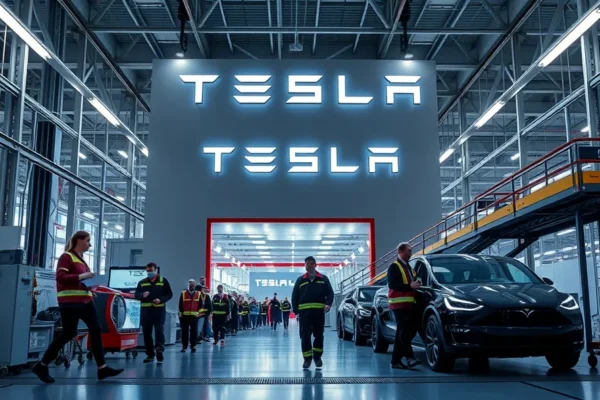
Tesla’s recent decision to increase wages at its German factory is a significant development that warrants close examination by global investors. This move, impacting its Brandenburg plant, has implications for the company’s labor relations, production efficiency, and its overall position within the highly competitive electric vehicle (EV) market.
Tesla’s Wage Adjustment in Germany
Tesla (TSLA) announced a notable increase in wages for employees at its Gigafactory in Brandenburg, Germany. While specific percentage increases and the total financial impact have not been fully detailed by the company, reports indicate that the adjustments aim to bring compensation closer to industry benchmarks. This development comes as Tesla navigates a complex labor landscape and strives to meet ambitious production targets.
The Catalyst for the Wage Increase
The primary catalyst for this wage adjustment appears to be a combination of factors. Firstly, increasing labor costs and the general tightness of the skilled labor market in Germany, particularly within the automotive sector, likely played a significant role. Companies operating in high-cost regions often face pressure to enhance employee compensation to attract and retain talent. Reports from German media outlets, such as Handelsblatt, highlighted employee dissatisfaction with compensation levels relative to other automotive manufacturers in the region. Secondly, Tesla’s ongoing efforts to ramp up production at the Gigafactory, which aims to produce hundreds of thousands of vehicles annually, necessitate a stable and motivated workforce. Ensuring competitive compensation is a key strategy to mitigate potential labor disputes and maintain operational continuity.
Financial and Operational Context
Tesla’s Gigafactory Berlin, located in Brandenburg, represents a substantial investment in the European market. The facility is crucial for Tesla’s global production strategy, aiming to reduce logistical costs and better serve European customers. While Tesla has consistently demonstrated impressive revenue growth, with its Q4 2023 earnings report showing total revenue of $25.17 billion, increased operational expenses are a constant consideration. Labor costs are a significant component of manufacturing expenses. According to Tesla’s 2022 Impact Report, employee compensation and benefits globally represent a substantial investment. While specific figures for the German plant are proprietary, a general wage increase is expected to impact operational expenditures. This move also comes at a time when the automotive industry is facing intense competition, with traditional automakers and new EV players vying for market share. Companies like Volkswagen, BMW, and Mercedes-Benz, all with significant manufacturing presence in Germany, already offer competitive wage structures and benefits, putting pressure on Tesla to align its compensation packages.
Analysis of the Wage Adjustment’s Impact
This Tesla wage increase at its German factory can be viewed from several analytical perspectives. Fundamentally, it signals Tesla’s commitment to stabilizing its workforce and potentially improving employee morale and productivity at a critical production hub. A more motivated workforce can lead to fewer errors, increased efficiency, and higher quality output, all of which are vital for meeting production goals. From a labor relations standpoint, this move could de-escalate potential tensions with employee representatives and unions, fostering a more collaborative environment. This is particularly important given Germany’s robust labor laws and strong union presence. On the technical side, while a direct impact on Tesla’s stock price (TSLA) may not be immediately evident from this single event, it contributes to the broader narrative of Tesla’s operational maturity and its ability to manage complex international manufacturing. Investors will be watching key metrics such as production output from the Brandenburg plant, delivery figures, and any reported changes in employee turnover rates. The company’s market capitalization, currently standing at over $550 billion as of early 2024, reflects its significant valuation, and sustained operational success is key to maintaining investor confidence.
Related Opportunities and Competitive Landscape
The Tesla wage increase in Germany has ripple effects across the broader automotive industry and the labor market. Other EV manufacturers operating in Germany, or those planning to establish a presence, will likely monitor this development closely. Companies that rely on a highly skilled workforce, such as those in the advanced manufacturing and technology sectors, may also see shifts in compensation expectations. Competitors like Volkswagen (VOW.DE) and Mercedes-Benz (MBG.DE), with established manufacturing bases and long-standing relationships with German labor unions, may find their existing compensation structures reaffirmed. Conversely, newer entrants or companies looking to expand in the region might need to reassess their own labor cost projections. The overall impact on the automotive industry’s labor market could be a slight upward pressure on wages, particularly for skilled roles in EV production, as companies compete for talent.
Future Outlook and Watchpoints
Looking ahead, several factors will be crucial for investors to monitor regarding Tesla’s German operations and its broader labor strategy. Firstly, the company’s ability to sustain and potentially increase production volumes from the Brandenburg plant will be a key indicator of success. Any reported improvements in efficiency or quality directly attributable to the wage adjustments would be positive. Secondly, investors will be keen to observe Tesla’s ongoing dialogue with its workforce and any formal recognitions of employee representation in Germany. The relationship between Elon Musk’s leadership and the factory’s workforce will remain a point of interest. Upcoming quarterly earnings reports will provide a more comprehensive view of Tesla’s financial performance, including operational costs and profitability, which will help assess the long-term financial impact of this wage increase. The evolving regulatory landscape for EV production in Europe and global demand for electric vehicles will also continue to shape Tesla’s strategic decisions.
Risk Disclaimer: Past performance does not guarantee future results. Markets are volatile and can be unpredictable. Investors should conduct their own research and consider consulting with a qualified financial advisor before making any investment decisions.
Frequently Asked Questions
What is the primary reason for Tesla’s wage increase at its German factory?
The primary reasons cited for Tesla’s wage increase at its German factory include the need to remain competitive in the German labor market, attract and retain skilled workers, and ensure stable operations to meet ambitious production goals at the Gigafactory. Reports indicate a desire to align compensation with industry standards in the region.
How does this Tesla wage increase compare to competitors in Germany?
While specific figures are not always publicly disclosed, this move suggests Tesla aims to bring its compensation closer to that offered by established German automakers like Volkswagen and Mercedes-Benz. These competitors have historically provided competitive wage packages and benefits to their workforce.
What is the potential impact of this Tesla wage increase on employee compensation?
The wage increase is expected to lead to higher take-home pay for employees at the Brandenburg plant. It aims to improve employee satisfaction and reduce potential labor disputes by ensuring that compensation is more in line with the competitive German labor market for automotive manufacturing jobs.
Will this Tesla wage increase affect the company’s overall profitability?
An increase in wages will likely lead to higher operating costs for Tesla’s German factory. The extent to which this impacts overall profitability will depend on Tesla’s ability to offset these costs through increased production efficiency, higher vehicle sales volumes, and potentially by passing some costs to consumers through pricing strategies, though this is not guaranteed.
How does the Tesla Gigafactory in Brandenburg contribute to the company’s strategy?
The Tesla Gigafactory in Brandenburg is a crucial component of Tesla’s global manufacturing network, designed to serve the European market more efficiently. It plays a vital role in increasing Tesla’s electric vehicle production capacity and reducing logistical challenges for deliveries within Europe.
What are the risks associated with Tesla’s labor relations in Germany?
Risks associated with Tesla’s labor relations in Germany include potential for further unionization efforts, employee dissatisfaction if wage increases are perceived as insufficient, and potential disruptions to production if labor disputes arise. Germany has strong labor laws and a history of active employee representation.











