

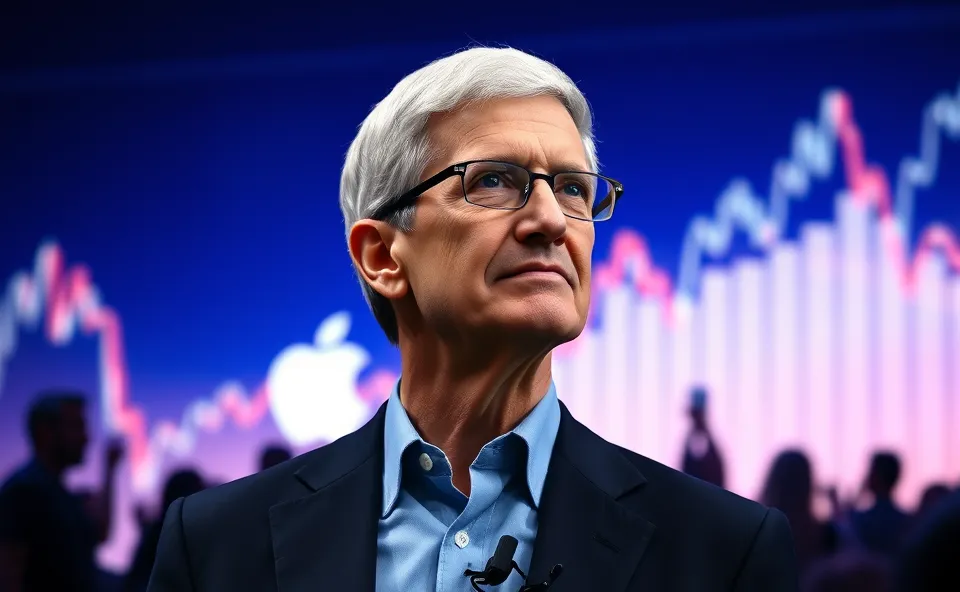
The Man Who Scaled a Giant
When we talk about the most influential people in tech, the conversation usually starts with the founders. But for the last 15 years, the story of Apple has been written by Tim Cook. Taking over as Apple CEO is perhaps one of the hardest jobs in business history. Imagine stepping into a role where your predecessor is viewed as a once in a generation genius. Most people would have played it safe. Instead, Tim Cook did something different. He took a company that was already successful and turned it into a global financial powerhouse.
Under his leadership, Apple stopped being just a computer and phone company. It became a part of the very fabric of our daily lives. He didn’t just maintain the momentum; he expanded the entire definition of what Apple could be. From the way we track our health on our wrists to the way we listen to music through wireless pods, the fingerprints of his leadership are everywhere. He shifted the focus from just making one hit product to building a massive ecosystem that keeps users locked in with seamless experiences.
Why Everyone Is Talking About His Legacy
You might wonder why people are analyzing his tenure so closely right now. It is because we are at a major crossroads in technology. For years, the smartphone market felt like it had peaked. The iPhone was great, but the big leaps in innovation seemed to slow down. Now, we are entering the era of AI and spatial computing. With the launch of the Vision Pro and the integration of smarter software, people are asking if the company can still innovate the way it did in the early 2000s.
There is also a lot of chatter about the global economy. Apple is now a trillion-dollar company, and its movements affect everything from stock markets to global supply chains. When the Apple CEO makes a move in China or changes a privacy policy in iOS, the whole world notices. We are seeing a shift in how the company handles its hardware and software, making it the perfect time to look back at how Tim Cook got us here.
Stepping Out From a Legend’s Shadow
To understand where Apple is today, we have to look at Apple history. For years, Steve Jobs was the face of the company. He was the visionary who dreamt up the iMac, the iPod, and the iPhone. He focused on the magic of the product. Tim Cook, on the other hand, was the master of the machine. Before becoming CEO, Cook was the operations wizard. He fixed the supply chain, reduced inventory, and made sure that millions of devices could be built and shipped across the world without a hitch.
When Tim Cook took the helm, many critics doubted him. They wondered if a logistics expert could lead a creative company. They feared the magic would disappear without Jobs. However, Cook understood something vital. He knew that for a company to grow from a niche luxury brand into a global utility, it needed more than just vision. It needed operational excellence. He didn’t try to be the next Steve Jobs. Instead, he became the leader Apple needed to scale. He kept the core values of design and simplicity but added a level of discipline and efficiency that the company had never seen before.
How He Changed the Tech Game
The impact of Tim Cook’s leadership is best seen through the numbers and the new products that have defined the last decade. He didn’t just iterate on the iPhone; he built entirely new categories of devices that people didn’t even know they needed.
Expanding the Product Line
While the iPhone remained the crown jewel, Cook expanded the family. The Apple Watch and AirPods are perfect examples. These weren’t just accessories. They became industry leaders in their own right. The Apple Watch turned the company into a health and fitness leader, while AirPods changed how we interact with audio. These products created a “halo effect,” making the iPhone even more valuable because it worked so well with everything else.
The Shift to Services
Perhaps the smartest move Tim Cook made was the pivot toward services. He realized that selling a phone is a one time event, but a subscription is a lifelong relationship. By growing the App Store, iCloud, Apple Music, and Apple TV+, he created a steady stream of revenue that doesn’t depend on a new hardware launch every September. This shift transformed Apple into a service giant, ensuring that the company remains profitable even when phone sales fluctuate.
The Power of Apple Silicon
One of the biggest technical wins under his tech leadership was the move to their own silicon. By ditching Intel and creating the M-series chips, Apple took full control of its destiny. This move allowed the Mac to have better battery life and incredible speed, proving that Apple could innovate at the chip level just as well as they did at the software level.
The China Expansion
We cannot talk about this era without mentioning the China expansion. Cook leaned heavily into China, both as a manufacturing hub and as a massive consumer market. This strategy allowed Apple to scale production to a level that was previously impossible. It also opened up hundreds of millions of new customers, fueling the company’s rise to becoming a trillion-dollar company.
Where Apple Goes From Here
Looking forward, the challenge for Tim Cook is to define the next big thing. The world is moving toward a future where AI is integrated into everything. Apple is taking a different approach than its competitors. Instead of just building a chatbot, they are focusing on how AI can make the user experience more personal and private within iOS and macOS.
We are also seeing the start of a new chapter with spatial computing. The Vision Pro is a risky, expensive bet, but it shows that the company is still willing to experiment with entirely new ways of interacting with technology. Additionally, Apple is slowly diversifying its supply chain. While China remains important, the company is expanding its footprint in other countries to protect itself from geopolitical tensions.
The next few years will likely be about refinement and integration. We can expect a deeper blend of hardware and intelligence, making our devices feel less like tools and more like intuitive assistants. The goal is no longer just to sell a gadget, but to provide a complete digital lifestyle.
Common Questions About Apple’s Leadership
How does Tim Cook differ from Steve Jobs?
Steve Jobs was the visionary who focused on the “what” and the “why” of a product. Tim Cook is the operational expert who focuses on the “how” and the “how much.” While Jobs created the spark, Cook built the engine that allowed that spark to light up the entire world.
Did Tim Cook introduce any major new products?
Yes. While he refined the iPhone, he oversaw the launch of the Apple Watch, AirPods, and the Apple Silicon chips. He also led the development of the Vision Pro, marking Apple’s entry into spatial computing.
Why is the move to services so important for the Apple CEO?
Moving into services like iCloud and Apple Music creates recurring revenue. It means the company makes money every month from users, rather than waiting for them to buy a new phone every few years. This makes the business much more stable.
What was the goal of the China expansion?
The China expansion served two purposes. First, it provided a massive, skilled workforce for manufacturing. Second, it gave Apple access to a huge new market of consumers, which helped the company reach its trillion-dollar valuation.
How is Apple handling the rise of AI?
Apple is integrating AI into its existing ecosystem through a focus on privacy and user experience. Rather than releasing a standalone AI tool, they are weaving intelligence into iOS to make daily tasks easier and more personal.











