

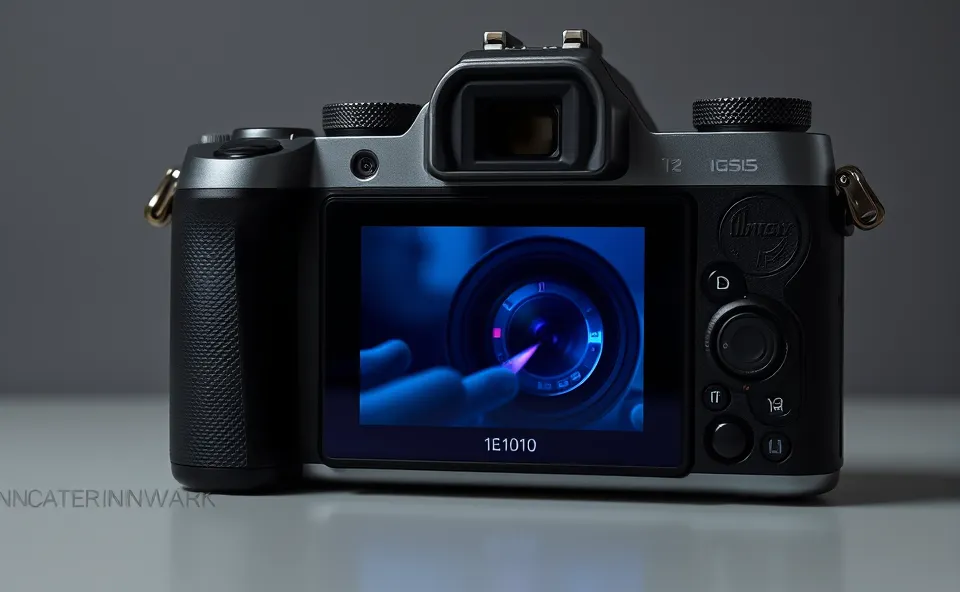
A New Way to See the World Through the Godox C100
Imagine holding a camera and looking through the back of it, but instead of seeing a black piece of glass or a glowing screen, you see the actual world in front of you. Now, imagine that this same piece of glass can suddenly show you your settings, your focus point, and your exposure levels without blocking your view. This is exactly what is happening with the Godox C100.
The Godox C100 is a unique device that introduces a transparent LCD camera experience. For those who are not familiar, most digital cameras today force you to choose between an optical viewfinder, where you look through a mirror and glass, or an electronic viewfinder, which is basically a tiny TV screen. The C100 blends these two worlds. It uses a transparent LCD screen that doubles as an optical viewfinder.
When you look through the back of the camera, you are seeing the physical light from the scene. However, the screen can overlay digital information directly onto that real world view. It is a clever bit of engineering that makes the act of taking a photo feel more tactile and connected. Instead of staring at a digital representation of a scene, you are staring at the scene itself, enhanced by digital tools.
Why Everyone Is Talking About This Right Now
You might wonder why a transparent screen is causing such a stir when we already have high resolution screens on every smartphone. The answer lies in something called the camera renaissance. Over the last few years, there has been a massive shift in how people feel about photography. We are seeing a huge surge in the popularity of film cameras and vintage gear.
People are tired of the sterile feeling of modern digital photography. There is a growing desire to feel the process of capturing an image. The Godox C100 hits this sweet spot perfectly. It offers the convenience of a digital camera but brings back the soul of the point and shoot experience.
The appeal comes from the desire to disconnect from the screen while remaining connected to the technology. When you use a traditional LCD screen, you are looking at a picture of the world. When you use the transparent viewfinder on the C100, you are looking at the world. This subtle difference changes the entire psychological experience of photography. It makes the user feel like an observer rather than just an operator of a machine.
The Road to the Transparent Viewfinder
To understand why the Godox C100 is a big deal, we have to look back at where camera design has been. For decades, the optical viewfinder was the gold standard. It was instant, it required no power, and it felt natural. Then, as digital technology took over, we moved toward electronic viewfinders. While these are powerful, they can feel lagging or artificial.
There were early attempts to bridge this gap. For instance, the Kodak Charmera from years ago played with the idea of simplifying the user experience and focusing on the joy of the shot. However, the technology to make a screen truly transparent while maintaining high visibility was not quite there yet.
Godox is an interesting company to lead this charge. They are world famous for photography lighting. They spent years mastering how light interacts with sensors and surfaces. Moving into the camera body market is a natural step for them. By applying their knowledge of light and optics, they managed to create a screen that does not feel like a barrier. They took the nostalgia of the old point and shoot and upgraded it with a futuristic interface. This is a far cry from the bulky, menu heavy systems found in many high end Canon cameras, focusing instead on intuition and speed.
What This Means for the Future of Photography
The arrival of the Godox C100 is more than just a cool gadget launch. It represents a shift in how companies think about user interfaces. For a long time, the goal of tech was to make screens bigger and brighter. Now, the goal is becoming invisibility.
For the everyday user, this means photography becomes more immersive. You no longer have to constantly glance back and forth between the scene and a screen to check your settings. The information is simply there, floating in your field of vision. This allows for better composition and a faster reaction time when capturing candid moments.
From a business perspective, this opens up a new category of digital cameras. We have professional mirrorless systems and we have smartphones. The C100 creates a middle ground. It is for the enthusiast who wants a dedicated tool that feels like a camera but works like a computer. It challenges the industry to stop relying on the same slab of glass on the back of every device and start experimenting with how we actually interact with light.
This technology also has potential beyond just hobbyist photography. If transparent displays become a standard, we could see them in professional gear where seeing the environment is critical for safety or precision. The Godox C100 is essentially a proof of concept that the world is ready for transparent tech.
Where Do We Go From Here
Looking ahead, it is likely that we will see more brands experimenting with transparent displays. We are moving toward an era where technology disappears into the background. The success of the Godox C100 suggests that people want tools that enhance their reality rather than replace it.
We can expect this transparent LCD camera technology to evolve. Future versions might include augmented reality elements, where the camera can identify objects in the frame or suggest composition changes in real time through the transparent glass. We might see this technology shrink even further, moving into smaller devices or even wearable tech.
The most important takeaway is that the industry is realizing that more pixels are not always the answer. Sometimes, the best way to improve a digital experience is to bring back a physical one. The trend of the camera renaissance is not just about old film. It is about finding a balance between the magic of the physical world and the power of digital processing.
Common Questions About the Godox C100
What exactly is a transparent LCD camera?
A transparent LCD camera is a device that uses a see through screen instead of a traditional opaque display. In the case of the Godox C100, this screen allows you to look through the back of the camera to see your subject while digital information is overlaid on the glass.
How does the transparent viewfinder help with taking photos?
The transparent viewfinder allows you to stay connected to the actual environment. You do not have to look at a digital screen to compose your shot. This makes the process feel more natural and helps you spot details in the real world that a screen might miss.
Is the Godox C100 meant for professionals or beginners?
It is designed to appeal to a wide range of users. While professionals can appreciate the unique workflow, it is especially attractive to those who love the point and shoot style. It is perfect for people who want a digital camera that feels like a classic film camera.
How is this different from the Kodak Charmera or older cameras?
Older cameras like the Kodak Charmera used purely optical systems with no digital overlay. The Godox C100 keeps that optical feeling but adds a digital layer. It gives you the best of both worlds by combining a physical view with modern digital controls.
Does Godox use its experience in photography lighting for this camera?
Yes. Godox has a deep history in managing light and optics. This expertise was essential in creating a transparent LCD screen that is clear enough to see through while still being bright enough to display digital information accurately.











