

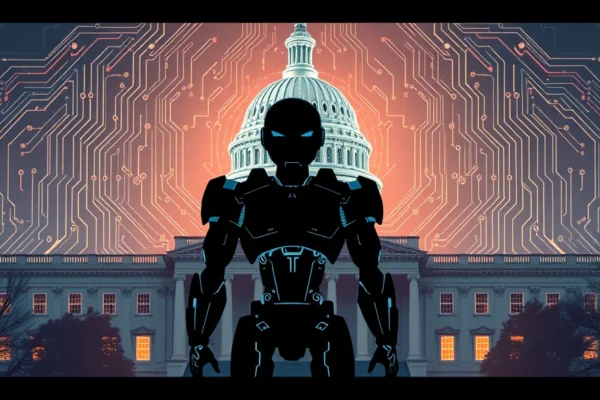
Understanding the AI Regulation Debate
When we talk about “government regulation,” think of it like the rules of the road for a busy city. Without traffic lights, speed limits, and lane markings, driving would be chaotic and dangerous. Similarly, financial regulation sets rules for how money markets, banks, and businesses operate to ensure fairness, prevent fraud, and protect consumers. In the context of emerging technology, like artificial intelligence (AI), regulation involves establishing guidelines and laws to manage its development and use. This is crucial because new technologies can dramatically reshape economies, create new jobs, and unfortunately, also introduce new risks. Understanding how governments plan to oversee something as powerful and rapidly evolving as AI is vital for everyone, as it can influence investment, job markets, and even the cost of goods and services.
How a “Trump AI Force” Might Work
The idea of a “Trump AI Force” and an “AI tsar” suggests a focused, government-led initiative to manage artificial intelligence. Let’s break down what this could mean. An “AI Force” could be a dedicated agency or a significant expansion of an existing one, tasked with researching, developing, and perhaps even deploying AI technologies for national interests. Think of it like a government-backed research lab or a special military unit focused solely on AI. An “AI tsar” would be the high-level official leading this effort, much like a czar historically had immense authority over a specific area. Their job would be to set the direction, coordinate efforts across different government departments, and likely liaise with private industry.
Imagine if the government decided to build a national high-speed rail system. They would appoint a director (an “AI tsar”) and create a specialized agency (the “AI Force”) to oversee planning, construction, and operation. This agency would need to figure out where the tracks go, how fast the trains can safely travel, and ensure the technology is up-to-date and secure. In this scenario, the “AI Force” would be focused on developing and implementing AI strategies, potentially for defense, infrastructure, or economic growth, while the “AI tsar” would be the chief strategist and decision-maker.
Why This Matters for Your Financial Future
The way governments approach AI regulation has direct implications for our personal finances and the broader economy. If the government heavily invests in developing AI, it could spur job growth in related fields like data science and AI development. However, if AI is deployed rapidly to automate tasks, it could also lead to job displacement in other sectors, potentially affecting wage growth and creating economic uncertainty. For example, if AI can perform customer service roles more efficiently, companies might reduce their human staff, impacting job availability and potentially consumer spending power.
Economically, government policies on AI can influence investment. A strong, supportive framework might encourage both domestic and international companies to invest in AI research and development within the US, boosting economic output. Conversely, overly strict or unclear regulation could stifle innovation and drive investment elsewhere. This can also affect the cost of goods and services. AI-powered efficiency could lower production costs, potentially leading to lower prices for consumers. However, if AI development leads to market concentration or new monopolistic practices, consumers might face higher prices in the long run. For investors, understanding these policies is crucial for identifying growth sectors and managing risk.
The Shifting Stance on Government and Technology
Historically, the US has often adopted a relatively hands-off approach to regulating emerging technologies, allowing private industry to lead innovation. This has been the case with the internet and early stages of social media. However, as these technologies matured and their societal impacts became more apparent, calls for government oversight grew louder.
Donald Trump’s previous administration generally favored deregulation across many sectors, including technology. His rhetoric often centered on unleashing American businesses from what he termed burdensome regulations to foster economic growth. For instance, during his presidency, there was a push to reduce regulatory hurdles for businesses in various industries. However, the concept of a “Trump AI Force” and an “AI tsar” represents a significant shift. It indicates a potential move towards more active government intervention and strategic direction in the AI space, suggesting a recognition of AI’s unique potential and risks, necessitating a more centralized and forceful governmental approach. Recent data from organizations like the Congressional Research Service highlights increasing congressional interest in AI policy, reflecting a broader trend towards addressing AI’s implications.
Navigating AI Policy in Your Financial Thinking
When you hear about proposals for a “Trump AI Force” or an “AI tsar,” it’s important to consider how such initiatives might shape the economic landscape. This isn’t just about technology policy; it’s about economic direction. The government’s role in AI can influence job markets, investment opportunities, and the competitive landscape of industries.
A common misconception is that AI is purely a technological issue, separate from economic and financial concerns. In reality, government AI policy directly impacts the economy by influencing which industries grow, how jobs are created or lost, and the overall pace of technological adoption. When considering this, think about the long-term economic strategy. Is the focus on fostering rapid private sector innovation, or on guiding AI development in specific directions for national benefit? What is the approach to “AI monitoring” and “government oversight”? These elements can significantly affect market dynamics and investment attractiveness.
Connecting AI Policy to Broader Economic Ideas
Understanding the debate around AI regulation connects to several core economic concepts. The idea of an “AI Force” and an “AI tsar” touches upon industrial policy – a government’s strategy to encourage the growth or development of particular industries. It also relates to the balance between market efficiency and government intervention, a perennial debate in economics. Furthermore, the development and deployment of AI have profound implications for productivity growth, a key driver of long-term economic prosperity. The ethical considerations surrounding “AI ethics” and “digital policy” also intersect with economic discussions, as unfair or biased AI systems can lead to economic disparities and legal challenges.
Frequently Asked Questions About the Trump AI Force and AI Regulation
Here are some common questions people ask regarding the government’s role in artificial intelligence:
- What is the primary goal of a “Trump AI Force”?
The primary goal would likely be to centralize and accelerate the development and adoption of AI for national strategic advantage, potentially in areas like defense, economic competitiveness, and technological leadership, as envisioned by a future Trump administration.
- How does the proposed “AI tsar” differ from current tech governance?
An “AI tsar” implies a single, high-level individual with significant authority to direct AI policy, which may differ from the more distributed approach to “technology policy” and “digital policy” currently managed across various government agencies.
- What are the potential benefits of government oversight of AI?
Potential benefits include ensuring “AI ethics,” promoting fair competition, mitigating risks associated with “emerging technology,” and ensuring that AI development aligns with national interests and public safety through careful “AI monitoring.”
- What are the potential downsides of strong “US tech regulation” in AI?
Overly strict “government oversight” could stifle innovation, slow down economic growth, and make it harder for American companies to compete globally if other nations have less restrictive policies.
- How might a “Trump AI Force” impact the job market?
The impact could be mixed: it might create new jobs in AI development and related fields but could also accelerate job displacement if AI is used to automate existing roles more rapidly.
- Can individuals influence AI regulation and policy?
While direct individual control is limited, citizens can influence policy through advocacy groups, contacting elected officials, and participating in public discussions about “AI ethics” and “digital policy.”
This educational content is intended to provide general information about financial and economic concepts. It is not financial advice. Financial situations vary greatly from person to person, and you should consult with a qualified financial professional for personalized advice tailored to your specific circumstances. Investing and financial decisions involve risk, and outcomes are not guaranteed. Always conduct your own research and consider consulting with experts before making any financial decisions.











