

Understanding Geopolitical Strategy and Economic Interests
When we talk about the relationship between countries like the United States and Denmark regarding Greenland, we are discussing geopolitical strategy. In financial terms, this is similar to a large corporation deciding where to invest its resources to protect its future. Imagine a small business owner who realizes that their shop sits on a plot of land that is suddenly highly valuable because a new highway is being built nearby. They have to decide whether to sell the land, partner with the builders, or expand their own operations.
On a global scale, countries behave much like those businesses. They assess their physical assets—territory, natural resources, and strategic location—to determine how they can best ensure their long-term security and prosperity. Understanding this is vital because national policies and international agreements directly influence global trade, energy prices, and the stability of the markets where you keep your savings and investments.
The Mechanics of International Defense Agreements
How does a country shift from the idea of buying a territory to forming a cooperative military agreement? Think of it like a landlord-tenant relationship. Initially, one party may want to buy the building outright. However, if the owner is not interested in selling, the interested party might instead sign a long-term lease that allows them to use the space for their own security needs while paying the owner for the privilege. This is a common mechanism in international relations.
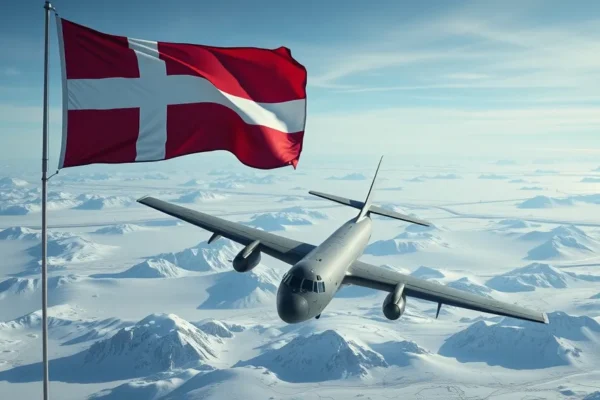
In the case of Greenland, the strategy has moved away from the idea of annexation—which means taking ownership of territory—toward a joint military presence. When the US and Denmark negotiate a defense agreement, they are essentially creating a formal contract. They outline exactly how many troops can be stationed there, who pays for the maintenance of the facilities, and how the local government is compensated. This ensures that the Arctic security needs of the United States are met without violating the sovereignty of Denmark, which maintains administrative control over Greenland.
For example, if the US needs to monitor Arctic air traffic, they might provide funding for infrastructure upgrades in Greenland. This creates jobs for local workers and provides an economic boost to the region, while the US gains the military intelligence it requires to protect its interests. It is a classic trade-off where both sides provide something of value to the other.
Why International Agreements Impact Your Wallet
You might wonder why a deal in the Arctic matters to your personal bank account. The answer lies in global stability. When major world powers like the US and Denmark reach an agreement regarding defense, it reduces the risk of conflict in a resource-rich area. When there is less uncertainty in the world, the global economy tends to function more smoothly.
For your personal financial decisions, this matters because of something called market volatility. Markets dislike the unknown. If tensions were to rise in the Arctic, shipping routes, mining rights for valuable minerals, and energy exploration projects could be disrupted. Such disruptions often lead to higher costs for fuel and goods, which contributes to inflation. By establishing a clear, legal framework for cooperation, these countries help keep the global economic environment more predictable, which is generally better for long-term investing.
On the flip side, military expansion can be expensive. If these defense agreements require significant tax-payer funding, it can influence government budgets, interest rates, and the overall tax environment. While the direct cost to an individual is small, the cumulative effect of these geopolitical moves helps shape the economic landscape in which you live and work.
From Annexation Ambitions to Strategic Partnership
The dialogue surrounding Greenland has evolved significantly. A few years ago, there was public discussion about the US potentially purchasing the island. This caused a stir in international relations, as Greenland is an autonomous territory within the Kingdom of Denmark. Experts at the time noted that such an acquisition was not feasible under international law, nor was it supported by the Danish government.
Today, the focus has shifted toward practical, mutual benefits. As the ice in the Arctic melts, new shipping lanes are opening, and previously inaccessible natural resources are becoming easier to reach. According to the United States Geological Survey, the Arctic holds significant amounts of undiscovered oil and gas. Because of these potential riches, Greenland has moved from a remote outpost to a central focus of Arctic security.
The current situation involves pending parliamentary approval, which is a common hurdle in democratic systems. Just as a board of directors must approve a major company merger, the Danish government and the Greenlandic authorities must review and sign off on any new defense agreements to ensure they align with their national interests. This process adds a layer of transparency and democratic accountability that was absent in older, more colonial-style arrangements.
Thinking About Geopolitics in Your Financial Life
How should an individual incorporate this news into their financial mindset? First, avoid making sudden changes to your portfolio based on headlines about international relations. Geopolitical events move slowly, and the markets often account for these changes over long periods. It is rarely a good idea to shift your entire investment strategy because of a news report about a defense agreement.
Instead, focus on the “big picture.” When news like the US and Denmark agreement surfaces, use it as a reminder to check if your portfolio is diversified enough to handle risks in different parts of the world. A common mistake is assuming that your home country is immune to global economic shifts. In reality, modern economies are deeply connected. Keep an eye on reports from reputable international organizations, such as the World Bank or the International Monetary Fund, for broader economic outlooks rather than reacting to individual news items.
One actionable insight is to maintain an “emergency fund”—a pool of cash equivalent to three to six months of expenses. If geopolitical tensions lead to a temporary spike in energy prices or market instability, having that liquid cash means you won’t be forced to sell your long-term investments at a loss just to cover your basic costs.
Connections to Global Financial Concepts
Understanding these agreements helps clarify several other financial concepts:
- Sovereign Risk: This refers to the risk that a government may default on its financial obligations. Agreements like these often act as stabilizers, reducing sovereign risk for both countries involved.
- Globalization: This is the process by which businesses or other organizations develop international influence. The Greenland situation is a prime example of how local territory becomes part of a global, interconnected economic web.
- Resource Economics: This study focuses on how natural resources are distributed and managed. The push for Arctic access is essentially a battle for control over future commodities.
Learning about these topics helps you connect the dots between world events and your own financial well-being.
Common Questions About the Greenland Agreement
How does the Greenland agreement affect Arctic security?
The agreement aims to modernize radar and surveillance systems, ensuring that both the United States and Denmark can monitor Arctic activity effectively, which promotes stability in a region that is becoming increasingly important for global shipping and resource extraction.
Will the US military presence in Greenland change the cost of goods?
Generally, a stable defense agreement reduces the risk of conflict, which helps keep global supply chains and trade routes functioning. While there is no immediate impact on prices, keeping the region peaceful helps prevent the kind of chaos that usually causes inflation.
Does this deal change Greenland sovereignty?
No, the agreement is designed to respect Greenland sovereignty. It allows for a joint military presence while recognizing that Greenland remains an autonomous territory under the jurisdiction of the Danish government.
Can individual investors benefit from Arctic development?
While you cannot invest directly in this specific military agreement, you can look for broad-market index funds that include companies involved in global logistics, energy, and infrastructure. These sectors are often the ones that benefit most from regional stability and development.
What are the risks of this defense agreement?
The primary risk is the potential for regional escalation if other countries, such as Russia or China, view the increased US military presence as a provocation. However, formal agreements like this are intended to provide clear “rules of the road” to minimize the chance of misunderstanding.
This article is for educational purposes only and does not constitute financial, investment, or legal advice. Financial situations vary significantly from person to person, and what is appropriate for one investor may not be suitable for another. Before making any significant financial decisions, you should consult with a qualified financial advisor or professional who can take your individual circumstances, goals, and risk tolerance into account. Historical trends and geopolitical events do not guarantee future market outcomes.











