

A Big Shift in the Car Market? Trump’s Tariff Plans Explained
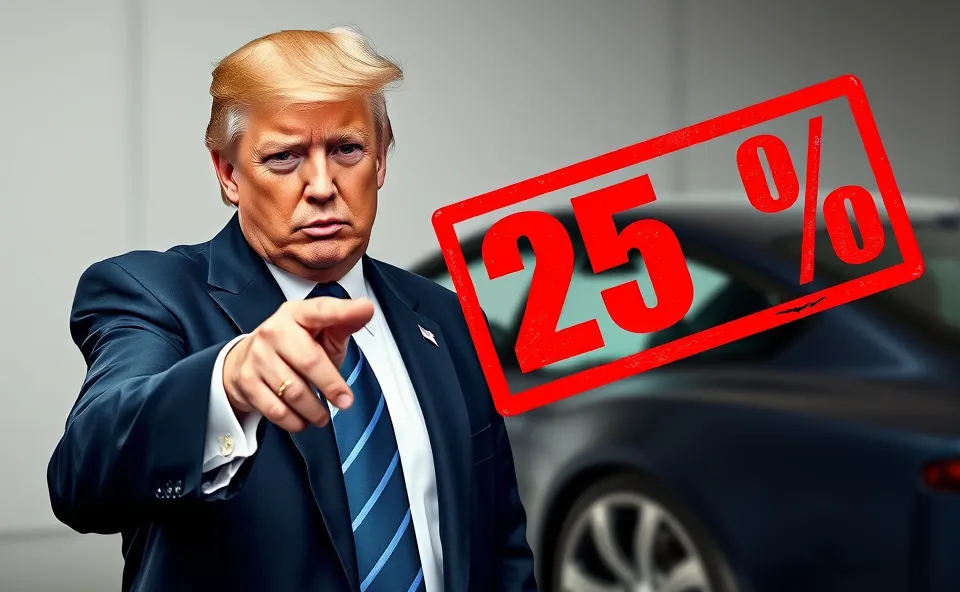
Let’s break down something that’s been buzzing in the tech and business world: Donald Trump’s proposal to slap a hefty 25% tariff on cars imported from the European Union. Think of it like this: if a car made in Germany or France currently enters the US, it might soon face a significant extra cost. This isn’t just a small tweak; it’s a major move that could shake up how cars are bought, sold, and made on a global scale.
Why Everyone’s Talking About EU Auto Tariffs Now
You’ve probably seen this pop up in the news or heard people discussing it. The reason it’s a hot topic right now is that these are more than just idle words; they represent a potential shift in trade policy with real consequences. When a figure like Donald Trump talks about significant import tariffs, especially on a massive industry like the automotive sector, it immediately gets the attention of businesses, economists, and consumers alike. It signals a potential move towards protectionism, and that always sparks a lot of debate and analysis.
Remembering the Trade Wars of the Past
To really get why this 25% tariff on EU autos is a big deal, we need to rewind a bit. This isn’t the first time we’ve seen trade tensions rise. In recent years, there have been ongoing discussions and actions around trade policy, including tariffs on goods from various countries. These kinds of moves often stem from a desire to protect domestic industries or address perceived trade imbalances. The European Union, being a major player in the global auto market, has always been a central point in these discussions. So, this latest proposal isn’t happening in a vacuum; it’s part of a larger, evolving trade narrative.
What This Means for Cars, Companies, and Your Wallet
So, what’s the big impact if these Trump tariffs on EU autos go through? It’s a multifaceted situation that touches many parts of the market.
For Car Companies
European automakers who sell cars in the US will feel the pinch directly. A 25% tariff means their cars become considerably more expensive for American buyers. This could lead to:
- Reduced sales volumes in the US.
- Automakers might absorb some of the cost to keep prices competitive, impacting their profit margins.
- Some companies might reconsider their production strategies, potentially shifting manufacturing or supply chains to avoid the tariffs.
- This could also affect American automakers that rely on European parts or have manufacturing operations in Europe.
For Consumers
For American car buyers, the most immediate effect could be higher prices. If the tariffs are passed on by manufacturers and dealers, you might see the price tags on imported European cars climb significantly. This could influence your purchasing decisions:
- You might opt for a domestic brand or a car from another country not subject to the tariff.
- The overall selection of vehicles available at certain price points could shrink.
- Used car prices might also see an uptick as new car options become more expensive.
For the Broader Economy
This isn’t just about cars; it has ripple effects across the economy. A trade war, or even the threat of one, can create uncertainty.
- Investment might slow down as businesses wait to see how trade policies evolve.
- Suppliers to the auto industry, both in the US and Europe, could face challenges.
- It could lead to retaliatory tariffs from the European Union on US goods, affecting other sectors.
- The complexity of global supply chains means that a change in one area, like EU autos, can have unforeseen consequences elsewhere.
Looking Ahead: What’s Next for EU Autos and Trade Policy
The future of these proposed Trump tariffs on EU autos isn’t set in stone. What happens next will likely involve a lot of negotiation and strategic maneuvering. Here are a few possibilities:
- Negotiations: The US and the European Union will likely engage in discussions to try and find a resolution. This could involve the EU making concessions on other trade issues, or the US reconsidering the scope or level of the tariffs.
- Implementation: If no agreement is reached, the tariffs could be implemented. This would then trigger the economic impacts discussed above and potentially lead to further trade disputes.
- Market Adaptation: Even if tariffs are imposed, the auto industry is incredibly adaptable. Companies will find ways to adjust, whether by changing production locations, focusing on different markets, or developing new strategies to navigate the trade landscape.
- Political Developments: The ongoing political climate and future election cycles will also play a significant role in shaping trade policy decisions.
It’s a dynamic situation, and the automotive sector, along with the broader global economy, will be watching closely.
Frequently Asked Questions About Trump’s EU Auto Tariff Plans
What exactly is the proposed 25% tariff on EU autos?
This refers to Donald Trump’s suggestion to impose a 25% import tariff on all cars manufactured in the European Union and imported into the United States. This means buyers would face significantly higher prices for these vehicles.
Why is Donald Trump proposing these import tariffs on European Union vehicles?
The reasoning often cited for such proposals is to address perceived trade imbalances, protect American jobs in the auto industry, and encourage domestic production. It’s a form of protectionism aimed at making imported goods less competitive.
How will these Trump tariffs affect the US auto industry?
The impact on the US auto industry is complex. While it might offer some protection to domestic manufacturers, it could also increase costs for American car companies that rely on European parts or have operations in Europe. It could also lead to retaliatory actions from the EU.
What is the potential economic impact of a 25% tariff on EU autos?
The economic impact could include higher car prices for consumers, reduced sales for European automakers, potential job shifts within the automotive sector, and broader uncertainty in international trade, possibly leading to retaliatory tariffs on other goods.
What does this mean for the broader trade war scenario involving the European Union and US autos?
This proposal is a significant development in trade relations. If implemented, it could escalate existing trade tensions or even trigger a more pronounced trade war, affecting multiple sectors beyond just the automotive sector on both sides of the Atlantic.











