

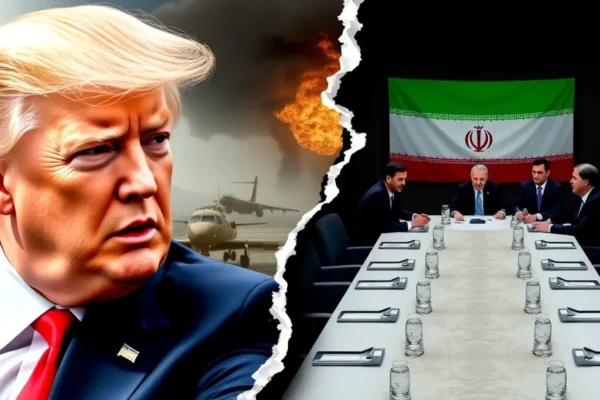
The tightrope walk for any US president dealing with Iran is one of the most complex puzzles in global politics. It’s a situation where every step carries immense weight, and a misstep can have ripple effects across the entire Middle East and beyond. When we talk about the Trump Iran deal, we’re really talking about a core tension: how to handle Tehran without triggering a wider conflict or appearing to concede too much.
The Stakes of the Iran Deal Explained
So, what exactly is this whole fuss about the Trump Iran deal? In simple terms, it boils down to a deal that the United States, under President Trump, pulled out of. This deal, officially known as the Joint Comprehensive Plan of Action or JCPOA, was designed to limit Iran’s ability to develop nuclear weapons. The idea was that if Iran agreed to strict limits on its nuclear program, sanctions against it would be lifted. President Trump, however, felt the deal wasn’t strong enough and reimposed harsh sanctions. Now, the question for the current US president is whether to try and re-enter a similar deal, negotiate a new one, or continue the path of maximum pressure. It’s a difficult choice, pitting the desire for a peaceful resolution against the fear of Iran eventually obtaining nuclear capabilities or becoming a regional aggressor that goes unchecked.
Why This Conversation Is Buzzing Now
You might be wondering why this is such a hot topic right now. The reason is simple: the geopolitical situation is constantly evolving. As Iran’s influence in the Middle East remains a significant concern, and as its nuclear program continues to advance, the options for the US president become increasingly limited. There’s a growing sense that something needs to be done, but the path forward is deeply divisive. Some argue that sticking to the maximum pressure campaign will eventually force Iran to negotiate a better deal, while others fear this approach is pushing Iran further away from diplomacy and closer to a dangerous threshold. The constant back and forth between the US and Tehran keeps this issue front and center, making the Trump Iran deal a recurring point of contention in foreign policy discussions.
A Quick Look Back at Where We Came From
To truly grasp the current dilemma, we need a little background. For decades, US Iran relations have been rocky. After the 1979 revolution, the Islamic republic emerged, leading to years of mistrust and tension. The nuclear deal itself was a product of intense, years-long negotiation, a diplomatic breakthrough that many thought was impossible. It was hailed by some as a triumph of diplomacy, a way to curb Iran’s nuclear ambitions through verification and international oversight. However, President Trump viewed it differently. He saw it as a flawed agreement that didn’t address Iran’s ballistic missile program or its regional activities and that the terms were too favorable to Tehran. His decision to withdraw and reimpose sanctions marked a significant shift in US foreign policy towards Iran, setting the stage for the current predicament faced by the US president.
What This Means for Us All
The choices made regarding the Trump Iran deal aren’t just abstract foreign policy debates; they have real-world consequences. For businesses, especially those involved in oil and gas or international trade, sanctions can mean disrupted markets and lost opportunities. Geopolitical crisis in the Middle East always has the potential to affect global energy supplies, influencing prices at the pump. For technology, the risk of escalation can lead to increased cyber warfare and a scramble for defense technologies. On a broader level, the ongoing tension contributes to regional instability, impacting everything from humanitarian aid efforts to international travel. The perception of US strength and commitment to its allies in the region is also on the line. It’s a delicate balancing act, where the US president must weigh the immediate risks of military escalation against the long-term implications of a failed or unfavorable nuclear deal.
What Might Come Next
Looking ahead, the path for the US president is fraught with challenges. One possibility is a renewed push for negotiations, perhaps with modified terms that address some of the concerns raised about the original deal. This would require careful diplomacy and a willingness from both sides to compromise. Another path is to continue the current strategy of maximum pressure, hoping it will eventually compel Iran to change its behavior or agree to a new, more comprehensive agreement. However, this carries the risk of further escalation and could push Iran closer to developing nuclear weapons if sanctions become unbearable or if Iran feels it has no other recourse. A less likely but possible scenario involves a complete stalemate, where the US maintains sanctions and Iran continues to advance its nuclear program, leading to a prolonged period of heightened Middle East tension. Ultimately, the US president will have to decide whether to risk a potential escalation to achieve a better outcome or accept a deal that might be less than ideal to avoid immediate conflict. The legacy of the Trump Iran deal will undoubtedly shape this decision.
Common Questions About the Trump Iran Deal
What is the Trump Iran deal controversy?
The controversy around the Trump Iran deal, or the JCPOA, stems from President Trump’s decision to withdraw the US from the agreement. Critics of his decision argue that it destabilized the region and pushed Iran closer to nuclear weapons development, while supporters believe the original deal was too weak and needed renegotiation.
Can the US president easily rejoin the Iran deal?
Rejoining the Iran deal is not straightforward for the US president. It would involve complex diplomatic negotiations, likely requiring concessions from both sides and overcoming significant political opposition within the United States and potentially from international partners.
What are the risks of escalation with Iran?
The risks of escalation with Iran are significant and include potential military conflicts, increased cyber attacks, further disruption to global energy markets, and a broader geopolitical crisis in the Middle East that could involve regional allies and adversaries.
Is the current US president considering a new Iran deal?
The current US president faces pressure and has expressed interest in diplomatic solutions concerning Iran’s nuclear program. Discussions often revolve around whether to revive the original nuclear deal or pursue a new agreement that addresses a wider range of concerns beyond just the nuclear aspect.
How does the Trump Iran deal impact Middle East tension?
The withdrawal from the Trump Iran deal and the subsequent reimposition of sanctions significantly impacted Middle East tension. It led to increased assertiveness from Iran, heightened concerns among regional US allies, and a period of unpredictable events and retaliations, contributing to the ongoing geopolitical crisis.











