

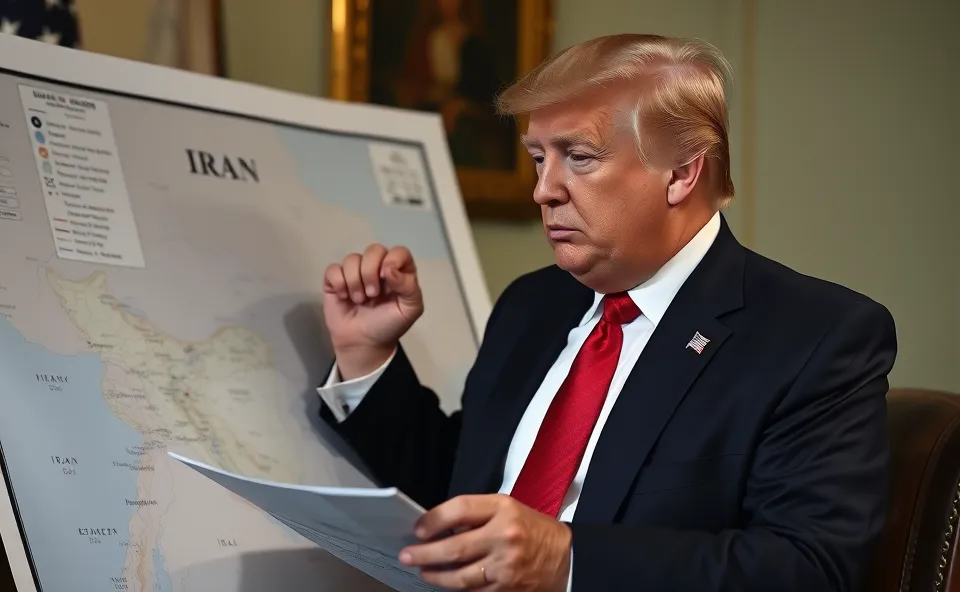
When the Dust Settles: Navigating President Trump’s Critical Iran Choices
Imagine a moment when the world holds its breath, just after a significant event has rocked the geopolitical landscape. This was often the atmosphere surrounding President Trump’s post-strike decision making concerning Iran. Following periods of heightened tension or specific military operations, the tough questions weren’t just about what happened, but what came next. We’re talking about the critical choices that could either dial down a crisis or escalate it dramatically.
At the heart of these challenges were two major considerations for Trump’s Iran strategy: the potential for further US troops deployment in the already volatile Middle East, and the complex issue of Iran’s continued progress with enriched uranium. Each factor presented a puzzle with far-reaching consequences, demanding a nuanced approach that balanced national security, regional stability, and global implications. It was never a simple ‘yes’ or ‘no’ situation, but a complex web of strategic risks and potential rewards.
The Lingering Questions Around Trump’s Iran Strategy
Why are we still dissecting these specific decisions made by Trump regarding Iran, even after some time has passed? The short answer is because the ripple effects are still very much with us. Global affairs are a continuous story, and the chapters written during periods of intense geopolitical pressure continue to shape today’s headlines and future challenges. People are constantly searching for insight into past foreign policy choices because they offer clues about present-day dynamics and potential future trajectories. The long-term geopolitical implications of these past choices are still unfolding, influencing everything from oil prices to regional alliances.
Whether it’s the ongoing debate about nuclear proliferation, the stability of the Middle East, or the effectiveness of particular foreign policy stances, understanding these moments provides invaluable context. The critical decisions made then – regarding military readiness, diplomacy, and economic pressure – created a blueprint, for better or worse, that subsequent administrations and international actors must now contend with. It’s a way of making sense of current events by looking back at the strategic forks in the road.
A Quick Look Back: The Road to Tension with Iran
To truly grasp the weight of Trump’s post-strike decision process, we need a quick refresher on the complex relationship between the US and Iran leading up to these flashpoints. For decades, the two nations have had a strained connection, marked by periods of confrontation and a deep-seated distrust.
A key turning point in recent history was the 2015 Iran nuclear deal, formally known as the Joint Comprehensive Plan of Action or JCPOA. This agreement, forged by world powers including the US, aimed to limit Iran’s nuclear program in exchange for sanctions relief. However, President Trump made a significant foreign policy move in 2018 when he withdrew the United States from the deal, arguing it was fundamentally flawed and didn’t adequately address Iran’s missile program or its regional activities.
This withdrawal brought back a host of US sanctions against Iran, leading to a dramatic increase in tensions. Iran, in turn, began to incrementally roll back its commitments under the nuclear deal, including increasing its production of enriched uranium beyond agreed limits. The situation was further complicated by a series of regional incidents, including attacks on oil tankers, drone strikes, and eventually, the US military operation that killed Iranian general Qassem Soleimani. It was in the immediate aftermath of such significant events that President Trump faced some of his most critical decisions about how to respond, weighing further military action versus de-escalation, and the potential for a larger regional conflict involving US troops.
The Ripple Effect: What Iran Decisions Meant for Markets
When tensions flared between President Trump and Iran, especially concerning potential military strikes or troop deployment, the world’s financial centers paid close attention. These high-stakes geopolitical dramas are rarely confined to the political arena; they send immediate and often unpredictable ripples across global markets, affecting everything from commodity prices to investor confidence.
Here’s how Trump’s Iran post-strike decision process could impact finance and business:
- Oil Prices: The Middle East is a major global oil producer. Any threat to stability or shipping lanes in the region, particularly near the Strait of Hormuz, directly impacts oil supply. Fear of disruption, even if it doesn’t materialize, can cause crude oil prices to spike. Higher oil prices mean increased costs for businesses (transportation, manufacturing) and consumers (gas at the pump), potentially slowing economic growth.
- Investor Confidence: Uncertainty is kryptonite for investors. When the threat of conflict looms, particularly in a region as strategically important as the Middle East, investors tend to pull back from riskier assets and move towards safer havens like gold or government bonds. This can lead to market volatility, impacting stock prices and making it harder for companies to raise capital.
- Defense Spending: Escalating tensions can also lead to increased defense spending, which might offer a boost to defense contractors but represents a diversion of resources that could otherwise be used for other economic development.
- Supply Chains: Global supply chains are intricately linked. Disruptions or increased shipping costs in one region can have a domino effect worldwide, impacting manufacturing schedules, product availability, and consumer prices.
- Currency Markets: Major geopolitical events often lead to shifts in currency values. Currencies of countries perceived as stable or “safe” might strengthen, while those of countries more exposed to the conflict or economic instability could weaken.
The decisions made by Trump in the aftermath of a strike – whether to deploy more US troops or pursue a different diplomatic path – were not just about national security; they were deeply financial in their immediate and long-term consequences. Businesses and markets thrive on predictability, and periods of intense US-Iran tension provided anything but.
Looking Ahead: The Long Shadow of Iran Strategy
So, where do we go from here? While no one has a crystal ball, the critical decisions made during President Trump’s time in office, particularly concerning Iran’s enriched uranium activities and potential military strikes, continue to cast a long shadow over future US-Iran relations and the broader Middle East. The strategic implications of his approach are still playing out, shaping the options available to current and future administrations.
One major lingering question revolves around Iran’s nuclear program. Having expanded its uranium enrichment activities following the US withdrawal from the JCPOA, the path back to a verifiable agreement has become significantly more complex. Any future foreign policy aiming to contain Iran’s nuclear ambitions must contend with the realities established during that period. This could involve renewed diplomatic efforts, continued sanctions, or a combination of both, always with the underlying tension of potential escalation if diplomacy fails.
Furthermore, the increased US troops deployment in the region, or the threat of it, during periods of tension, has reshaped regional alliances and dynamics. Countries in the Middle East have adjusted their own strategies, either aligning more closely with the US, pursuing independent paths, or seeking new regional security frameworks. The balance of power remains fluid, influenced by past actions and reactions.
Ultimately, the impact of Trump’s Iran strategy has set a new baseline for engagement. Future policy will inevitably build upon or react to this foundation, navigating the same challenges of nuclear proliferation, regional stability, and ensuring national security without triggering wider conflict. The choices made then have truly shaped the range of possibilities for what might come next.
Frequently Asked Questions About Trump’s Iran Post-Strike Decisions
What was President Trump’s core post-strike decision framework regarding Iran?
President Trump’s post-strike decision framework regarding Iran often centered on a strategy of “maximum pressure,” balancing the need to deter further Iranian aggression with avoiding a full-scale regional conflict. Decisions usually involved assessing the immediate threat, weighing potential retaliatory military strikes, and considering the broader geopolitical implications.
How did concerns about enriched uranium influence Trump’s Iran strategy?
Concerns about enriched uranium were central to Trump’s Iran strategy. After withdrawing from the nuclear deal, his administration aimed to prevent Iran from developing nuclear weapons by reimposing sanctions, which ironically led Iran to increase its enrichment activities. The decision to strike or not strike was always framed against the backdrop of slowing or stopping this progress.
What were the geopolitical implications of potential US troop deployment in the Middle East?
The potential for increased US troops deployment in the Middle East carried significant geopolitical implications. It could signal an escalation of conflict, impact regional power balances, and influence the actions of allies and adversaries. Such decisions directly affected oil markets, diplomatic relations, and the stability of the entire region, impacting national security concerns.
How did Trump’s military strikes against Iran affect national security?
Trump’s military strikes against Iran were framed as actions taken to protect national security interests by deterring aggression and disrupting perceived threats. While intended to strengthen security, they also increased the risk of retaliation, raising alert levels for US forces and personnel in the Middle East and potentially intensifying the overall conflict.
What was the broader context of Trump’s foreign policy toward Iran?
The broader context of Trump’s foreign policy toward Iran was defined by a departure from previous administrations’ engagement. It focused on isolating Iran through sanctions, withdrawing from the nuclear deal, and adopting a confrontational stance to force Iran to negotiate a new, tougher agreement that addressed its nuclear program, missile development, and regional proxy activities. This tough stance heavily influenced his post-strike decision processes.











