

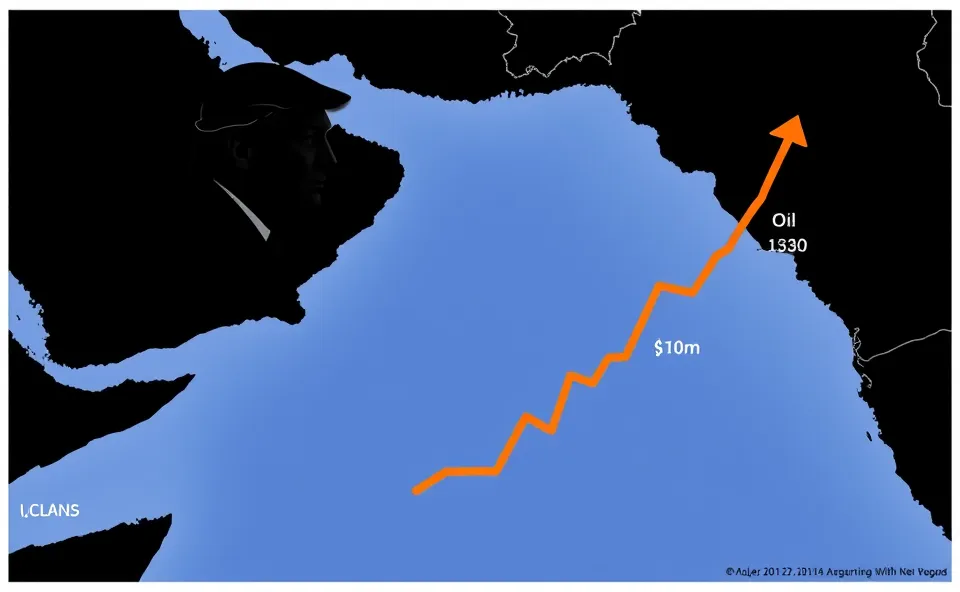
A Familiar Warning: Trump, Iran, and the Strait of Hormuz
Recently, a strong statement from former President Donald Trump regarding Iran and the crucial Strait of Hormuz captured global attention. He issued a clear warning, stating that Iran should not “mess with us” in the Strait, specifically mentioning potential interference with American shipping. This isn’t the first time such rhetoric has come from Washington concerning the Middle East, but the timing and the target — the critical chokepoint for a significant portion of the world’s oil supply — immediately sent ripples through international relations and the global oil market.
The core of the message was simple: any aggressive actions by Iran against U.S. vessels in this vital waterway would be met with a firm response. While the specific context of his remarks often comes from public appearances or social media, the underlying message is a direct challenge to Iran’s presence and perceived influence in the region, particularly around a geographic feature that holds immense strategic and economic value.
Why the World is Watching This Now
You might wonder why a statement from a former president, even one as influential as Donald Trump, makes such waves. The answer lies in the deeply unsettled state of global affairs. We are living in a period marked by significant geopolitical tension. There’s an ongoing war in Eastern Europe that has already dramatically reshaped energy markets and supply chains. Against this backdrop, any new or resurfacing Middle East conflict immediately heightens anxiety.
The global economy is already grappling with inflationary pressures and the continued impact of post-pandemic recovery. When you introduce a potential flashpoint in a region as sensitive as the Strait of Hormuz, where a huge chunk of the world’s oil travels, it’s like throwing gasoline on an already smoldering fire. Investors, businesses, and governments are all acutely aware that disruptions here could have immediate and severe economic consequences, particularly for the Brent crude price, which has already seen significant volatility and recently pushed above the $110 mark. This isn’t just news; it’s a potential tremor in the foundations of global energy security.
The Story So Far: Iran, Oil, and a Critical Waterway
To really grasp the weight of the Trump Iran threat, we need a quick look back. The relationship between the United States and Iran has been fraught with tension for decades. It’s a complex history involving revolutions, hostage crises, nuclear ambitions, and sanctions. The Strait of Hormuz has frequently been at the center of this geopolitical drama.
What makes the Strait of Hormuz so critical? Imagine a narrow bottleneck. That’s essentially what it is, connecting the Persian Gulf to the open ocean. Through this strait passes approximately one-fifth of the world’s total petroleum consumption and one-third of all seaborne traded oil. Major oil-producing nations like Saudi Arabia, Iraq, UAE, Kuwait, and Iran itself rely on this passage to get their oil to global markets. For Iran, it’s not just a neighbor; it’s a backyard, a strategic point it has, at various times, threatened to close or control in response to international pressure or perceived aggression.
Past incidents include:
- Mine attacks on tankers during the “Tanker War” of the 1980s.
- Iranian seizures of commercial vessels.
- Confrontations between U.S. naval forces and Iran’s Islamic Revolutionary Guard Corps Navy.
Each of these events, even minor ones, has historically sent jitters through the global oil market, underlining the Strait’s fragility and its outsized importance to energy security worldwide. The memory of these past frictions makes any new threat, like the recent Trump Iran threat, resonate powerfully.
Feeling the Heat: What This Means for Global Energy
So, what does this specific Trump Iran threat mean for you, for businesses, and for the broader global oil market? The immediate impact is primarily on sentiment and price. Even the risk of disruption in the Strait of Hormuz is enough to trigger significant upward movement in oil prices.
Here’s how it breaks down:
- Oil Prices Soar: The most visible effect is the jump in Brent crude price. When the market perceives a heightened risk of supply interruption from such a vital artery, prices react almost instantly. Traders anticipate potential shortages and bid up prices, leading to Brent crude moving above $110 per barrel, sometimes even higher depending on the severity of the perceived risk.
- Energy Security Concerns: For countries that heavily rely on imported oil, especially from the Middle East, the prospect of instability in the Strait of Hormuz raises serious energy security questions. It underscores the need for diverse energy sources and alternative shipping routes, though viable alternatives for such a massive volume of oil are limited.
- Economic Consequences: Higher oil prices translate into higher costs across the board. Businesses face increased expenses for transportation, manufacturing, and energy. Consumers feel it at the pump and in the prices of goods that need to be transported. This contributes to inflation and can slow economic growth globally, exacerbating the war impact on the economy.
- Investment Volatility: Investors become more cautious, leading to increased volatility in financial markets. Sectors heavily dependent on stable energy prices, like airlines, logistics, and manufacturing, become particularly vulnerable.
The mere mention of military intervention or a blockade in the Strait is enough to inject massive uncertainty, reminding everyone how interconnected geopolitics, international relations, and economics truly are. It serves as a stark reminder of the delicate balance that maintains the flow of global energy.
Navigating the Waters: What Could Happen Next
Predicting the future in the Middle East is always tricky, but we can consider some logical pathways for how this situation might unfold. The immediate outcome of the Trump Iran threat will largely depend on the reactions of various actors.
Here are a few possibilities:
- Continued Rhetoric, No Escalation: It’s possible that the statement serves as a deterrent, keeping Iran’s actions in check without leading to direct confrontation. Both sides may continue with strong words, but avoid any physical escalation in the Strait of Hormuz. The global oil market might remain jumpy, but no actual supply disruption occurs.
- Increased Vigilance and Military Presence: The U.S. and its allies might increase their military presence and surveillance in the Strait to ensure the free flow of shipping. This could be seen as a show of force, aiming to prevent any Iranian interference, but also carries the risk of accidental encounters.
- Diplomatic Backchannels: Behind the scenes, diplomatic efforts might intensify to de-escalate the geopolitical tension. International relations are always a complex dance, and even while public statements are fiery, there are often quieter efforts to prevent open conflict.
- Limited Provocations and Response: Iran might test boundaries with minor provocations, such as harassing commercial vessels without causing major damage. This would likely prompt a measured, non-military response from the U.S., potentially in the form of further sanctions or diplomatic pressure, keeping the Brent crude price elevated.
What’s clear is that the region remains a hotspot, and the global oil market will continue to factor in this heightened risk. The ongoing war elsewhere further complicates the picture, ensuring that energy security remains a top priority for governments and businesses worldwide. The situation calls for careful monitoring and a nuanced understanding of international relations, as any misstep could have far-reaching economic consequences.
Your Questions Answered: Decoding the Trump Iran Threat
Why is the Strait of Hormuz so crucial for global oil prices?
The Strait of Hormuz is a narrow waterway through which about 20% of the world’s total petroleum consumption and a third of all seaborne oil passes daily. Any threat of disruption there directly impacts supply, making the global oil market nervous and driving up prices, including the Brent crude price.
How does the Trump Iran threat influence global energy security?
A Trump Iran threat or any similar warning about potential conflict in the Strait of Hormuz raises major energy security concerns. It highlights the vulnerability of global oil supplies and the dependence on a single chokepoint, encouraging nations to seek diversified energy sources and more resilient supply chains.
What role does geopolitical tension play in the rising Brent crude price?
Geopolitical tension, especially in oil-rich regions like the Middle East, is a primary driver of rising Brent crude prices. When political stability is threatened, the risk of supply disruptions increases, prompting traders to bid up oil prices as a hedge against potential shortages. The ongoing war further amplifies this effect.
What are the economic consequences of increased tension in the Middle East conflict?
Increased tension in a Middle East conflict can lead to significant economic consequences. Higher oil prices translate to increased costs for transportation, manufacturing, and consumer goods, contributing to inflation and potentially slowing global economic growth. It also creates uncertainty for businesses and investors.
Beyond oil, what other international relations are affected by a Trump Iran threat?
A Trump Iran threat impacts a wide array of international relations. It can affect diplomatic efforts with allies and adversaries, potentially altering alliances or prompting new diplomatic initiatives. It also influences the dynamics of regional powers in the Middle East and impacts discussions around nuclear non-proliferation and broader trade relationships.











