

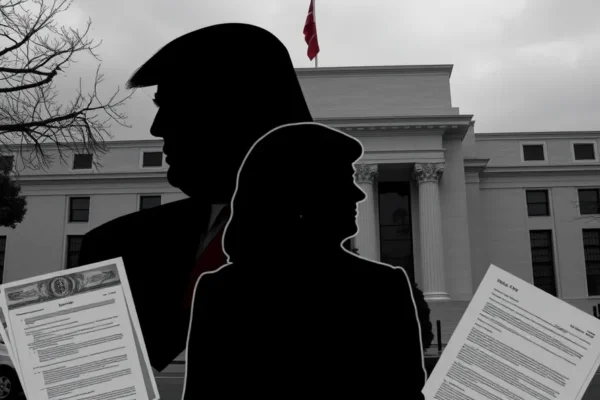
Alright, let’s dive into something that’s got folks in the financial world buzzing again. You might have heard whispers about Donald Trump and his renewed talk about removing a Federal Reserve governor. It’s a situation that touches on presidential powers, the independence of our central bank, and frankly, some pretty big economic questions. We’re going to break down exactly what’s going on with Donald Trump and Fed Governor Lisa Cook, why it’s resurfacing now, and what it all could mean.
When a Former President Takes Aim at the Fed Board
So, what’s the core of this story? Basically, Donald Trump has once again publicly stated his desire to potentially remove Federal Reserve Governor Lisa Cook from her position. This isn’t exactly brand new; he’s expressed similar sentiments before. However, the recent chatter has gained traction, bringing the topic of Donald Trump and the Fed back into the spotlight. It’s a clear signal that even after leaving office, Trump remains interested in shaping the leadership at the Federal Reserve System. His comments suggest a willingness to use presidential authority to make changes to the Fed board if he were to return to power.
Think about it like this: the Federal Reserve is a really important organization that manages the country’s money supply and interest rates. They make big decisions about our economic policy. Having governors on the Fed board who are there for their full terms is usually seen as a way to keep their decisions free from short-term political pressure. When a former president voices a desire to sack Fed officials he disagrees with, it raises eyebrows because it challenges this idea of independence.
Why This Story is Heating Up Again
You’re probably wondering, why now? What’s making this particular threat from Donald Trump about Lisa Cook and the Fed governor position relevant today? Well, a significant part of the renewed interest is tied to a recent Supreme Court ruling. This ruling, while not directly about the Federal Reserve, has broad implications for presidential powers and how they can appoint and remove officials in various government agencies. It’s stirred up discussions about the limits of presidential authority, and naturally, people are looking at how that might apply to powerful institutions like the Federal Reserve.
The Supreme Court ruling has essentially re-opened the conversation about the balance of power between the executive branch and independent agencies. When you combine that with Trump’s past criticisms of the Federal Reserve, especially its monetary policy under certain leadership, you have a perfect storm for this story to gain traction. People are connecting the dots, wondering if this new legal landscape could give a president more leeway to influence the Fed’s leadership. So, the timing isn’t coincidental; it’s the legal context that’s making this particular threat from Donald Trump to sack Fed officials feel more current and potentially more impactful.
A Look Back at the President’s Power Over the Fed
To really get a handle on this, we need a bit of background. The Federal Reserve System was created by Congress to be independent. This independence is a crucial part of its design, meant to shield monetary policy decisions from the day-to-day political pressures that can sway elected officials. Fed governors are appointed by the President and confirmed by the Senate, and they serve long, staggered 14-year terms. This structure is intended to allow them to make tough economic decisions based on long-term economic health, not just what might be popular in an election cycle.
During his presidency, Donald Trump often expressed frustration with the Fed and its then-chair, Jerome Powell. He frequently criticized the central bank’s interest rate decisions, believing they were hindering economic growth. He made it known he was unhappy with Powell’s leadership and suggested he might even try to remove him, though the legal grounds for doing so were unclear and debated. Lisa Cook was appointed to the Fed board more recently, and Trump’s continued focus on her suggests a broader concern about the direction of the Federal Reserve’s policymaker position and its overall economic policy approach.
The key point here is that while presidents appoint Fed governors, removing them is a much more complicated matter. Unlike cabinet secretaries who serve at the pleasure of the president, Fed governors have strong protections designed to ensure their independence. The exact grounds for removal are generally understood to be limited to specific reasons like malfeasance, not simply policy disagreements. This makes any president’s attempt to sack Fed governors a legally and constitutionally complex endeavor.
What This Could Mean for the Economy and Markets
So, if Donald Trump were to actively pursue removing a Fed governor like Lisa Cook, what would the ripple effects be? First off, it could create significant uncertainty in financial markets. Markets generally value stability and predictability, especially when it comes to monetary policy. The idea of a president intervening directly in the Fed’s leadership could be seen as a destabilizing force. This uncertainty could lead to increased market volatility, affecting everything from stock prices to bond yields.
For businesses, this uncertainty could make it harder to plan for the future. Decisions about investment, hiring, and expansion often depend on expectations about interest rates and economic conditions. If the Federal Reserve’s independence is questioned, those expectations become less reliable. This could potentially slow down economic growth. Businesses might become more cautious, waiting to see how these political dynamics play out before making major commitments.
From a broader economic policy perspective, a president’s ability to influence or remove Fed members could shift the focus of monetary policy. Instead of focusing solely on inflation and employment, there’s a risk that policy decisions might become more influenced by political considerations. This is exactly what the Fed’s independence is designed to prevent. It’s a delicate balance, and any perceived erosion of that independence can have far-reaching consequences for the stability and health of the entire economy.
Here are some key areas of potential impact:
- Market Volatility: Increased swings in stock, bond, and currency markets as investors react to perceived political interference.
- Business Confidence: A decline in the willingness of companies to invest and expand due to uncertainty about future economic policy.
- Monetary Policy Direction: A potential shift in focus from economic stability to politically motivated decisions.
- Credibility of the Fed: A weakening of the Federal Reserve’s reputation as an independent and objective economic institution.
Looking Ahead: What’s Next for the Fed and Presidential Influence
The path forward from here involves a lot of “what ifs,” but we can outline some logical possibilities. If Donald Trump were to win a future election, his past statements suggest he would likely explore his options regarding the composition of the Fed board. The recent Supreme Court ruling might embolden him to test the boundaries of presidential authority in this area, potentially leading to legal challenges over the removal of Fed governors. This could result in a prolonged period of legal and political debate about the true extent of presidential powers over the central bank.
On the other hand, the Federal Reserve itself has a strong institutional framework and a commitment to its mandate of price stability and maximum employment. The current governors, including Lisa Cook, are likely to continue their work, focusing on economic data and their fiduciary responsibilities. Even if challenged, the deep-rooted independence of the Fed is a powerful counterweight. The Senate confirmation process for new appointments would also remain a significant hurdle for any president seeking to install individuals with specific policy agendas.
Ultimately, the ongoing discussion around Donald Trump’s views on the Fed and the potential for him to sack Fed officials highlights a fundamental tension between political power and central bank independence. The future will likely involve continued scrutiny of the Fed’s role and the balance of power, with any significant actions by a president facing intense public and legal examination. The focus will remain on how economic policy is made and who gets to make those crucial decisions.
Frequently Asked Questions About Trump, Lisa Cook, and the Fed
What is the primary concern regarding Donald Trump and Fed Governor Lisa Cook?
The main concern is Donald Trump’s repeated public statements expressing a desire to remove Federal Reserve Governor Lisa Cook from her policymaker position, which could challenge the independence of the Federal Reserve System.
Why is Donald Trump’s threat to sack Fed officials relevant now?
The topic is gaining renewed attention partly due to a recent Supreme Court ruling that has sparked broader discussions about presidential powers and the ability to remove officials from government agencies, including potentially those at the Fed board.
What is the background of presidential powers concerning the Federal Reserve System?
Presidents appoint Fed governors, but their terms are long and designed for independence. Removing a Fed governor is generally understood to require specific grounds like malfeasance, not simply policy disagreements, making it difficult for a president to sack Fed officials at will.
How might the Federal Reserve System be impacted by such presidential actions?
Any attempt to sack Fed governors or overtly influence monetary policy could lead to market volatility, undermine the central bank’s credibility, and create uncertainty around economic policy decisions, impacting businesses and the overall economy.
What could be the future outlook if a president seeks to remove a Fed governor like Lisa Cook?
The future could involve legal challenges to test presidential powers, increased debate over central bank independence, and potential shifts in the approach to monetary policy if a president is successful in influencing the Fed board composition.











