

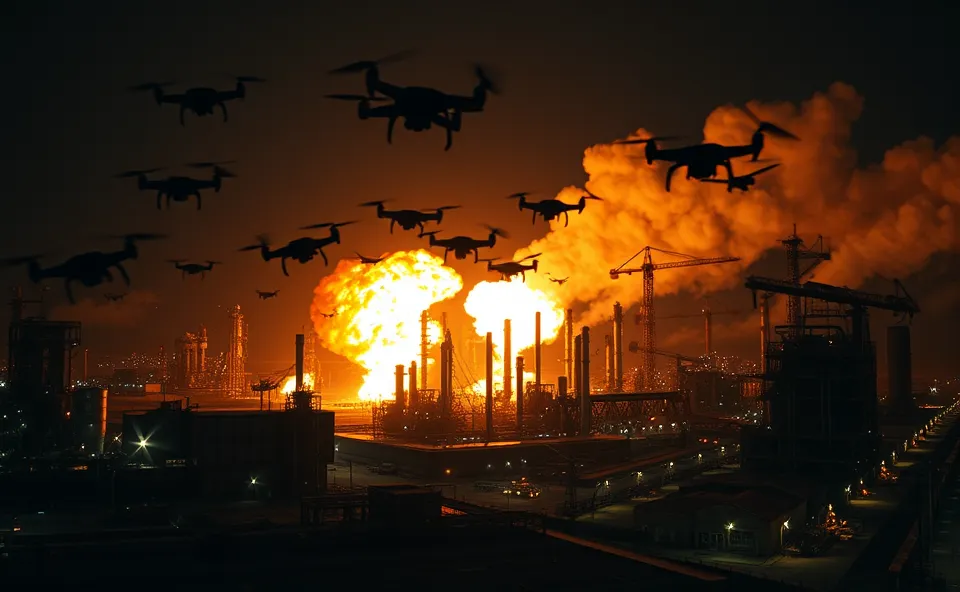
A New Front in Economic Warfare
For months, the conflict between Ukraine and Russia has shifted from the front lines of the battlefield to the industrial heartland of energy production. Ukraine has launched an increasingly aggressive drone campaign targeting Russia’s massive oil refineries. These are not just military strikes; they are a calculated effort to hit the Russian economy where it hurts the most. By sending long-range drones hundreds of miles into Russian territory, Ukraine is aiming to cripple the processing plants that turn raw oil into the fuel needed for tanks, planes, and trucks. This is a classic example of economic warfare, where the goal is to make the cost of continuing the war unsustainable for the adversary.
Why Everyone Is Watching the Fuel Crisis
You might be wondering why these specific attacks are grabbing headlines right now. It is because the damage is finally moving from theoretical to tangible. Russia has long been a global powerhouse for energy, and any disruption to its ability to export or even use its own fuel has a ripple effect on the global stage. People and businesses are paying close attention because these refinery attacks are beginning to create a genuine fuel crisis inside Russia. When a country that produces so much oil suddenly struggles to refine enough for its own needs, prices spike and shortages emerge. This creates a chain reaction that market analysts, governments, and everyday citizens are watching with growing concern.
How We Got to This Point
To understand the current situation, we have to look back at the role of international sanctions. Since the start of the full scale invasion, Western nations have tried to limit Russia’s ability to fund its military by placing tight caps on how much they can earn from oil exports. However, Russia found ways to keep the money flowing by selling to other markets. Seeing that sanctions alone were not stopping the conflict, Ukraine turned to its own ingenuity. By developing custom, low-cost drone technology, they found a way to bypass air defenses and reach critical infrastructure that is difficult and expensive for Russia to repair. This transition from traditional ground warfare to targeted strikes against energy infrastructure represents a significant change in how modern conflicts are fought.
The Global Ripple Effect of Energy Disruption
The impact of this campaign goes far beyond the borders of the two countries involved. When refining capacity drops in a major energy-producing nation, the international energy market gets nervous. Energy security is a fragile thing, and when supply chains are threatened, oil prices often climb in response. Businesses that rely on steady fuel costs are now factoring these geopolitical impacts into their long-term planning. For the average person, this might eventually show up at the gas pump. Even if a country does not buy its oil from Russia, the interconnected nature of the global market means that a shortage in one region forces buyers to look elsewhere, driving up demand and cost for everyone.
The economic pressure on Russia is twofold:
- Direct loss of revenue from exported petroleum products.
- Increased domestic costs to repair sophisticated machinery that is now harder to source due to global trade restrictions.
- The psychological impact of showing that even highly protected industrial sites are vulnerable to low-cost technology.
- Pressure on the Russian government to divert air defense resources away from the front lines to protect oil infrastructure.
What Comes Next for Energy Markets
Looking ahead, the situation remains highly fluid. Russia is clearly working to bolster its defenses around key refineries, using everything from electronic jamming to physical barriers. At the same time, Ukraine is likely to continue its drone campaign as long as it feels the strategy is yielding results. The big question is whether these attacks can force a change in the strategic calculus of the conflict. If the fuel crisis within Russia worsens significantly, it could limit their military mobility or force a shift in their economic priorities. However, we should not expect a sudden collapse of the Russian energy sector. Russia has deep reserves and has spent decades building its infrastructure, meaning this will be a slow, grinding process of attrition rather than an overnight change.
Common Questions About Energy Strikes
How does the Ukraine drone campaign impact global oil prices?
When major energy producers face instability, the international energy market reacts to the fear of lower supply. Because Russia is a key player, any reduction in their refining capacity puts upward pressure on prices for consumers everywhere.
What is causing the fuel crisis in Russia?
The fuel crisis is a direct result of successful strikes on critical refinery infrastructure. When these plants are taken offline, Russia struggles to convert its abundant crude oil into usable diesel and gasoline for its military and civilian economy.
Are these refinery attacks changing the geopolitical impact of the war?
Yes, by focusing on economic warfare, Ukraine has shifted the conversation from purely territorial gains to the sustainability of the Russian economy. It forces the world to acknowledge how vital energy infrastructure is to the modern war machine.
Why is energy security such a major concern for Western nations?
Energy security is crucial because modern economies run on fuel. When supply chains are disrupted by conflict or sanctions, it leads to inflation and economic instability that can be felt by businesses and households thousands of miles away.
What makes the drone attacks on Russia such an effective military strategy?
Drones are inexpensive, hard to detect, and can be mass-produced. By using them to target expensive, stationary assets like oil refineries, Ukraine is engaging in an asymmetric battle where a cheap drone can cause millions of dollars in damage and disrupt the enemy’s logistics.











