

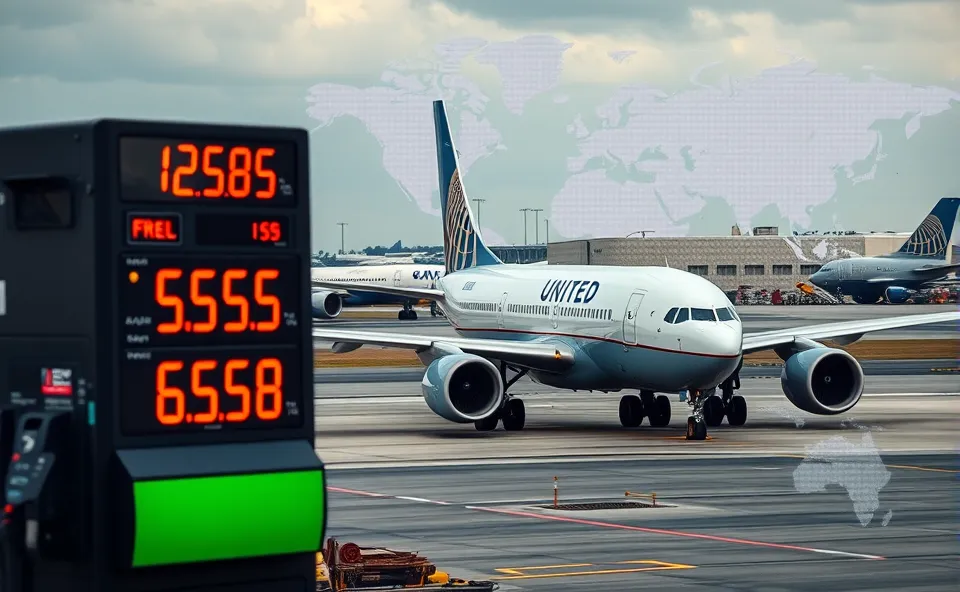
United Airlines Makes a Tough Call on Flight Schedules
Ever feel like the world’s events are constantly finding new ways to affect your daily life, even something as routine as flying? Well, here’s a fresh example. United Airlines, a major US carrier, recently announced some significant changes to its flight plans. They’ve decided to trim about 5% of their planned flight capacity for the foreseeable future. This isn’t just a minor tweak; it’s a strategic move in response to a big challenge: the soaring fuel prices hitting the aviation industry.
Imagine running a giant bus service, but the price of diesel suddenly jumps through the roof. You’d have to make some tough choices, right? That’s pretty much the situation airlines like United Airlines are facing now. Fuel is their biggest single operating cost, and when that cost gets out of control, they have to find ways to save money. Cutting flights, unfortunately, is one of the most direct ways to do that, even if it means fewer options for travelers.
Why Fuel Costs Are Making Headlines Right Now
So, why are these fuel prices suddenly “soaring”? This isn’t just a normal bump in the market. The current spike has a direct and unsettling link to ongoing global tensions, particularly the Iran war and its impact on the Middle East. Geopolitical events in such a critical oil-producing region always send ripples across the global economy, and the price of oil is often the first thing to react dramatically.
When there’s instability or conflict in an area rich in oil, the market gets nervous. Supply lines become uncertain, and the fear of disruptions pushes prices up. This isn’t a new phenomenon, but the intensity of current events means we’re seeing some serious pressure on oil prices, which directly translates to significantly higher costs for jet fuel. That’s why news of United Airlines flight cuts is making waves right now. It’s a very tangible outcome of complex global events, reaching from distant battlefields right into your potential travel plans.
Understanding the Cost of Keeping Planes Flying
To truly grasp why United Airlines and the broader aviation industry are so sensitive to fuel prices, it helps to understand a bit about how airlines operate. For any airline, fuel isn’t just a line item; it’s a massive expense, often accounting for 20% to 30% of their total operating costs. Think about it: a single long-haul flight can burn thousands of gallons of jet fuel. Even small price increases per gallon can add up to millions, or even billions, of dollars across an entire fleet over a year.
Historically, airlines have always ridden this rollercoaster of oil prices. There have been periods of stable, low fuel costs, which allowed for expansion and lower fares. But just as frequently, there have been sudden shocks, like the oil crises of the 1970s or spikes following other geopolitical events. Each time, airlines have had to adapt, sometimes by raising fares, other times by adjusting their airline capacity, much like United Airlines is doing now.
When the cost of flying a plane on a specific route becomes too expensive to make a profit, or even cover its costs, the airline has to reconsider that route. Reducing flight capacity means fewer planes in the air, using less fuel, and theoretically helping the airline manage its budget during these periods of soaring fuel costs. It’s a difficult balancing act between meeting passenger demand and staying financially healthy.
What These Changes Mean for Travelers and Beyond
The decision by United Airlines to implement flight cuts has a ripple effect that touches many areas, from individual travelers to the global economy. Here’s what you might notice:
- Fewer Travel Options: With 5% less airline capacity, some routes might see fewer daily flights, or certain destinations might become harder to reach directly. This could mean longer layovers or less convenient departure times for travelers.
- Potentially Higher Fares: It’s basic economics. When supply goes down but demand stays relatively stable, prices tend to go up. Fewer available seats due to these flight cuts could lead to higher ticket prices on remaining flights, especially for popular routes or last-minute bookings.
- Air Travel Disruption: While a 5% cut might sound small, it can impact thousands of flights over time. This could contribute to more crowded airports, longer security lines, and a general feeling of air travel disruption.
- Impact on Other Airlines: United Airlines isn’t alone in facing these challenges. Other US carriers and international airlines are also grappling with high oil prices. We might see similar capacity adjustments across the aviation industry, leading to a broader economic impact.
- Broader Economic Implications: Reduced air travel capacity can also affect businesses that rely on air cargo for their supply chains or business travelers for important meetings. It’s a reminder of how interconnected the global economy is, and how geopolitical tensions can have far-reaching effects.
Navigating the Uncertain Path Ahead
So, what’s next for United Airlines and the aviation industry as a whole? Predicting the future is always tricky, especially when it’s tied to complex geopolitical situations like the Iran war. However, we can think through some logical possibilities.
Firstly, the duration and intensity of the Iran war will be a major factor. If the conflict de-escalates or oil production stabilizes, we might see fuel prices ease, potentially allowing United Airlines and other carriers to restore some of their cut capacity. However, if tensions remain high or escalate further, we could see continued pressure on oil prices, potentially leading to more widespread flight cuts across the aviation industry.
Airlines are also masters of adaptation. Beyond cutting flights, they might explore other strategies:
- Fuel Efficiency: Investing in newer, more fuel-efficient aircraft or optimizing flight paths to save on fuel.
- Hedging Strategies: Airlines often “hedge” their fuel purchases, buying fuel in advance at a fixed price to protect themselves from sudden spikes. However, this isn’t a foolproof solution and depends on market conditions.
- Route Optimization: Focusing on more profitable routes and adjusting their networks to maximize revenue from fewer flights.
For travelers, this means staying flexible and informed will be key. While United Airlines flight cuts are a response to current challenges, the industry will always strive to connect people and places. The path ahead will depend heavily on global events, but the aviation industry has a long history of navigating turbulence.
Your Top Questions About Airline Flight Changes Answered
What is causing United Airlines flight cuts?
United Airlines is making flight cuts primarily due to a significant rise in fuel prices. These soaring fuel costs make operating flights much more expensive, prompting the airline to reduce its capacity to manage expenses.
How does the Iran war influence the price of jet fuel for airlines?
The Iran war, and the geopolitical tensions it represents in a major oil-producing region, creates instability in global oil markets. This uncertainty can restrict oil supply or create fear of future disruptions, directly driving up oil prices, which in turn leads to higher jet fuel costs for the aviation industry.
Will other US carriers also reduce their airline capacity?
It’s very possible. Since all airlines are subject to the same global oil prices, if the soaring fuel costs continue or worsen, other US carriers and international airlines may also consider similar flight cuts to manage their operating expenses and profitability.
What is the economic impact of these flight cuts and air travel disruption?
The economic impact can be widespread. For travelers, it means potentially higher fares and fewer options. For businesses, it can affect supply chains reliant on air cargo and business travel. Overall, reduced airline capacity and air travel disruption can slightly dampen economic activity by making movement of people and goods more costly and less efficient.
What steps can travelers take to prepare for potential changes in air travel?
Travelers should book flights well in advance, consider travel insurance, and stay informed about their chosen airline’s policies. Being flexible with travel dates and routes can also help in navigating potential air travel disruption or higher prices stemming from factors like the Iran war and its impact on fuel prices.











