

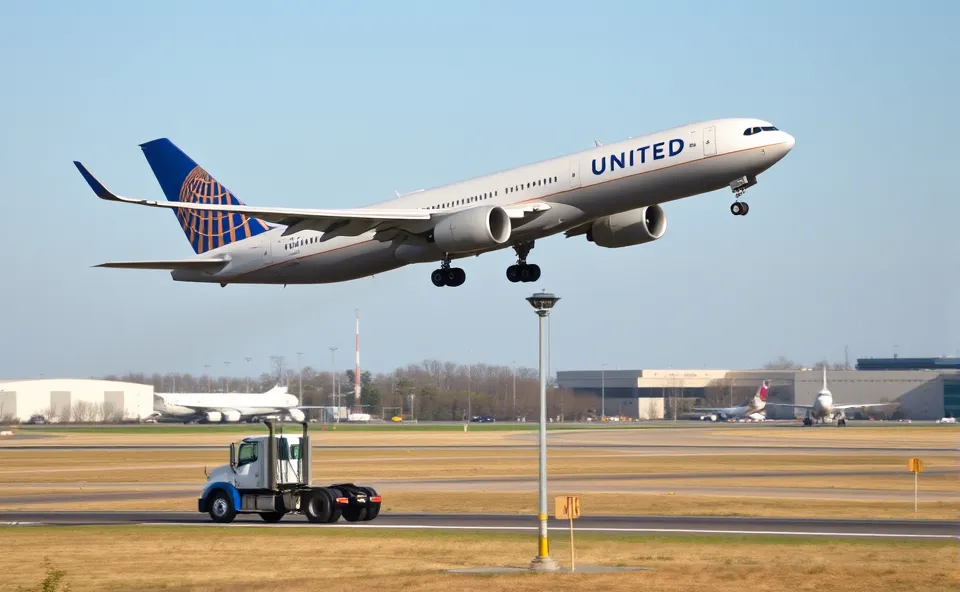
A Bump in the Road for United Flight 169 at Newark Liberty
Imagine settling into your seat, ready for takeoff, only to experience an unexpected jolt before even leaving the ground. That is precisely what happened recently to passengers and crew aboard United Airlines Flight 169 at Newark Liberty International Airport. This incident, while thankfully without serious injury, has caught the attention of many, prompting a closer look at airport operations and passenger safety protocols.
The details are quite specific: United Flight 169, which had originated in Venice, Italy, and was being prepared for its next journey, found itself in an unusual predicament. While the aircraft was being pushed back from its gate at Newark airport, it made contact with a light pole. Almost immediately after, the wing of the aircraft also brushed against a truck that was operating nearby on the tarmac.
This wasn’t a mid-air scare, but a ground-level collision, highlighting the often-overlooked complexities of airport logistics. The immediate aftermath saw a rapid response from ground crews. Importantly, all 124 passengers and 7 crew members aboard the United flight were reported safe and sound. There were no injuries to anyone on the plane or the ground, a crucial detail that brought a sigh of relief to everyone involved. The flight was, understandably, canceled as the aircraft needed a thorough inspection, and passengers were rebooked on alternative flights.
Why Everyone’s Talking About This Newark Airport Incident
In our connected world, even minor incidents can quickly become big news, especially when they involve air travel. The recent event with the United flight at Newark airport is a prime example of why people are searching for and discussing this specific occurrence right now. There’s a natural human curiosity about aviation accidents, even small ones, because they touch upon concerns about safety, reliability, and the sheer scale of modern air operations.
Here’s why this particular light pole strike and truck collision has resonated:
- Uncommon Nature: While air travel is incredibly safe, ground incidents involving aircraft are less common than general flight delays. The idea of a plane hitting a stationary object or a vehicle on the tarmac sparks immediate questions about how such a thing could happen.
- Major Hub Impact: Newark Liberty International Airport is a significant global aviation hub. Any disruption there, even a localized one, can have ripple effects, delaying other flights and impacting thousands of travelers. People want to know if their own travel plans might be affected.
- Passenger Safety Focus: Even though no one was hurt, the incident naturally brings passenger safety into focus. Travelers want assurance that everything possible is being done to prevent such occurrences, and that airlines like United Airlines maintain the highest standards.
- The “What If” Factor: For many, hearing about a “United flight hits truck” scenario conjures up a sense of near-miss. It makes people think about the intricate dance of people and machinery required to get a plane safely into the sky.
The story offers a momentary glimpse behind the scenes of airport operations, turning a routine pushback into a notable event that prompts discussion about the meticulous planning and precision required in the aviation industry.
Looking Back at Airport Safety Operations
To really understand the significance of the recent United flight incident at Newark airport, it helps to put it into context. Modern airports like Newark Liberty International Airport are incredibly complex ecosystems. They are bustling environments where aircraft, ground vehicles, luggage carts, fuel trucks, and countless personnel move in a carefully choreographed ballet. This intricate dance happens 24/7, under all weather conditions, and relies on precise communication and strict protocols.
Historically, aviation accident statistics overwhelmingly point to the safety of flight itself. However, a significant portion of incidents, though usually minor, occur on the ground. These ground incidents can range from minor wing scrapes to more serious runway incursions. Airlines and airports invest heavily in training ground crews, establishing clear communication channels, and developing technology to prevent such occurrences.
For an airline the size of United Airlines, which operates thousands of flights daily across the globe, maintaining operational integrity on the ground is just as critical as in the air. Their procedures are designed to minimize risks during every phase of a flight, from gate to gate. While a light pole strike or a truck collision might sound startling, it’s a testament to these robust safety systems that incidents like the one involving Flight 169 are rare and, when they do happen, rarely result in serious harm.
This incident, therefore, serves as a reminder of the continuous effort and vigilance required to maintain safety in such dynamic environments. It’s not just about flying, but about every step leading up to and following a flight.
The Ripple Effect: Impact on Travelers and the Industry
While the United flight incident involving the light pole strike and truck collision at Newark Liberty International Airport thankfully resulted in no injuries, it doesn’t mean there’s no impact. Such events, even seemingly minor ones, send ripples through several areas, affecting travelers, businesses, and the broader aviation industry.
For travelers, the most immediate impact is disruption. Passengers on Flight 169 faced unexpected delays, rebooking, and the stress of an altered travel plan. Even those not on the flight might experience knock-on effects if the incident caused temporary congestion or a shortage of available gates at the busy Newark airport. It highlights the vulnerability of travel plans to unforeseen circumstances, even when everything seems routine.
For United Airlines, the impact is primarily operational and reputational. The aircraft involved needed to be taken out of service for inspection and repair, leading to costs and potential schedule adjustments. There’s also the time and resources dedicated to managing passenger rebookings and communicating updates. From a business perspective, incidents like these are reminders of the constant need for operational excellence and meticulous adherence to safety protocols to maintain customer trust.
For airport operations at Newark Liberty International Airport, the incident triggered a series of immediate responses:
- Investigation into the exact circumstances.
- Assessment of damage to the light pole and potential infrastructure.
- Review of ground traffic procedures and communication channels.
- Potential temporary adjustments to ground movement patterns in the affected area.
The broader aviation industry views such events as data points. Every aviation accident or incident, regardless of severity, offers lessons. It reinforces the importance of continuous training, advanced ground monitoring technologies, and clear, unambiguous communication between pilots, ground controllers, and ground crews. It’s a testament to the industry’s commitment to passenger safety that even a ground-level truck collision or light pole strike prompts significant review and potential refinement of processes.
In essence, this United flight incident underscores that every small detail in the complex world of air travel matters, and vigilance is key at every stage.
What Happens Next: Looking Ahead After the Incident
When an incident like the recent one involving the United flight at Newark Liberty International Airport occurs, it’s not simply brushed aside once the immediate crisis is over. Instead, a series of structured steps typically follow, aimed at understanding what happened, preventing recurrence, and maintaining the highest levels of passenger safety.
First and foremost, there will be a thorough investigation. Agencies like the National Transportation Safety Board (NTSB) or the Federal Aviation Administration (FAA) will likely be involved, even for ground incidents. United Airlines will conduct its own internal review, as will Newark airport operations. This investigation will seek to answer critical questions:
- What precisely led to the light pole strike and subsequent truck collision?
- Was there any equipment malfunction, human error, or miscommunication?
- Were all procedures followed correctly?
- What were the environmental factors at play?
Based on the findings, it’s very probable that operational reviews and potential adjustments will take place. This could mean updated training for ground crews, revised pushback procedures, clearer markings on the tarmac, or improved communication protocols between pilots and ground control. United Airlines will meticulously examine its own processes, while Newark Liberty International Airport might look at its overall ground traffic management systems.
We might also see discussions around technological enhancements. Could better proximity sensors on aircraft or ground vehicles help prevent similar incidents? Are there advanced radar systems that could offer real-time alerts for potential ground conflicts? The aviation industry is constantly evolving, and incidents often spur innovation.
For the average traveler, the long-term impact on daily travel will likely be minimal. While this particular United flight incident caused immediate disruption for those involved, such events are typically isolated. They serve as valuable learning experiences that ultimately contribute to making an already safe system even safer. The commitment to continuous improvement means that every lesson learned, even from a ground collision, helps refine the intricate dance of air travel for millions of passengers globally.
Your Questions About the Recent United Flight Incident Answered
What exactly happened with the United flight at Newark airport?
A United Airlines flight, specifically Flight 169, which had arrived from Venice and was preparing for its next departure, struck a light pole and then made contact with a truck while being pushed back from its gate at Newark Liberty International Airport. This ground incident caused damage to the aircraft but, critically, resulted in no injuries to passengers or crew.
Which United Airlines flight was involved in the light pole strike?
The flight involved in the incident was United Airlines Flight 169. This Venice flight was reportedly being maneuvered on the tarmac when the light pole strike occurred, followed by the truck collision.
Were there any injuries from the airport incident involving flight 169?
Fortunately, there were no injuries reported among the 124 passengers or the 7 crew members aboard United Flight 169, nor were there any injuries to ground personnel involved in this airport incident. Passenger safety was maintained despite the collision.
How does an aviation accident like a truck collision on the ground affect passenger safety?
While the term “aviation accident” often brings to mind in-air events, ground incidents like a truck collision or a light pole strike are also taken very seriously. In this case, robust aircraft design and quick emergency response ensured passenger safety was not compromised. Such events trigger investigations to enhance ground procedures and further protect everyone on board and on the tarmac.
What measures are taken at Newark Liberty International Airport after such an event?
After an incident like this, Newark Liberty International Airport, in conjunction with United Airlines and relevant authorities, initiates a thorough investigation. This includes assessing damage, reviewing ground control communications, examining operational procedures, and potentially implementing new training or technological solutions to prevent similar occurrences in the future. The focus is always on continuous improvement for passenger safety and operational efficiency.











