

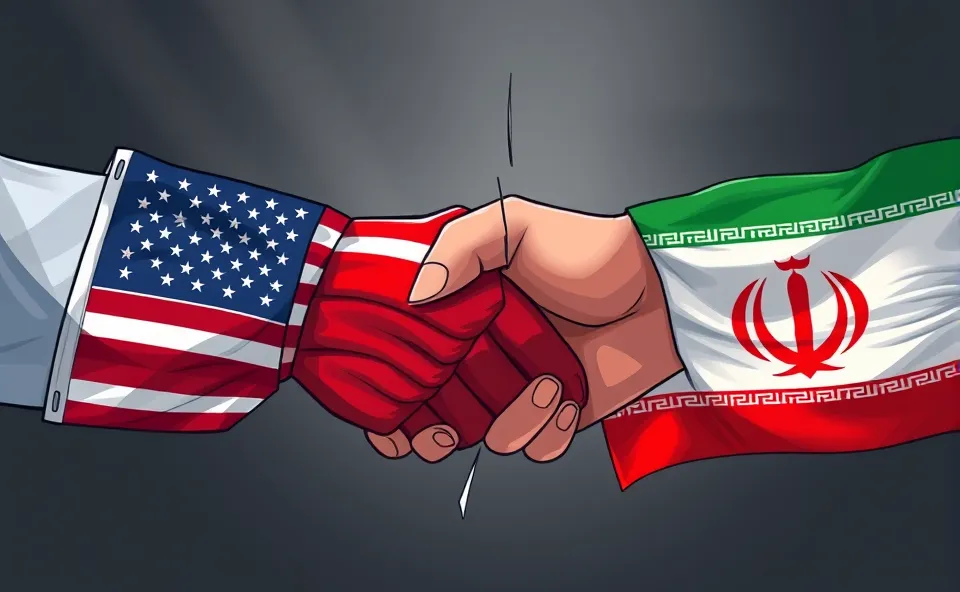
The Deep Freeze in Global Negotiations
If you have been keeping an eye on the news lately, you have likely noticed a shift in the tone regarding international relations in the Middle East. For a while, there was at least a faint hope that back-channel talks or renewed international diplomacy might ease the friction between Washington and Tehran. Recently, however, that momentum has hit a hard wall. The dialogue has effectively stalled, leaving a vacuum where structured communication used to be. When diplomacy goes quiet, the space is often filled by uncertainty and, unfortunately, the potential for direct confrontation.
In simple terms, the current state of US Iran relations is arguably at its most brittle point in years. Both sides seem to have retreated into entrenched positions. Washington is maintaining a firm stance on economic sanctions while Iran continues to advance its regional interests and technical capabilities. When two major players stop talking, the risk of miscalculation grows. It is no longer just a matter of political posturing; it is becoming a reality that businesses and global citizens need to watch closely because the ripple effects are significant.
Why Everyone is Paying Attention Now
You might wonder why this topic is suddenly dominating search trends and dinner table conversations. The reason is simple: the global economy is incredibly interconnected, and the Middle East remains the world’s most sensitive energy chokepoint. People are not searching for these updates just because they are interested in politics. They are looking because they understand that a shift in US Iran relations can impact the price of a gallon of gas, the cost of shipping goods across the ocean, and the stability of global markets.
The urgency stems from a feeling that we are at a tipping point. With international diplomacy currently sidelined, the focus has shifted toward military readiness and regional maneuvering. When major powers signal a departure from peaceful resolution, investors and business leaders naturally get nervous. They are trying to figure out if we are heading toward a period of prolonged cold friction or if we are walking toward an active, localized conflict that could disrupt supply chains that are already stretched thin.
A Brief Look at the Road Behind Us
To understand where we are today, we have to look at the history of the Iran nuclear deal. Years ago, that agreement was the centerpiece of international efforts to keep the region stable. It created a framework where sanctions were lifted in exchange for transparency. However, the landscape changed dramatically when the Trump Iran policy shifted the strategy from engagement to maximum pressure. This approach relied on heavy economic sanctions intended to force a change in Tehran’s behavior.
While those policies were designed to bring Iran to the negotiating table, they also fueled deep-seated distrust. Over time, we have seen a cycle of retaliatory actions. Every time a new sanction is added, or a new diplomatic bridge is burned, it becomes harder for the next administration to restart the conversation. We moved from an era of controlled agreements to a reality of regional proxy tensions. This history matters because it shows us that the current impasse is not an overnight development. It is the result of years of escalating tension and the steady erosion of trust between two nations that have very different visions for the region.
What This Means for Markets and Daily Life
The impact of this diplomatic freeze is felt far beyond the halls of government. For businesses and individual consumers, geopolitical instability is often synonymous with volatility. The most immediate concern is the global oil market. A significant portion of the world’s crude oil passes through the Strait of Hormuz, a narrow waterway that is essentially the jugular vein of the energy trade. If military conflict breaks out or if tensions lead to even minor disruptions in shipping, the price of energy can swing wildly in a matter of hours.
Here is what this means for your daily life and the broader economy:
- Energy Prices: Because oil markets hate uncertainty, any sign of escalation usually leads to higher prices at the pump. This can pull money out of consumer pockets and slow down discretionary spending.
- Supply Chain Fragility: Global shipping routes are sensitive. If insurance premiums for tankers go up due to the risk of military conflict, those costs are passed down to the companies shipping the goods and, eventually, to you.
- Business Planning: Companies that operate internationally find it difficult to forecast costs when they cannot predict the next move in US foreign policy. This often leads to caution, reduced hiring, or delayed expansion plans.
- Market Sentiment: Stock markets generally dislike the threat of war. Even the threat of combat operations can lead to a flight toward safer investments, creating a drag on economic growth.
In short, when diplomacy fails, the “risk premium” on everything we buy and sell goes up. We are essentially paying a tax on instability.
Looking Toward the Horizon
What happens next is the million-dollar question. While it is easy to assume the worst, we should look at the landscape logically rather than through a lens of fear. The most likely path forward is a continuation of the current “grey zone” strategy. This means both sides will likely avoid an all-out, direct war, which would be disastrous for everyone involved, but they will continue to engage in localized, low-level confrontations. Expect more cyber activity, regional proxy challenges, and a continuation of economic pressure campaigns.
However, the window for a return to meaningful international diplomacy is not permanently shut. It is just heavily boarded up. The future will likely be defined by whether or not third-party mediators can create enough common ground to get both sides to at least agree on a temporary “cease-fire” of rhetoric. Until that happens, we are in a holding pattern where every headline about Middle East tensions will cause a flutter in the markets. The takeaway is that we should prepare for a period of ongoing turbulence where patience and long-term planning will be more valuable than reactionary decisions.
Commonly Asked Questions
How does the current state of US Iran relations affect my personal finances?
The primary connection is through energy prices. Because the Middle East is vital to global oil supply, tensions in the region can cause oil prices to spike. When energy becomes more expensive, it usually increases the cost of transport and manufacturing, which can lead to higher prices for almost everything you buy.
Is a direct military conflict inevitable given the current stalled Iran diplomacy?
Not necessarily. While the lack of diplomacy is concerning, both sides have historically shown a preference for avoiding direct, full-scale military conflict. Most analysts expect a continuation of indirect actions, such as economic sanctions and regional influence plays, rather than an immediate move to open warfare.
Why is the Strait of Hormuz so critical to the global economy?
The Strait of Hormuz is one of the most important shipping channels in the world. A massive percentage of the world’s daily oil production passes through this narrow passage. Any geopolitical instability near this location creates immediate fear of supply shortages, which drives up oil prices globally.
How does the Trump Iran policy continue to influence current US foreign policy?
Many of the economic sanctions and the strategy of maximum pressure established during that period remain in effect today. These policies set a precedent that current decision-makers must navigate, making it difficult to simply reset relations to how they were before those policies were implemented.
What role does international diplomacy play in preventing a military conflict?
International diplomacy acts as a pressure release valve. It provides a structured way for nations to air grievances and negotiate compromises without using force. When diplomacy stalls, the only tools left for resolving disputes are economic pressure or military posturing, which naturally increases the risk of accidental escalation.











