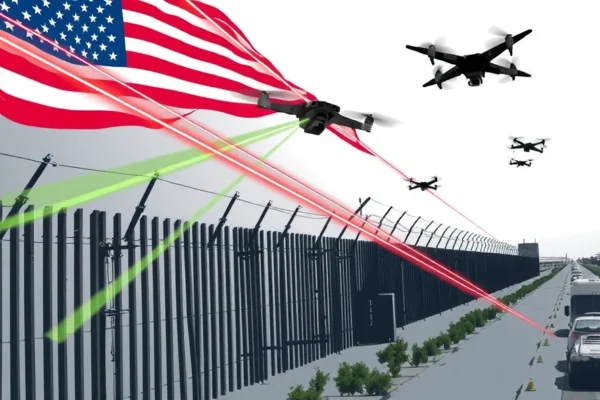
A New Border Battle Against Rogue Drones
The United States and Mexico are embarking on a novel joint operation, leveraging advanced laser technology to combat a growing threat: commercial drones used in human and drug trafficking. This initiative, revealed in early 2024, signifies a significant escalation in the technological arms race along the shared border, aiming to detect, track, and ultimately disable these unauthorized aerial intrusions. The collaboration highlights the evolving nature of border security challenges, moving beyond traditional methods to embrace cutting-edge solutions.
Shining a Light on the Problem
At its core, this joint operation deploys a sophisticated form of anti-drone technology that uses lasers. The problem it aims to solve is the increasingly sophisticated use of commercial drones by criminal organizations. These drones can carry illicit goods, act as surveillance tools, or even facilitate the movement of people across borders, often operating at altitudes and speeds that make traditional surveillance difficult. The US Mexico drones initiative seeks to provide a robust counter-drone system capable of neutralizing this threat.
The significance of this development lies in its proactive and technologically advanced approach. Historically, border security has relied on patrols, sensors, and physical barriers. However, the proliferation of affordable and capable commercial drones has created new vulnerabilities. This joint operation represents a significant step in adapting border security strategies to address this emerging aerial threat, focusing on a laser drone defense system.
Details of the specific deployment and participating agencies were outlined in joint statements by homeland security officials from both nations. While precise technological specifications are often guarded for operational security, the fundamental principle involves using directed energy, specifically lasers, to interfere with or disable drones.
How Laser Drone Defense Works
Think of this laser drone defense system like an advanced, invisible net cast into the sky. The core mechanism involves a powerful, precisely aimed laser beam. When a drone is detected and identified as a threat, the system locks onto it. The laser then delivers a concentrated burst of energy.
There are generally two main ways this energy can neutralize a drone:
- Overheating and Disruption: The laser can heat critical components of the drone, such as its sensitive electronics, sensors, or motors. This can cause the drone to malfunction, lose control, or even shut down mid-flight.
- Physical Damage: In some advanced systems, a sufficiently powerful laser can physically damage the drone’s airframe or propellers, forcing it to crash.
The system typically integrates with advanced aerial surveillance technologies, including radar and optical sensors, to detect drones. Once a target is identified, sophisticated tracking software guides the laser, ensuring it stays locked on even if the drone maneuvers. This entire process is designed to be rapid, allowing for quick intervention before a drone can complete its illicit mission. It’s a form of laser technology that provides a directed and immediate response.
Current Deployments and Early Adoption
While the formal announcement of the US Mexico joint operation is recent, the underlying laser drone defense technology has been in development and testing for several years by various defense contractors and research institutions. Companies like Raytheon, Lockheed Martin, and others have been developing and demonstrating similar directed energy counter-drone systems. Some of these systems have seen limited deployment in military bases, airports, and sensitive government facilities to protect against unauthorized drone activity.
The use of such systems in a sustained, large-scale border operation between two nations is a significant expansion of their application. Currently, this technology is in its early adoption phase for widespread homeland security purposes. It is not yet a mainstream, off-the-shelf solution for general use but is becoming a critical tool for high-stakes security environments. Availability is largely restricted to government and military entities with the necessary funding and technical expertise for operation and maintenance.
Competition in the Skies and on the Ground
The field of counter-drone systems is highly competitive. Beyond laser technology, several other approaches are being developed and deployed:
- Electronic Warfare (Jamming): These systems emit radio signals that disrupt a drone’s communication with its operator or its GPS signal, causing it to return to base, land, or hover. This is a widely used and mature technology but can be less effective against drones operating autonomously or those with encrypted communications.
- Kinetic Interceptors: These are physical projectiles, such as nets or specialized missiles, designed to capture or destroy drones. While effective, they are expendable and can pose secondary risks depending on where they land.
- Detect-and-Disable Systems: These combine various sensors (radar, acoustic, optical) with methods like spoofing GPS signals or employing a counter-drone itself to intercept the threat.
Laser drone defense, like the one being explored in the US Mexico drones initiative, offers a compelling advantage: it’s a ‘soft kill’ solution that doesn’t necessarily destroy the drone, potentially allowing for recovery and forensic analysis of the device. It also has the potential for lower operational costs over time compared to expendable kinetic systems, as the ‘ammunition’ (laser energy) is effectively limitless. The advantage for this specific joint operation lies in the precisely controlled, non-kinetic neutralization it offers, which is crucial for border regions where collateral damage or debris could be a significant concern.
Transforming Border Security and Beyond
The implications of this joint operation are far-reaching. For border security, it offers a potent new tool to deter and disrupt human trafficking and drug trafficking operations that rely on drones. This can lead to reduced flow of illicit goods and increased safety for border patrol agents. The success of this laser drone defense program could set a precedent for similar collaborations between nations facing analogous challenges with drone-based criminal activity.
Economically, the development and deployment of such advanced counter-drone systems drive innovation and create jobs in the defense and technology sectors. It also represents a significant investment in homeland security infrastructure. Socially, the primary benefit is enhanced public safety and a reduction in the crime and exploitation facilitated by these rogue drones. However, concerns regarding the potential misuse of such powerful technology and the escalation of an “arms race” in the skies also warrant careful consideration.
In the short term, this initiative will likely focus on pilot programs and phased deployment along critical border segments. Over the next 3-5 years, we can expect to see wider adoption and integration into existing border surveillance networks if initial deployments prove effective and cost-efficient.
Navigating the Hurdles Ahead
Despite its promise, laser drone defense technology faces several limitations and challenges. One primary bottleneck is the weather. Lasers are light, and conditions like fog, heavy rain, or dust storms can significantly reduce their effectiveness and range. Ensuring reliable operation in all environmental conditions remains a technical hurdle.
Another challenge is the power requirement and thermal management for high-energy lasers. These systems can be bulky, require substantial power sources, and generate significant heat, complicating mobile or discreet deployment. The cost of acquiring and maintaining these sophisticated systems is also substantial, presenting a barrier to widespread adoption, especially for smaller agencies or less affluent nations.
Furthermore, regulations surrounding the use of directed energy weapons, even for non-lethal purposes, are still evolving. Ensuring that these systems are used responsibly and ethically, without posing undue risks to civilian aircraft or people on the ground, is paramount. The ability of these systems to discriminate between hostile and friendly drones, or even hobbyist drones that may stray into restricted airspace, is also a critical consideration.
The Evolving Landscape of Aerial Defense
The future trajectory of laser drone defense technology points towards increased miniaturization, improved weather resilience, and enhanced AI-driven targeting capabilities. We can expect to see more integrated systems that combine lasers with other counter-drone technologies for a multi-layered defense. Research is ongoing to develop “eye-safe” lasers that can disrupt drone electronics without posing a visual hazard, potentially expanding their deployment scenarios.
Key developments to watch include advancements in adaptive optics to compensate for atmospheric distortion and improvements in laser power efficiency. The timeline for next breakthroughs is fluid, but continued investment in directed energy research by both governments and private companies suggests incremental progress is likely. Within the next 5-10 years, laser drone defense systems are expected to become more sophisticated, more integrated, and potentially more accessible for a wider range of security applications.
Frequently Asked Questions
What exactly are US Mexico drones in this context?
US Mexico drones refers to the joint operation between the United States and Mexico utilizing advanced anti-drone technology, specifically lasers, to counter the illegal use of commercial drones for trafficking purposes.
How effective is laser drone defense against trafficking?
Early indications suggest laser drone defense can be highly effective in detecting, tracking, and disabling drones used in drug and human trafficking. Its precise, non-kinetic approach offers a significant advantage in border security.
Is this laser technology currently available for public purchase?
No, this advanced laser drone defense technology is currently restricted to government and military applications due to its complexity, cost, and operational requirements. It is not available for public purchase.
What are the main risks associated with laser drone defense?
The main risks include potential ineffectiveness in adverse weather, the high cost of deployment, regulatory hurdles, and the need for robust protocols to prevent accidental engagement of friendly or civilian aircraft.
How does this compare to drone jamming technology?
Laser drone defense offers a more targeted approach that can physically disable a drone, potentially allowing for analysis, whereas jamming disrupts signals, which might be less effective against autonomous drones and can sometimes affect unintended targets.
This article discusses emerging technologies and their potential applications. Specific performance capabilities and timelines are based on current announcements and research; actual deployment and effectiveness may vary.