

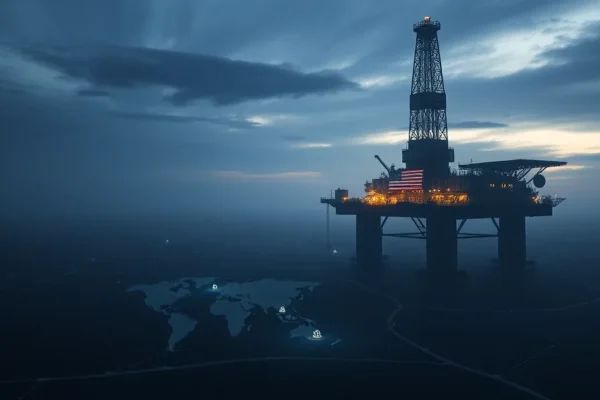
The global energy market is always shifting, and one significant recent development is the return of U.S. oil drillers to global wildcatting. This means American companies are increasingly looking beyond U.S. borders for new oil discoveries, a practice known as oil exploration or wildcat drilling. For decades, the U.S. has been a major oil producer, but this renewed focus on international frontiers signals a new chapter for shale drillers and the broader petroleum industry. Understanding this trend is crucial because it can influence everything from gas prices at the pump to national energy security.
What is Global Wildcatting?
At its core, global wildcatting refers to the search for new, untapped oil or gas fields in places where extraction hasn’t been done before. Think of it like being a treasure hunter. Instead of digging in your backyard where you know there might be buried coins, a wildcatter looks for entirely new islands or continents hoping to strike gold. In the context of US oil, this means American companies are venturing into international territories, often in politically or geographically challenging regions, to find new sources of crude oil. These are typically referred to as upstream oil operations – the initial stage of finding and extracting oil and gas.
Why should you care about this? Because the more oil there is, and the easier it is to get, the more stable oil prices tend to be. If oil discoveries slow down or become more expensive to find, it can lead to higher prices for the gasoline you put in your car, the heating oil you use in winter, and the raw materials for countless products we use daily. It directly impacts household budgets and the cost of goods and services worldwide.
How U.S. Oil Drillers Are Returning to Global Wildcatting
The process of international oil exploration by U.S. companies involves several key steps. First, companies conduct extensive research, analyzing geological data and political stability of potential regions. They might use advanced seismic imaging technologies, similar to an ultrasound for the Earth, to identify underground rock formations that could trap oil and gas. If promising signs are found, they then bid for exploration rights or enter into joint ventures with national oil companies or other international firms.
Once rights are secured, the actual wildcat drilling begins. This is the riskiest part, as a well might be drilled only to find no commercially viable oil or gas. However, advances in drilling technology have made exploration more efficient and, in some cases, less risky than in the past. For example, horizontal drilling and hydraulic fracturing (fracking), which revolutionized U.S. shale production, can also be applied in new international settings. If a discovery is made, the company then moves to the development phase, which involves building infrastructure to extract and transport the oil.
A real-world scenario could involve a U.S. company securing exploration rights in a remote part of Africa or South America. They invest millions in surveying and drilling. If they strike a significant deposit, it could lead to a new major oil supply source. This is akin to a large retailer deciding to open a new store in a previously underserved neighborhood; if successful, it brings new products and economic activity to that area.
Why This Trend Matters
The return of US oil companies to global wildcatting has several significant implications. For individuals, it can mean more stable or potentially lower fuel prices in the long run if new supplies are found and brought to market. It could also impact the value of investments in energy companies.
Economically, increased oil exploration can boost job creation, both directly in the petroleum industry and indirectly in supporting sectors. It can also influence global oil supply dynamics, potentially shifting power and market share among oil-producing nations. For countries that successfully attract this investment, it can bring much-needed revenue and technological transfer. However, it also brings risks. The environmental impact of drilling, potential geopolitical instability in exploration regions, and the volatility of oil prices are significant concerns.
Who benefits? Primarily, the oil companies conducting the exploration, their investors, and potentially consumers through more stable prices. Nations that host these discoveries can also see economic benefits. Who is affected negatively? Nations that rely heavily on oil exports and see their market share potentially reduced, as well as communities and ecosystems in areas targeted for exploration that may face environmental risks.
Historical and Current Context of Global Wildcatting
Oil exploration has a long history, with major booms and busts tied to discoveries in various parts of the world. For much of the 20th century, U.S. companies were at the forefront of global exploration. However, the U.S. became a net importer of oil for decades, and the focus shifted inward with the shale revolution beginning in the late 2000s. This revolution, driven by advancements in drilling technology like hydraulic fracturing and horizontal drilling, made previously uneconomical U.S. oil reserves accessible.
For a period, U.S. shale production surged, making the U.S. one of the world’s largest oil producers and even an exporter. However, as domestic production matured and global demand continued to grow, many U.S. companies began looking abroad again for new growth opportunities and higher-return projects. The current interest in global wildcatting is partly a return to historical practices, but now armed with superior technology and experience gained from the U.S. shale boom. For example, the U.S. Energy Information Administration (EIA) reported that in 2022, U.S. crude oil production averaged 11.9 million barrels per day, a significant increase from previous years, but the drive for further growth pushes companies internationally.
Practical Implications for Thinking About This Trend
When you hear about US oil companies engaging in global wildcatting, it’s useful to consider what it means for your own financial planning. A common misconception is that all oil exploration automatically leads to immediate price drops. In reality, it takes years from discovery to significant production, and prices are influenced by a complex web of global events, demand, and geopolitical factors.
What to watch for: Keep an eye on reports from major oil companies about their international exploration budgets and successes. News about new, large-scale oil discoveries can be a signal for potential future supply increases. Also, pay attention to global crude oil benchmarks like Brent and West Texas Intermediate (WTI), as their prices reflect market expectations about supply and demand.
Actionable insight: Understanding that energy prices are influenced by global supply and demand, including new discoveries and geopolitical stability, can help you make more informed decisions about budgeting for fuel and energy costs. While you cannot directly control oil exploration, being aware of these trends can help you anticipate potential shifts in prices and plan accordingly.
Related Concepts to Explore
This topic is deeply interconnected with several other financial and economic concepts. Understanding energy security, which refers to a nation’s ability to ensure reliable and sufficient energy supplies, is key. The dynamics of the energy market are heavily influenced by the principles of supply and demand. The practice of wildcat drilling is a high-risk, high-reward venture within the broader field of upstream oil and gas operations. Furthermore, global economic growth and the transition towards renewable energy sources also play a significant role in shaping the future of international oil exploration and the overall petroleum industry.
Common Questions About US Oil and Global Wildcatting
How does U.S. oil exploration abroad affect domestic gas prices?
While the direct impact on domestic prices might not be immediate, increased global wildcatting by U.S. companies can contribute to global oil supply. If significant new reserves are found and brought to market, it can help stabilize or lower international crude oil prices, which in turn influences the cost of gasoline at the pump in the U.S.
What are the main risks involved in international oil exploration for U.S. companies?
The risks are substantial and include geological uncertainty (finding no oil), political instability in exploration regions, regulatory changes, operational hazards, environmental concerns, and the volatility of global oil prices. This is why it is considered wildcat drilling – it’s a high-stakes endeavor.
Can individual investors participate in global oil exploration?
Yes, individual investors can participate by investing in publicly traded energy companies that are involved in international oil exploration. However, this involves risks associated with stock market volatility and the inherent risks of the petroleum industry itself.
What is the role of technology in modern U.S. oil exploration?
Technology is critical. Advanced seismic imaging, directional and horizontal drilling technology, and hydraulic fracturing have enabled access to previously inaccessible oil reserves. This technology makes both domestic and international oil exploration more efficient and sometimes more successful.
How does this trend relate to energy security for the U.S. and other nations?
For the U.S., a diversified global presence in oil exploration can enhance energy security by reducing reliance on any single supplier. For other nations, the success of U.S. companies in finding new reserves can impact their own energy independence and market position.
What are the potential environmental impacts of increased global wildcatting?
Increased oil exploration, especially in remote or ecologically sensitive areas, carries potential environmental risks such as habitat disruption, oil spills, and increased carbon emissions associated with the extraction and transportation of fossil fuels. Careful regulation and adherence to environmental standards are crucial.
This educational content is for informational purposes only and does not constitute financial advice. Financial situations are unique, and it is always recommended to consult with a qualified financial professional before making any investment or financial decisions. Past performance is not indicative of future results, and all investments carry risk.











