

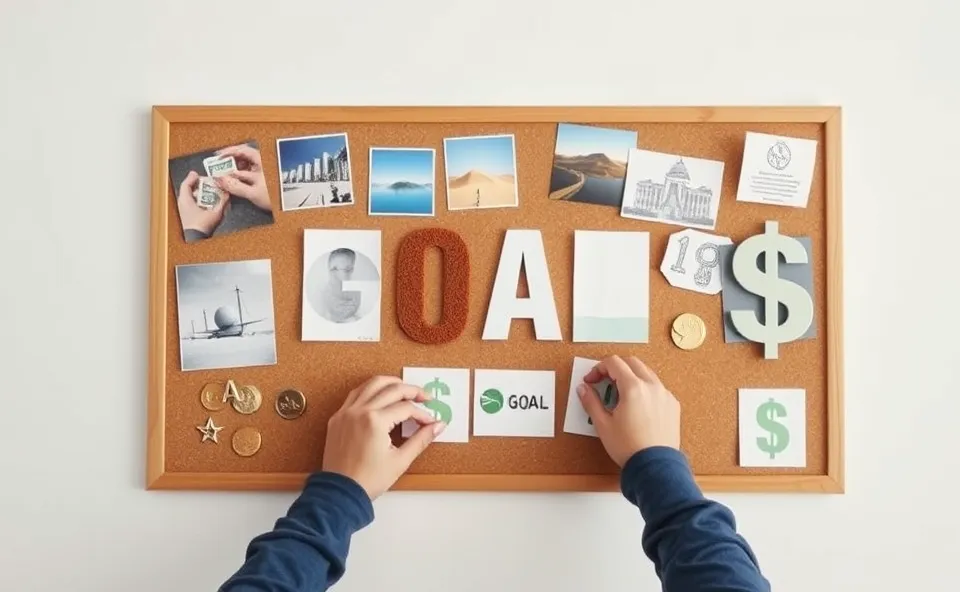
The Power of a Visual Financial Roadmap
Imagine you are sitting at your desk, staring at a complicated spreadsheet. The numbers are cold, the rows are endless, and your long term dreams feel like they are buried under a mountain of math. It is hard to feel excited about a budget when all you see is what you cannot spend. Now, imagine replacing that feeling with a vibrant, colorful collage that reminds you exactly why you are saving in the first place. This is the essence of using a vision board to manage your financial goals.
A vision board is more than just a craft project. It is a curated collection of images, words, and symbols that represent the life you want to build. When we apply this to money, we move away from the stress of restriction and move toward the excitement of achievement. Instead of thinking about what you are cutting out of your budget, you start thinking about what you are building toward. It turns the abstract concept of wealth into something you can actually see and touch.
Why People are Turning to Visual Tools Now
You might notice more people talking about wealth manifestation and visual planning on social media lately. There is a good reason for this surge. We live in a time of significant economic shifts. Between inflation and the rising cost of living, traditional financial planning can often feel overwhelming or even discouraging. When the news feels heavy, people look for ways to reclaim a sense of agency over their lives.
People are searching for ways to bridge the gap between their current reality and their future aspirations. A simple list of savings goals can feel disconnected from daily life. However, seeing a photo of a cozy home or a peaceful retirement lifestyle every morning changes the emotional connection to your money. It provides a mental anchor. In an era of constant digital distraction, these physical or digital reminders help people stay focused on their long term success habits rather than getting lost in short term impulses.
A Brief Look at the History of Visualization
The idea of using images to influence your mindset is not actually new. For decades, psychologists and performance coaches have used visualization techniques to help athletes and executives reach the top of their fields. The concept is simple: the brain often has trouble distinguishing between a vividly imagined experience and a real one. When you repeatedly view an image of your success, your brain begins to accept that goal as a tangible reality.
In the early 2000s, the concept of the vision board exploded into the mainstream through various self help movements. It moved from a niche psychological tool to a popular lifestyle trend. People realized that they could use these boards not just for vague dreams, but for very specific life milestones. By combining old school psychological principles with modern personal finance management, a new way of looking at money was born. It shifted the conversation from scarcity to possibility.
Transforming Your Habits with a Financial Vision Board
Creating a board that actually works requires more than just cutting out pictures of luxury cars. To make a real impact on your money mindset, you need a structured approach. Here is a step-by-step guide to building a board that drives real results.
Step 1: Define Your Specific Financial Goals
Before you grab the scissors, you need to know what you are aiming for. General ideas like “being rich” do not work well for a vision board. You need clarity. Sit down with a journal and write out your specific targets. Consider these categories:
- Short term goals: This might be an emergency fund, paying off a specific credit card, or saving for a summer vacation.
- Medium term goals: Think about a down payment for a house, a new car, or starting a small business.
- Long term goals: This includes retirement stability, paying off a mortgage, or building a legacy for your family.
The more specific you are, the better your budget planning will become because you will have a clear “why” behind every dollar you save.
Step 2: Select Meaningful Imagery
Now comes the fun part. You need to find vision board ideas that resonate with your soul. Do not just pick things because they look expensive. Pick things that represent the feeling of financial freedom. If your goal is to travel, do not just find a picture of an airplane. Find a picture of the specific beach or mountain range you want to stand in. If you want to feel secure, find an image of a warm, stable home.
Use a mix of different elements:
- Photos: Real images of the lifestyle or items you are working toward.
- Words and Quotes: Phrases like “Financial Freedom,” “I am a magnet for prosperity,” or “Disciplined and Rewarded.”
- Symbols: An image of a growing plant to represent your growing investments, or a gold coin to represent wealth.
Step 3: Assemble Your Board
You can go the traditional route with a physical poster board, glue, and magazines, or you can go digital using apps like Pinterest or Canva. A physical board is wonderful because it is a tactile experience. You can feel the texture of the paper, which can make the process feel more grounded. A digital board is great because you can set it as your phone wallpaper or computer background, ensuring you see it dozens of times a day.
Step 4: Strategic Placement and Daily Rituals
A vision board tucked away in a drawer is just a pile of paper. For it to influence your success habits, it must be visible. The best places include:
- The wall directly in front of your desk.
- The inside of your closet door so you see it while getting ready.
- Your bedside table if you want it to be the first thing you see in the morning.
To truly leverage visualization techniques, create a daily ritual. Spend five minutes every morning looking at your board. As you look at each image, try to feel the emotion you will feel once that goal is achieved. If you are looking at a photo of a debt free life, feel the lightness and the lack of stress. This helps rewire your brain to favor the actions that lead to that feeling.
What the Future of Wealth Manifestation Looks Like
As technology continues to evolve, the way we interact with our goals will change too. We are already seeing the rise of highly personalized finance apps that use behavioral psychology to keep users on track. In the near future, we might see “smart” vision boards. Imagine a digital display in your home that syncs with your bank account. As you hit your savings goals, the images on your board could become clearer or more vibrant, providing instant visual dopamine for your progress.
We may also see more integration between artificial intelligence and personal finance. AI could help you curate your vision board by suggesting imagery based on your actual spending habits and long term objectives. Instead of just dreaming, your board could become a dynamic, living dashboard that shows you exactly how close you are to your dreams. The line between mental visualization and practical financial planning will continue to blur, making the journey toward wealth both more psychological and more data driven.
Frequently Asked Questions
How can a vision board help with financial goals?
A vision board acts as a constant visual reminder of your objectives. It helps keep your focus on the big picture, making it easier to stay disciplined during budget planning and helping you resist impulsive spending that does not align with your long term dreams.
What are some creative vision board ideas for wealth?
Instead of just using money symbols, try using images of lifestyle freedom. This could include photos of a quiet library if you value knowledge, a serene garden if you value peace, or a passport filled with stamps if you value adventure. Linking money to specific experiences makes your financial goals feel much more attainable.
How do visualization techniques help with money mindset?
Visualization techniques work by training your brain to recognize opportunities that align with your goals. By repeatedly seeing your desired outcome, you reduce the subconscious fear associated with money and replace it with a sense of possibility and proactive planning.
Can I use a vision board for budget planning?
Yes. While a budget is about the numbers, a vision board is about the purpose. Use your board to remind yourself why you are following your budget. When you feel the urge to overspend, looking at your board can help you reconnect with your savings goals.
Is a vision board part of effective personal finance?
While a vision board is not a replacement for a mathematical budget, it is a powerful psychological companion to personal finance. It provides the emotional motivation needed to stick to the technical aspects of managing your money over the long term.











