

The New Era of Mobile Imaging with the Vivo X500 Pro Max
For years, smartphone photography has relied on a tug of war between hardware and software. While software algorithms could fake a high dynamic range by stitching multiple photos together, the physical sensors often struggled with extreme lighting. The arrival of the Vivo X500 Pro Max marks a shift in this balance. This flagship phone introduces the Sony Lytia L910 sensor, a piece of hardware designed to handle light in a way that was previously reserved for professional cinema cameras.
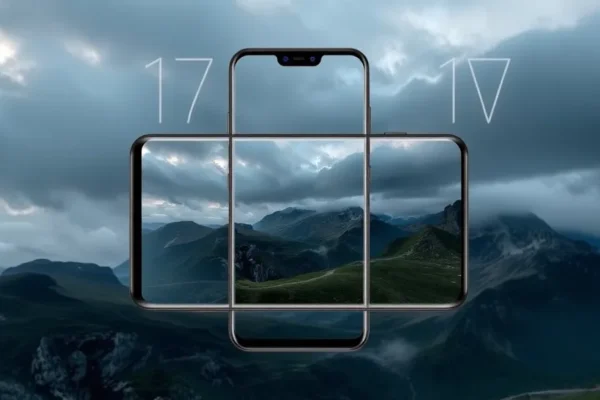
The primary innovation here is the integration of LOFIC technology, which enables a staggering 17 EV dynamic range. In simple terms, this device can capture detail in the deepest shadows and the brightest highlights of a single frame without losing information. According to official technical specifications from Vivo and Sony, this is a significant leap over the 12 to 14 EV range typical of most high end smartphones. By solving the problem of blown out skies and crushed shadows, the Vivo X500 Pro Max aims to bring professional grade lighting control to the average user.
How LOFIC and the Lytia L910 Sensor Work
To understand why the 17 EV dynamic range is impressive, we first need to understand how a standard camera sensor works. Imagine each pixel on a sensor as a tiny bucket that catches photons, which are particles of light. In a normal sensor, once a bucket is full, any additional light simply spills over. This is why a bright window in a photo often looks like a solid white blob; the pixel has overflowed, and the data is lost.
LOFIC, which stands for Lateral Overflow Integrated Capacitor, changes this architecture. Think of LOFIC as adding a second, smaller overflow tank next to each main bucket. When the primary pixel fills up, the excess light does not disappear. Instead, it flows into this side capacitor. The camera then combines the data from both the main bucket and the overflow tank to determine the exact brightness of that point.
This process allows the sensor to capture a much wider spectrum of light intensities. This is what creates the 17 EV dynamic range. EV, or Exposure Value, is a numerical scale used to describe the amount of light reaching the sensor. A higher EV range means the camera can see more detail across the gap between total darkness and blinding light. For the user, this means you no longer have to choose between a visible subject and a visible background when shooting into the sun.
Real World Applications and Capabilities
The Vivo X500 Pro Max is not just about still photos. It leverages this sensor power for high performance video, most notably with its 4K240 slo-mo capability. This allows the phone to record 240 frames per second at 4K resolution. Most phones that offer high frame rates must drop the resolution to 1080p, which results in a blurry image when slowed down. By maintaining 4K, the slow motion remains crisp and professional.
In the real world, these features translate to several specific use cases. For sports photographers, the 4K240 slo-mo allows for the capture of high speed action, such as a golf swing or a splashing wave, with cinematic clarity. For street photographers, the Lytia L910 sensor allows for spontaneous shooting in harsh midday sun or moody neon cityscapes without needing to manually adjust exposure settings for every shot.
Currently, the Vivo X500 Pro Max is positioned as a premium flagship phone. It is available in select global markets, primarily targeting enthusiasts who prioritize camera hardware over other features. The device utilizes advanced MediaTek silicon to process the massive amounts of data generated by the L910 sensor, ensuring that the 17 EV dynamic range is rendered naturally rather than looking like an over processed HDR photo.
The Competitive Landscape of Flagship Sensors
Vivo is not alone in the race for sensor supremacy. The most direct competitor is the Xiaomi 17 Ultra, which also employs large Sony sensors and aggressive computational photography. While Xiaomi often focuses on color science and teleconverter lenses for extreme zoom, Vivo has pivoted toward the physics of light capture via LOFIC.
Other rivals, like Samsung and Apple, tend to rely more heavily on software stacking. They take five or ten photos in a fraction of a second and merge them. While this produces great results, it can lead to ghosting effects when objects move quickly. Because the Vivo X500 Pro Max handles more of this work at the hardware level with the Sony image sensor, it can potentially capture more accurate single frames with less digital artifacting.
The advantage Vivo holds here is the specific implementation of the Lytia line. Sony designed the Lytia sensors to be more efficient with power and light than the older IMX series. By pairing this with high end MediaTek silicon, Vivo has created a pipeline that can handle 4K240 slo-mo without the immediate overheating that plagued earlier high frame rate attempts in mobile devices.
Implications for Content Creation
The shift toward 17 EV dynamic range and high resolution slow motion has broader implications for the creator economy. As the gap between professional mirrorless cameras and smartphones closes, the barrier to entry for high quality cinematography drops. This allows independent journalists, vloggers, and social media creators to produce content that meets broadcast standards using a device that fits in their pocket.
Economically, this pushes the industry toward a hardware arms race. We are seeing a transition where the value of a phone is no longer measured by CPU clock speed, but by the physical size and technology of its optics. This may lead to a new market for mobile accessories, such as external cooling fans or professional grade filters, as users push these sensors to their absolute limits.
Socially, this changes how we document the world. The ability to capture high fidelity slow motion in 4K means we are moving away from static memories toward more immersive, cinematic storytelling in our daily lives. However, this also increases the reliance on high speed storage and cloud services, as 4K240 files are significantly larger than standard video.
Limitations and Technical Challenges
Despite the breakthroughs, the Vivo X500 Pro Max is not without its drawbacks. The most immediate challenge is the physical size of the Lytia L910. A sensor capable of this much light capture requires a large lens assembly, resulting in a prominent camera bump that makes the phone tilt when placed on a flat surface. This is a compromise of aesthetics for performance.
Another significant bottleneck is data management. Recording 4K240 slo-mo generates a massive amount of data per second. This puts immense pressure on the internal storage write speeds and the battery. Even with efficient MediaTek silicon, users will find that battery life drains rapidly when using the high frame rate modes. Furthermore, the files produced are enormous, which may frustrate users with limited cloud storage or older computers that struggle to edit 4K high frame rate footage.
Finally, there is the challenge of consistency. While the LOFIC technology handles extreme contrast well, the software must still decide how to map those 17 EVs of data onto a screen that can only display a fraction of that range. In some cases, this can lead to an image that looks too flat or lacks the natural contrast that gives a photo depth.
The Future Trajectory of Mobile Imaging
The trajectory of smartphone photography is moving toward a hybrid model where hardware does the heavy lifting and AI does the polishing. The success of the Vivo X500 Pro Max suggests that the industry is moving back toward prioritizing physical sensor innovation after a decade of relying almost entirely on software. We can expect future iterations to further refine LOFIC technology to reduce noise in low light environments.
Over the next two to three years, we will likely see the integration of variable apertures that work in tandem with 17 EV sensors to give users total control over depth of field. We may also see a shift where 4K240 becomes the standard for all flagship phones, eventually leading toward 8K slow motion as processing power increases.
The ultimate goal is a device that can emulate a full frame camera. While we are not there yet, the transition from basic pixels to integrated capacitors like those in the Lytia L910 is a critical step in that direction.
Common Questions About the Vivo X500 Pro Max
Does the 17 EV dynamic range make professional cameras obsolete?
No. While the Vivo X500 Pro Max is impressive, professional cameras have much larger sensors that capture more raw data and offer better lens versatility. This phone closes the gap for most users, but professionals still need the control and scale of dedicated gear.
What is the benefit of 4K240 slo-mo over standard slow motion?
Standard slow motion often drops the resolution to 1080p, which looks blurry on large screens. 4K240 slo-mo provides high resolution and high frame rates simultaneously, meaning the video remains sharp even when slowed down significantly.
How does LOFIC technology differ from HDR?
HDR is usually a software process that combines multiple photos. LOFIC is a hardware feature within the Sony image sensor that prevents light overflow in a single shot, resulting in a more natural and accurate image.
Will the Vivo X500 Pro Max overheat during high resolution recording?
The device uses advanced MediaTek silicon to manage heat, but recording 4K240 is demanding. Users may experience thermal throttling or battery drain during extended high frame rate sessions.
How does this compare to the Xiaomi 17 Ultra?
The Xiaomi 17 Ultra focuses heavily on zoom and color processing. The Vivo X500 Pro Max differentiates itself by using LOFIC technology to achieve a superior 17 EV dynamic range for high contrast scenes.
Note: This analysis is based on current technical specifications and manufacturer announcements from Vivo and Sony. Real world performance may vary based on environmental conditions and software updates.











