

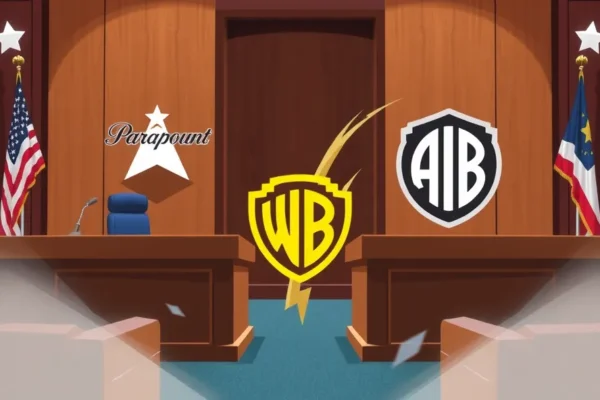
Breaking the Deadlock: Paramount and the Warner Bros Discovery Merger Litigation
Recent developments in the media landscape have brought significant attention to the ongoing legal challenges surrounding industry consolidation. Paramount Global and legal representatives recently held meetings with the California Attorney General to discuss a potential settlement regarding the Warner Bros. Discovery merger lawsuit. This litigation centers on concerns regarding market competition and the potential for monopolistic behavior in the entertainment sector. While the broader Warner Bros. Discovery merger is still pending final regulatory approval, these discussions indicate a proactive push by the parties involved to clear the path for deal completion by addressing specific antitrust challenges through negotiation rather than protracted courtroom battles.
The Strategic Push for Consolidation
The core motivation behind this move is the desire to resolve regulatory hurdles that have stalled the Warner Bros. Discovery merger. Paramount Global and other involved parties are operating in an environment where speed is essential. In the media industry, market position is often dictated by scale, and executives are eager to move past the litigation phase to focus on operational integration. The legal challenge, which serves as a major roadblock, threatens to diminish the value of the deal by creating uncertainty for investors and distracting leadership from the actual business of merging assets. By seeking a settlement with the California Attorney General, the companies aim to proactively address antitrust concerns, effectively demonstrating a willingness to adjust their plans to satisfy local regulators.
Navigating the Competitive Landscape
The entertainment industry is currently dominated by massive players with deep pockets, such as Netflix and Amazon. For companies like Paramount Global and Warner Bros. Discovery, merging assets is often seen as the only way to achieve the scale necessary to compete effectively. David Zaslav, as a key architect of the Warner Bros. Discovery merger, has consistently argued that scale is a necessity for long-term viability in a streaming-first world. However, this strategy faces resistance from regulators who fear that too much consolidation will harm consumer choice and inflate prices. Competitors are watching this situation closely, as a successful settlement could signal a pathway for further industry consolidation, whereas a failure to settle could force the companies to abandon the merger entirely, leaving them at a competitive disadvantage.
Shifting Trends in Media Regulation
The involvement of the California Attorney General in the Paramount lawsuit highlights a broader trend: state-level regulators are playing an increasingly active role in scrutinizing national media merger activity. Traditionally, antitrust review was primarily the domain of federal agencies like the Department of Justice or the Federal Trade Commission. The current environment, however, suggests that states are concerned about how these deals impact local jobs, local production ecosystems, and consumer pricing. This shift suggests that companies can no longer rely solely on federal approval; they must also navigate a complex, multi-layered regulatory environment. Other media peers are likely to adopt similar settlement-first approaches to avoid the reputational and financial costs of fighting state regulators in court.
Financial Implications and Operational Hurdles
The financial stakes of the Warner Bros. Discovery merger are immense. Consolidation is expected to unlock significant cost synergies—or savings—by eliminating redundant roles and streamlining technical infrastructure. However, these savings are contingent upon the deal closing successfully. Prolonged litigation creates a “valuation gap,” where the uncertainty of a deal’s success causes stock prices to fluctuate and potentially lowers the overall market capitalization of the companies involved. In the long term, the success of this strategy hinges on whether the companies can integrate their massive content libraries into a profitable streaming platform without incurring excessive debt or operational friction. The cost of legal settlements is likely a small price to pay compared to the risk of the deal collapsing, which would likely result in significant stock price depreciation.
Execution Risks and the Uncertainty Factor
While a settlement with the California Attorney General would be a major win, it does not guarantee the merger will succeed. Execution risk remains high. Historically, large media mergers have struggled to deliver on their promised synergies due to clashing corporate cultures and the difficulty of merging complex technical platforms. Furthermore, even if the California lawsuit is settled, there remains the risk of other regulatory bodies or even private litigants challenging the merger. Market conditions are also volatile; high interest rates and changing consumer habits regarding streaming services add another layer of complexity. If the integration does not proceed smoothly, the companies could find themselves saddled with high debt loads and underperforming assets, proving that a successful legal settlement is only the first step in a difficult journey.
Impact on Employees and Shareholders
For stakeholders, this development is a double-edged sword. Investors generally favor the move because it clears the uncertainty that has depressed share prices. Employees, however, often face the brunt of post-merger integration, which frequently involves layoffs and departmental restructurings to reduce overlapping costs. Partners and content creators are also watching to see how the combined entity will handle distribution rights and creative partnerships. The culture of the companies, which have distinct operational histories, will face significant pressure as they try to align their workforces. For investors, the focus remains on whether the combined business can generate the free cash flow required to deleverage—or pay down—the debt incurred by the merger.
The Road Ahead for the Merger
If the settlement negotiations with the California Attorney General prove successful, the next phase will be the final push for regulatory sign-off. Stakeholders should monitor for public statements from the Attorney General’s office regarding the specific concessions made by the companies, as these will indicate the long-term impact on market competition. Key milestones to watch include the finalization of the legal agreement and the subsequent timeline provided for the integration of technical systems. If the settlement is rejected, the companies would likely face a long, expensive trial, which could lead to a significant loss of market confidence. Investors will be looking for signs of operational stability and a clear roadmap for the combined business model in the coming quarters.
Strategic Questions and Answers
Will the settlement resolve all regulatory hurdles for the Warner Bros. Discovery merger?
A settlement with the California Attorney General would address state-level antitrust challenges, but it does not automatically clear the path for federal regulatory approval. While it is a significant step forward, the companies still need to navigate national oversight to complete the deal.
Why is the California Attorney General involved in this Paramount lawsuit?
The California Attorney General is exercising authority to protect the local labor market and competition within the entertainment sector, which is heavily concentrated in California. Their involvement reflects a growing trend of state-level regulators taking an active interest in the economic impacts of a major media merger.
What are the primary risks if this settlement strategy fails?
If the strategy fails, the companies face a protracted legal battle that would drain resources and increase uncertainty. This could lead to a decline in stock prices, potential loss of key talent, and a total collapse of the Warner Bros. Discovery merger, which would force the companies to rethink their individual business strategies.
How does John Malone’s influence affect the strategy?
John Malone, a prominent media mogul known for his advocacy of consolidation, is widely viewed as a driving force behind the strategic vision of the Warner Bros. Discovery merger. His influence suggests a commitment to long-term consolidation and scale, even when faced with significant regulatory and legal opposition.
What does this mean for consumers and content pricing?
The central concern for regulators regarding the Warner Bros. Discovery merger is that decreased competition could lead to higher subscription prices or fewer choices for viewers. The settlement will likely require the companies to provide commitments that protect consumer interests, such as price stability or continued support for diverse content production.
Please note that all business outcomes, including the success of this settlement and the finalization of the merger, are subject to significant execution risk and regulatory uncertainty. There are no guarantees that these strategic moves will result in the projected financial performance or competitive advantages.











