

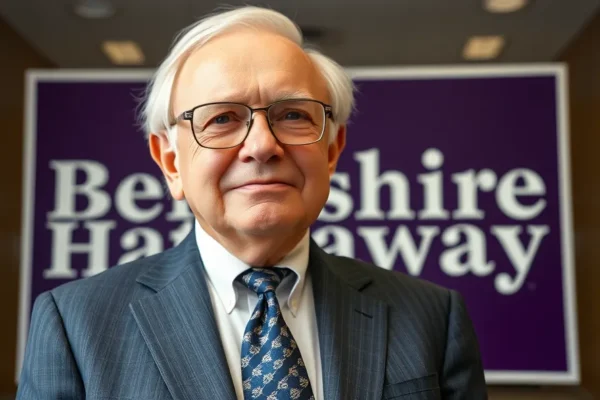
Warren Buffett’s transition to chairman emeritus at Berkshire Hathaway marks a significant moment for the iconic conglomerate and its investors. After decades at the helm, Buffett’s move, alongside other leadership adjustments, signals a new era for the company and prompts a review of its future direction and market perception. This analysis delves into the implications of this executive transition, examining the market’s response and what investors should monitor as Berkshire Hathaway (BRK.A, BRK.B) navigates this leadership evolution.
Berkshire Hathaway’s Leadership Shift and Market Reaction
The formalization of Warren Buffett’s role as chairman emeritus at Berkshire Hathaway, effective following the annual shareholder meeting, alongside the promotion of Greg Abel to CEO and Howard Buffett to chairman of the board, has been a planned and communicated transition. While no specific immediate stock price movement can be directly attributed to the announcement of Buffett assuming the chairman emeritus title in the present context, as it formalizes an existing de facto succession, the market has historically reacted to news surrounding Berkshire Hathaway’s leadership and performance. For instance, in the past, significant Berkshire Hathaway announcements, such as its annual shareholder letters or major acquisition news, have influenced its stock performance.
To understand the market’s nuanced response to such leadership changes, it’s important to consider Berkshire Hathaway’s overall market capitalization, which stood at approximately $880 billion as of early May 2024, according to financial data providers like Yahoo Finance. The stock has shown resilience and growth over the long term, reflecting investor confidence in the company’s underlying businesses and its strategic direction. Any short-term volatility around leadership announcements is typically absorbed by the market’s broader assessment of Berkshire’s diversified portfolio and its enduring investment philosophy.
The Catalyst for Change: Succession Planning at Berkshire Hathaway
The transition to chairman emeritus is not a sudden event but the culmination of years of careful succession planning at Berkshire Hathaway. Warren Buffett, the legendary investor, has gradually ceded day-to-day operational responsibilities, designating key individuals to take on leadership roles. The appointment of Greg Abel as CEO, with responsibility for Berkshire’s vast non-insurance operations, and Howard Buffett as chairman of the board, overseeing governance, signifies a deliberate and phased handover. This proactive approach aims to ensure continuity and stability for the company.
The catalyst for this phase of the transition is the ongoing commitment to a well-defined succession strategy that Buffett himself has emphasized. This is evidenced by the clear delineation of responsibilities among the new leadership team. For example, Berkshire Hathaway’s most recent annual reports and investor communications have consistently highlighted the roles and capabilities of its key executives, preparing the market for this evolution. The company’s robust financial health, as demonstrated in its Q1 2024 earnings report, which showed operating earnings of $11.2 billion, a significant increase from $8.1 billion in the same period last year, underpins the confidence in its continued ability to perform under new leadership.
Berkshire Hathaway’s Financial Strength and Historical Context
Berkshire Hathaway’s financial foundation is exceptionally strong, built on a diverse collection of wholly owned businesses ranging from insurance and energy to railroads and manufacturing, alongside a substantial portfolio of publicly traded stocks. As of the first quarter of 2024, Berkshire Hathaway reported a record cash pile of $189 billion. This immense liquidity provides significant strategic flexibility for future investments and acquisitions. The company’s revenue for the first three months of 2024 reached $89.8 billion, showcasing the breadth and depth of its operations.
Historically, Berkshire Hathaway has been synonymous with Warren Buffett’s investment acumen. The company’s compound annual growth rate under Buffett’s leadership has been remarkable, consistently outperforming the S&P 500 over many decades. For instance, from 1965 to 2023, Berkshire Hathaway’s per-share book value grew at an average annual rate of 19.8%, compared to the S&P 500’s 10.0% annual total return over the same period (Source: Berkshire Hathaway 2023 Annual Shareholder Letter). This historical performance sets a high bar, and investors will be watching how the company maintains its trajectory with new leadership at the helm.
Analysis: Implications of the Executive Transition
The transition to chairman emeritus for Warren Buffett signals a shift in how Berkshire Hathaway operates, though his influence is expected to remain significant in an advisory capacity. The immediate implication for the stock market is a greater focus on the operational execution and strategic decisions of CEO Greg Abel and the board of directors, led by Howard Buffett. This is a fundamental shift from the concentrated leadership of the past. Key metrics to watch will include Berkshire’s operating earnings growth, its ability to deploy its massive cash reserves effectively, and the performance of its diverse business segments.
The market sentiment surrounding Berkshire Hathaway is largely shaped by its reputation for stability, long-term value creation, and conservative financial management. While Buffett’s direct involvement in stock picking will be missed by many, the depth of talent within Berkshire and the structured succession plan suggest a continued commitment to these core principles. Investors are likely to scrutinize the capital allocation decisions made by the new leadership team, observing if they maintain Buffett’s patient, value-oriented approach. The company’s market cap, a testament to investor trust, will be a key indicator of sustained confidence.
Related Opportunities and Competitive Landscape
The leadership transition at Berkshire Hathaway could indirectly impact other companies within its diverse portfolio and the broader investment landscape. As Berkshire continues to evolve, its strategic acquisitions and divestitures could create ripple effects. For example, if Berkshire Hathaway decides to increase its stake in a particular publicly traded company or acquire a new business, it could influence the stock prices and competitive dynamics of those sectors. Companies that operate in similar sectors to Berkshire’s subsidiaries, such as insurance (e.g., Geico’s competitors) or utilities, will be watched closely to see if there are any shifts in competitive strategies or market share.
Furthermore, the succession at Berkshire Hathaway serves as a case study for other large conglomerates and family-controlled businesses regarding effective long-term succession planning. The success of Abel and Howard Buffett in their new roles could embolden investors to look more favorably upon companies with similar robust planning processes. Conversely, any missteps could heighten investor caution regarding leadership transitions at other major corporations. The industry-wide implication is a reinforcement of the importance of structured executive development and governance.
Future Outlook and Key Watchpoints
The future outlook for Berkshire Hathaway hinges on the execution of its strategy by the new leadership team and its continued ability to generate strong returns across its diverse operations. Investors will be closely monitoring upcoming quarterly earnings reports, particularly for trends in operating income and the deployment of its substantial cash reserves. Key events to watch include any significant capital allocation decisions, such as major acquisitions or stock buybacks, and the performance of Berkshire’s wholly owned subsidiaries, especially its insurance and energy businesses.
Factors that could shift the outlook include changes in the macroeconomic environment, such as interest rate movements or economic growth slowdowns, which could impact the performance of Berkshire’s businesses and investments. Regulatory changes affecting its various operating segments could also play a role. The timeline for significant shifts in Berkshire’s strategic direction is generally considered long-term, reflecting Buffett’s philosophy. However, the market will be looking for early indicators of the new leadership’s approach and effectiveness in the coming quarters and years.
Past performance does not guarantee future results. Markets are volatile and subject to unpredictable events. Investors should conduct their own research and consider consulting with a qualified financial advisor before making any investment decisions.
Frequently Asked Questions
What is Warren Buffett’s new role at Berkshire Hathaway?
Warren Buffett has transitioned to the role of chairman emeritus at Berkshire Hathaway. This means he will no longer be involved in the day-to-day management of the company but will likely serve in an advisory capacity, continuing to lend his expertise and guidance to the board and leadership team.
How does this executive transition impact Berkshire Hathaway’s stock (BRK.A, BRK.B)?
The market response to executive transitions at large, established companies like Berkshire Hathaway is typically multifaceted. While the succession has been well-communicated, investors will closely observe the performance of CEO Greg Abel and the board. The company’s strong financial metrics, such as its significant cash reserves and consistent operating earnings, provide a stable foundation. Any perceived shifts in capital allocation strategy or operational efficiency under new leadership could influence stock performance over time.
What are the key risks associated with Berkshire Hathaway’s leadership change?
The primary risk for Berkshire Hathaway involves maintaining its exceptional track record of performance and capital allocation under new leadership. While the company has a diversified portfolio and a deep bench of talent, the unique investment genius of Warren Buffett is unparalleled. Investors will be watching to see if the company can continue to identify and execute highly accretive investments and effectively manage its vast conglomerate of businesses without his direct oversight in the chairman role.
How does Berkshire Hathaway’s succession planning compare to other companies?
Berkshire Hathaway’s succession planning is often cited as a model for its deliberate and long-term approach. Unlike some companies that experience sudden leadership vacuums, Berkshire has had years to prepare its board and executive team, notably Greg Abel, for increased responsibilities. This phased transition allows for a smoother handover and continuity of corporate governance and investment philosophy, distinguishing it from more abrupt or unexpected leadership changes seen elsewhere in the market.
Is Berkshire Hathaway still a good investment with Warren Buffett as chairman emeritus?
Berkshire Hathaway’s investment appeal is rooted in its diversified business model, strong financial position, and the enduring principles of value investing championed by Buffett. The company’s substantial cash reserves and consistent profitability from its subsidiaries continue to provide a solid financial base. Investors considering Berkshire Hathaway should evaluate its current fundamentals, the strategic direction of its new leadership team, and its long-term prospects, rather than solely relying on Buffett’s past chairmanship.
What are the primary responsibilities of Greg Abel and Howard Buffett in their new roles?
Greg Abel, as CEO, is responsible for overseeing Berkshire Hathaway’s entire non-insurance operations, which encompass a vast array of industries including energy, manufacturing, and railroads. Howard Buffett, as chairman of the board, will focus on corporate governance and the overall strategic direction and oversight of the company, working closely with the board of directors and the executive team to ensure the company’s long-term health and shareholder value.











