

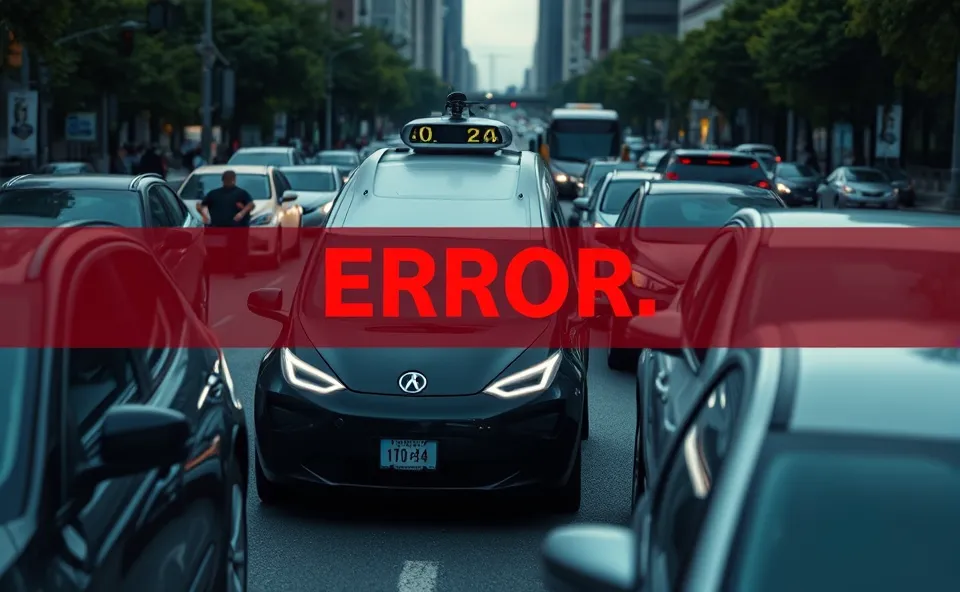
When the Future Hits a Snag
So, have you heard about those recent Waymo outages? It sounds like the fancy self-driving cars, the ones Google’s been pouring so much effort into, had a bit of a hiccup. Imagine this: you’re expecting your ride-hailing service to show up, and it just… doesn’t. Or worse, the cars themselves stop in the middle of the road. That’s essentially what’s been happening. It’s not just a minor glitch; these Waymo outages have brought a whole new layer of complexity to the ongoing conversation about autonomous driving.
Why Everyone’s Talking About Waymo Problems Now
This isn’t the first time Waymo has experienced some issues, but these recent incidents have really put autonomous driving, and specifically Waymo safety, back under the spotlight. When technology that’s supposed to be the future of transportation stumbles, especially in busy city streets, people take notice. There’s a natural curiosity and concern that sparks when the promise of self-driving cars runs into real-world challenges. It’s the kind of event that makes you pause and think about how ready we truly are for this revolution.
A Look Back at the Road So Far
To understand why these Waymo outages are causing such a stir, we need a little background. Google’s Waymo has been a pioneer in this field, dedicating years and billions of dollars to developing fully driverless cars. They’ve been testing and operating in select cities, gradually expanding their services. The idea is to create a safer, more efficient way to get around, taking human error – a major cause of accidents – out of the equation. For a long time, the narrative has been one of steady progress and a bright, autonomous future. However, like any cutting-edge technology, there have been bumps in the road along the way. These aren’t necessarily catastrophic failures, but rather the kind of learning experiences that come with pushing boundaries. Previous Waymo problems, though perhaps less disruptive, have also contributed to a healthy skepticism and a demand for robust self-driving car reliability.
More Than Just Inconvenience: The Rippling Impact
When Waymo driverless cars experience these kinds of widespread issues, the impact goes beyond just a few frustrated passengers. In cities where these services are a significant part of the transportation mix, Waymo outages can lead to considerable traffic disruption. Imagine intersections where autonomous vehicles are part of the normal flow, and suddenly they’re stationary, creating unexpected jams. This isn’t just an inconvenience for other drivers; it affects local businesses, emergency services, and the general rhythm of urban life. For the companies involved, these incidents raise serious questions about the robustness and scalability of their technology. It also puts a microscope on the broader debate of autonomous vehicle safety versus human drivers. While proponents argue that self-driving cars, once perfected, will be far safer than humans, recurring incidents like these feed the arguments of those who are concerned about the technology’s readiness. The economic implications are also significant; investor confidence can waver, and the timeline for widespread adoption might be pushed back if reliability remains a question mark. It’s a stark reminder that the future of driving isn’t a simple straight line; it’s a complex journey with many potential pitfalls.
Navigating the Road Ahead: What’s Next for Autonomous Driving?
So, where does this leave us? The recent Waymo outages don’t necessarily signal the end of autonomous driving, but they certainly underscore the challenges ahead. We can expect Waymo and other companies in the self-driving car space to double down on their efforts to identify and fix the root causes of these technology failures. This might involve more rigorous testing, enhanced software updates, and potentially even rethinking certain operational strategies. For the public, it’s a call for patience and a realistic understanding that this transformative technology is still in its developmental stages. The debate about safety and reliability will undoubtedly continue, with each incident fueling further discussion. Ultimately, the future of driving hinges on proving that autonomous vehicles can operate not just efficiently, but with unwavering safety and dependability, consistently outperforming human drivers in all conditions. This means addressing these Waymo problems head-on and demonstrating a clear path toward overcoming them.
Frequently Asked Questions About Waymo and Self-Driving Cars
What were the recent Waymo outages about?
The recent Waymo outages refer to incidents where Waymo’s fleet of driverless cars experienced operational issues, leading to temporary service disruptions and, in some cases, vehicles stopping unexpectedly. These events have brought renewed attention to the reliability of autonomous driving technology.
How do Waymo problems affect urban traffic disruption?
When Waymo driverless cars are unable to operate correctly, they can stop in traffic lanes, causing unexpected congestion and delays for other vehicles. This urban traffic disruption highlights the need for seamless integration of autonomous vehicles into existing road systems.
What is the current discussion around Waymo safety compared to human drivers?
The recent Waymo outages have intensified the ongoing debate about autonomous vehicle safety. While proponents believe self-driving cars will ultimately be safer than human drivers by eliminating errors, recurring incidents raise concerns about the current reliability and safety of systems like Waymo’s.
How reliable is self-driving car reliability in general, based on these incidents?
Incidents like the recent Waymo problems suggest that while self-driving car reliability has advanced significantly, it is not yet perfect. Achieving consistent, error-free operation across all driving conditions remains a key challenge for the entire industry, including Google Waymo.
What are the implications of these technology failures for the future of driving?
These technology failures serve as a reminder that the path to widespread autonomous driving is complex. They emphasize the need for robust testing, continuous improvement, and public trust. The future of driving depends on overcoming these hurdles to demonstrate that driverless cars are a safe and reliable transportation solution.











