

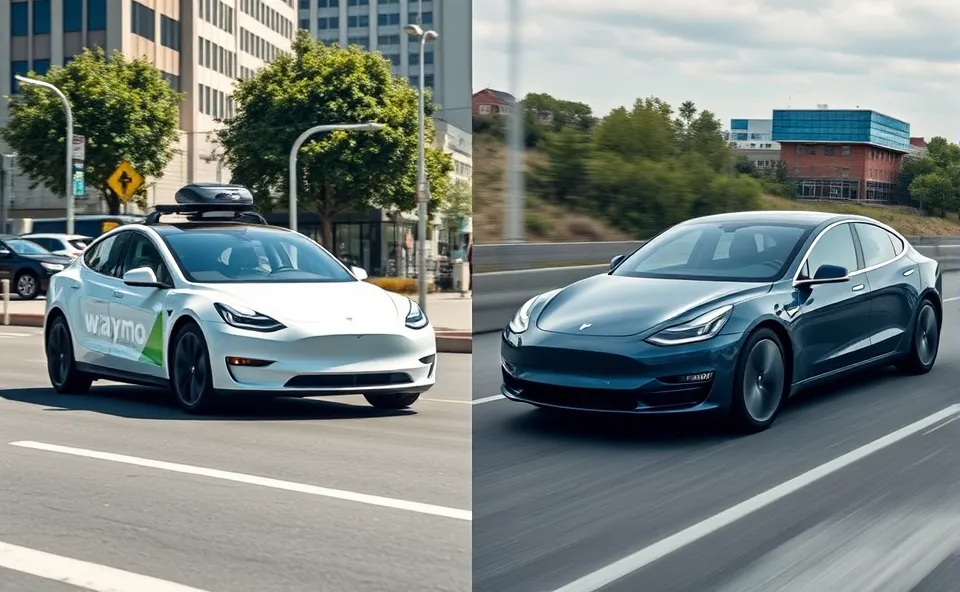
The Big Race for Driverless Cars
You’ve probably seen cars on the road with fancy sensors or heard about companies pushing the limits of what cars can do on their own. We’re talking about the autonomous vehicle or AV race. It’s a huge competition to build cars that can drive themselves, and two of the biggest players making headlines are Waymo and Tesla. They’re tackling this challenge in pretty different ways, and it’s fascinating to see how far they’ve come and where they might be going.
Why All the Buzz About Waymo and Tesla Right Now
So, why are Waymo and Tesla suddenly the center of attention in the AV race? It’s not just one thing. Waymo, which started as Google’s self-driving car project, has been steadily expanding its driverless taxi service in more cities. This means more people can actually hop into a car with no human driver. On the other hand, Tesla is constantly updating its “Full Self-Driving” or FSD software, promising more capabilities with each release, even if it still requires a driver to pay attention. This constant progress and the real-world testing of these systems are what keep people talking and searching for updates on the Waymo vs. Tesla AV race.
How We Got Here The Road to Self-Driving
To really understand where Waymo and Tesla stand today, it helps to look back a bit. Think of it like this: the dream of self-driving cars has been around for decades, but the technology just wasn’t there yet. Artificial intelligence AI in cars, super powerful computers, and advanced sensors were needed.
Waymo took a very deliberate, methodical approach. They focused on building a robust system from the ground up, using a suite of sensors including lidar, radar, and cameras. Lidar, in particular, uses lasers to create a detailed 3D map of the surroundings. They’ve spent years mapping cities and refining their driving algorithms in controlled environments before slowly opening up their service to the public.
Tesla, led by Elon Musk, has taken a different path. Their focus has been on leveraging cameras as the primary sensor, combined with advanced AI and neural networks. Tesla’s strategy is to collect massive amounts of real-world driving data from their fleet of customer vehicles equipped with their FSD beta software. The idea is that by learning from millions of miles driven by real people, the AI will get smarter faster. This has led to more frequent software updates and a more visible presence of their technology on public roads, even if it’s not fully driverless yet.
What It All Means The Impact of Their Progress
The advancements by Waymo and Tesla are not just cool tech stories; they have real implications for the future of transport and the automotive industry. For consumers, it means the potential for safer roads, more convenient travel, and new mobility options like robotaxis.
Here’s a breakdown of the impact:
- For Users: Imagine a future where you can summon a driverless car to take you anywhere, without needing to own a car or worry about parking. Waymo’s current robotaxi service is a glimpse of this. For Tesla FSD users, it means more assistance on their commutes, potentially reducing driving fatigue.
- For Businesses: Companies are looking at how autonomous vehicles can revolutionize logistics and delivery services. The efficiency gains could be enormous. New businesses will emerge focused on managing AV fleets and providing related services.
- For Technology: The AV race is a massive driver of innovation in AI, machine learning, sensor technology, and mapping. Companies like Waymo and Tesla are pushing the boundaries of what’s possible with AI in cars.
- For Markets: The automotive industry is being reshaped. Traditional car manufacturers are investing heavily in AV technology, either by developing their own or partnering with AV companies. This is a significant shift in the market landscape.
Waymo’s approach, relying heavily on lidar and a meticulously built system, has allowed them to achieve a high level of operational safety in their limited service areas. Tesla’s camera-centric approach, with its reliance on FSD beta and real-world data, has a wider reach but comes with the caveat that drivers must remain attentive. This difference in AV technology has led to different market positions and public perceptions.
Looking Ahead What’s Next in the AV Race
The AV race is far from over, and the next steps for both Waymo and Tesla are crucial. For Waymo, we’ll likely see a continued, steady expansion of their driverless taxi service into new cities. They’ll continue to refine their technology and tackle the complexities of urban driving in more diverse environments.
Tesla’s path forward involves pushing its FSD software to achieve true hands-off, eyes-off driving. This means overcoming significant technical hurdles related to edge cases – those unusual or unpredictable driving scenarios. Success here could unlock widespread adoption of their self-driving capabilities, but it requires continued breakthroughs in their AI and sensor interpretation.
Both companies face regulatory hurdles and the challenge of public trust. As autonomous vehicles become more common, the way they are regulated and how people feel about sharing the road with them will play a huge role in their widespread adoption. The future of transport is definitely being shaped by this intense AV race.
Frequently Asked Questions About Waymo, Tesla, and the AV Race
What is the main difference between Waymo and Tesla’s approach to autonomous vehicles?
Waymo uses a comprehensive sensor suite including lidar for its AV technology, focusing on meticulous development and a phased rollout of its driverless taxi service. Tesla primarily uses cameras and AI for its Full Self-Driving FSD software, gathering data from its customer fleet for continuous improvement.
Is Waymo or Tesla’s self-driving technology safer?
Both companies aim for safety, but they approach it differently. Waymo’s operational data from its driverless taxis suggests a high level of safety in its controlled environments. Tesla’s FSD beta requires drivers to remain alert, as the system is still considered an advanced driver-assistance feature.
Can I use Waymo or Tesla’s driverless cars today?
You can use Waymo’s driverless ride-hailing service in select cities like Phoenix and San Francisco. Tesla’s Full Self-Driving FSD is available as a software upgrade for customers who meet certain requirements, but it requires constant driver supervision.
What role does AI play in the AV race between Waymo and Tesla?
Artificial intelligence AI is central to both companies. Waymo uses AI to interpret sensor data and make driving decisions. Tesla heavily relies on AI and neural networks to learn from vast amounts of driving data collected by its FSD beta users, aiming to improve the self-driving capabilities.
What is the future outlook for Waymo and Tesla in the autonomous vehicles market?
The future outlook involves continued expansion of services. Waymo is expected to grow its robotaxi operations and AV technology. Tesla aims to achieve full self-driving capabilities with its FSD, potentially transforming personal car ownership and the automotive industry. The overall AV race is pushing the boundaries of the future of transport.











