

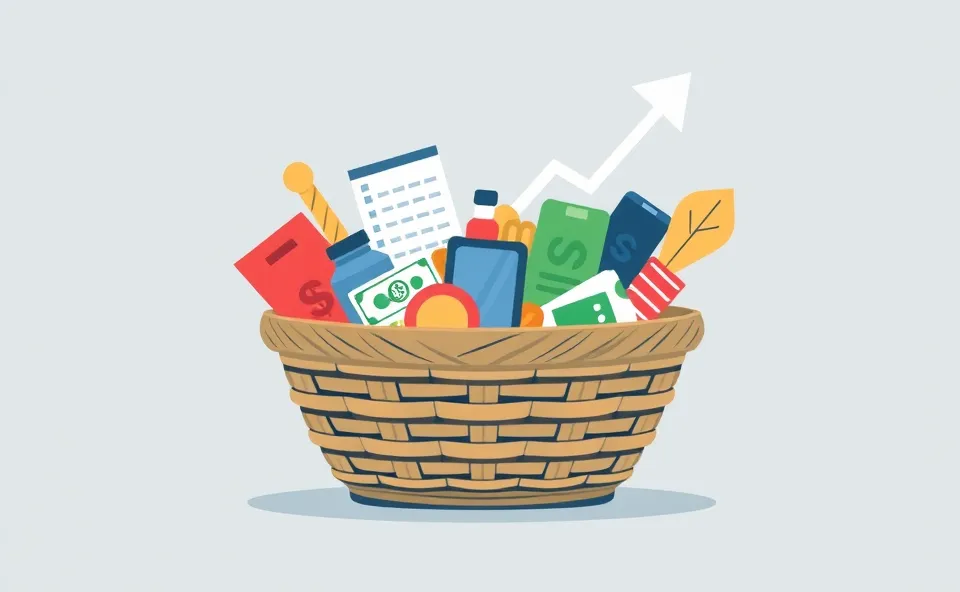
The Simple Way to Own a Piece of Everything
Imagine you are walking through a massive grocery store. You want to make a fruit salad, but instead of buying a whole crate of apples, a whole box of oranges, and a massive bag of grapes, you find a pre-packaged bowl that has a perfect mix of everything already inside. You pay one price, you grab the bowl, and you are ready to go. You have achieved variety without having to manage a dozen different items yourself.
In the world of investing, an Exchange-Traded Fund, or ETF, works almost exactly like that fruit bowl. Instead of fruit, the basket contains different stocks, bonds, or other assets. When you buy one share of an ETF, you are not just buying one company. You are buying a tiny slice of many different companies all at once. This makes it a very popular tool for anyone interested in personal finance and long term growth.
The name itself tells you how it works. Because it is an Exchange-Traded Fund, it trades on the stock market just like an individual stock. You can buy it in the morning and sell it in the afternoon if you want. It offers a level of flexibility that was much harder to find in the past. You can see the price change in real time, and you can jump in or out of your position whenever the market is open.
The main goal of using these funds is diversification. If you put all your money into one single tech company and that company has a bad year, your entire savings could take a massive hit. But if you use an ETF that holds fifty different tech companies, one company having a bad year will not ruin your entire portfolio. It spreads the risk around, which is a cornerstone of smart investing.
Why Everyone Is Focusing on This Right Now
If you have been looking into retirement planning lately, you have probably noticed that the conversation has shifted. People are moving away from complicated, high fee strategies and moving toward simpler, more efficient methods. This is why search interest in the ETF has skyrocketed.
One big reason is the cost. For a long time, if you wanted a diversified mix of stocks, you often had to use mutual funds. While mutual funds are great, many of them come with higher management fees. These fees can eat away at your savings over decades. Because an ETF is often designed to track a specific index, it can be managed much more cheaply. In the world of personal finance, keeping your costs low is one of the most effective ways to build wealth over time.
Another reason is accessibility. Modern technology has made the financial markets available to everyone. You no longer need a fancy broker or a massive amount of money to get started. With many apps available today, you can buy a single share of an ETF with just a few dollars. This has opened the door for younger generations to start their retirement planning much earlier than previous generations could.
Finally, there is the need for simplicity. Life is busy. Most people do not want to spend forty hours a week watching charts and reading company reports. They want a way to participate in the growth of the economy without needing to become a full time expert. The ETF offers a way to automate much of your strategy, allowing you to focus on your life while your money works in the background.
A Quick Look at How Investing Has Changed
To understand why these tools are so revolutionary, we have to look at how people used to handle their money. In the past, if you wanted a diversified portfolio, you had to do a lot of heavy lifting. You would have to research individual companies, decide how many shares of each to buy, and then manually keep track of everything. This was expensive, time consuming, and honestly, quite difficult for the average person.
Then came the era of index funds. These were a massive step forward. An index fund is designed to mimic a specific part of the market, like the top 500 companies in the country. It removed the need for a manager to try and pick winning stocks, which often resulted in lower fees and more predictable results. However, index funds were typically structured as mutual funds, which meant you could only buy or sell them at the end of the trading day.
The Exchange-Traded Fund took the best parts of that index approach and added the speed of the stock market. It combined the low cost and diversification of an index with the ability to trade instantly. It was the best of both worlds. It turned a slow, complicated process into something that feels as easy as buying a shirt online. This evolution has completely changed the landscape of the financial markets, making high quality investing tools available to the masses.
How This Changes Your Path to Retirement
When you are thinking about the long term, the way you manage your asset allocation is everything. Asset allocation is just a fancy way of saying how you split your money between different types of investments, like stocks, bonds, or real estate. If you get this balance right, you can help protect yourself from market swings while still growing your wealth.
The ETF makes this much easier to manage. Instead of trying to buy individual bonds or individual international stocks, you can simply buy a single fund that does it for you. This allows you to build a very sophisticated portfolio using just a handful of different funds. For example, you might have one fund for the total US stock market, one for international companies, and one for government bonds.
This approach has several major impacts on your financial life:
- Lower Costs: Because many of these funds are passive, you are not paying for an expensive manager to try and beat the market. This means more of your money stays invested.
- Easier Rebalancing: As you get closer to retirement, you might want to move more of your money from stocks into safer bonds. With ETFs, you can make these shifts quickly and easily.
- Broad Exposure: You can gain exposure to entire sectors, like green energy or healthcare, with a single click. This helps you tailor your investing to your own beliefs and goals.
- Liquidity: Because they trade like stocks, you can get your money out quickly if your circumstances change.
By using these tools, retirement planning becomes less about predicting the future and more about participating in the overall growth of the global economy. It shifts the focus from trying to find the next big winner to building a solid, resilient foundation that can weather different economic seasons.
Looking Toward the Future of the Markets
As we look ahead, the world of investing is only going to become more specialized. We are already seeing a trend toward thematic funds. These are ETFs that focus on very specific trends, such as artificial intelligence, cybersecurity, or clean water technology. While these can be more volatile, they offer a way for people to align their personal finance goals with the industries they believe will define the future.
We also expect to see even more integration between technology and asset allocation. We may see more automated tools that use ETFs to build and adjust your portfolio in real time based on your age and your goals. The barrier to entry will likely keep dropping, making it even easier for people around the world to participate in the financial markets.
While the tools will change, the underlying principles will stay the same. Diversification, low costs, and consistent investing will always be the most reliable ways to build wealth. The ETF is simply the modern vehicle that makes those principles easier than ever to put into practice.
Common Questions About Exchange Traded Funds
What is an ETF and how does it work?
An ETF is a type of investment fund that holds a collection of different assets, such as stocks or bonds. It is called an Exchange-Traded Fund because it can be bought and sold on a stock exchange throughout the day, just like an individual stock. When you buy a share, you are essentially buying a small piece of everything inside that fund.
How are Exchange Traded Funds different from mutual funds?
While both offer diversification, the main difference is how they are traded. Mutual funds are usually priced only once at the end of the day, and you often buy them directly from a fund company. An Exchange-Traded Fund trades all day long on the open market, which gives you more flexibility and often lower costs.
Can I use an ETF for retirement planning?
Yes, many people use them as a core part of their retirement planning. Because they allow for easy asset allocation and low fees, they are an excellent way to build a long term portfolio that covers many different sectors of the economy.
How do index funds play a role in an ETF?
Many ETFs are actually index funds. This means the fund is designed to automatically track the performance of a specific market index, like the S&P 500. This is a very common way to achieve broad investing exposure without having to pick individual stocks.
Why is diversification important when investing in an ETF?
Diversification is all about managing risk. By holding many different assets within one Exchange-Traded Fund, you ensure that your entire portfolio is not dependent on the success of a single company. This helps smooth out the ride through the ups and downs of the financial markets.











