

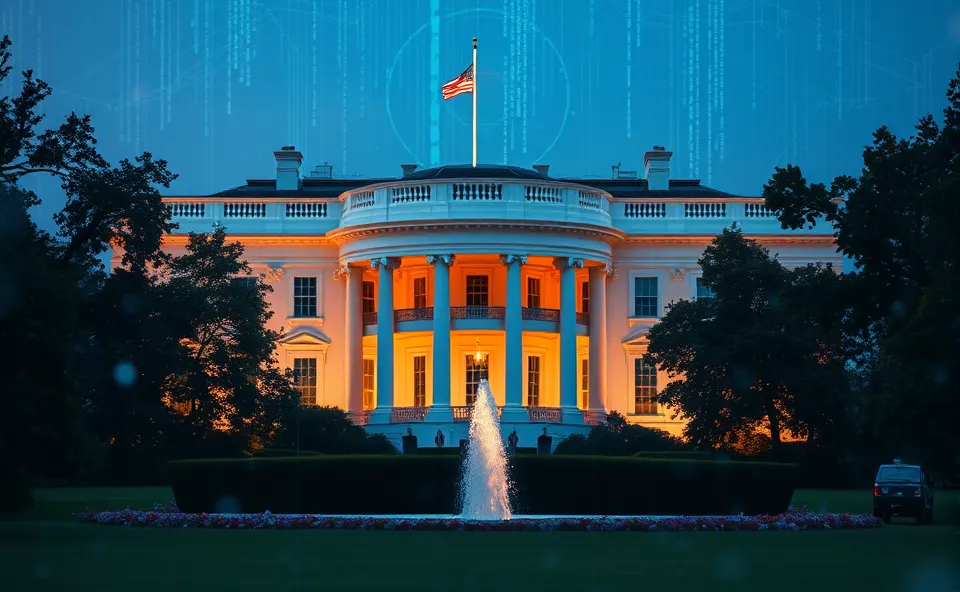
The race for safety as the White House speeds up AI rules
If you have been following the news lately, you know that artificial intelligence is moving at a speed that feels almost impossible to track. Just when we think we have figured out how a chatbot works, a new model comes out that is smarter, faster, and more capable. This rapid growth is exciting, but it is also making many people in the government a bit nervous. They are worried about how these powerful tools could be misused, whether they could spread misinformation, or if they might eventually become too difficult to control.
Because of this, the White House has decided to stop waiting and start acting. They are accelerating their timeline to create specific AI model standards. This is not just a vague suggestion or a polite request for companies to be careful. Instead, the government is working to build a structured way to measure how safe and reliable these models actually are. This move is a big deal because it signals that the era of the AI wild west might be coming to an end. The rules of the road are being written right now, and they will change how every major tech company operates.
When we talk about these new standards, we are talking about a set of benchmarks. Think of them like crash test ratings for cars. Before you buy a vehicle, you want to know if it will protect you in an accident. The government wants to ensure that before a massive AI model is released to the public, it has been thoroughly tested to make sure it does not cause harm. This includes checking for biases, ensuring it cannot be used to create cyberattacks, and making sure it does not reveal private information.
Why the push for an AI governance framework is happening now
You might wonder why this is suddenly such a massive topic of conversation. Why not wait a few more years until the technology settles down? The reason is simple: the technology is not settling down. It is exploding. Every month, we see new breakthroughs in how large language models can reason, code, and even interact with the physical world. This speed has created a sense of urgency in Washington.
There are a few main reasons why everyone is searching for information on this topic right now. First, there is a growing concern about artificial intelligence safety. As these models become more integrated into our schools, our workplaces, and our healthcare systems, the stakes get much higher. A mistake in a small chatbot is a nuisance, but a mistake in an AI system managing power grids or medical diagnoses is a catastrophe. The government wants to get ahead of those risks.
Second, there is the issue of global competition. The United States wants to lead the world in AI innovation, but they also want to ensure that American AI is seen as the most trustworthy and safe version. By establishing clear US AI guidelines, the government hopes to create a gold standard that other countries will eventually follow. It is a way to lead through leadership in safety rather than just leadership in raw power.
Finally, businesses and investors are looking for clarity. Nobody likes to build a massive company on a foundation of uncertainty. If a company spends billions of dollars developing a new model, they need to know what the rules will be. Without a clear AI governance framework, companies are essentially flying blind. The sudden acceleration of these standards provides a roadmap that helps the industry plan for the long term.
Looking back at the early days of tech policy
To understand why this is such a shift, we have to look at how things used to be. For the last few years, the relationship between the government and big tech was mostly hands off. The prevailing thought was that if the government regulated too early, it would kill innovation. So, instead of hard laws, we had voluntary commitments. Big companies like OpenAI and Google essentially promised to be good actors and follow certain safety principles on their own.
This worked for a while, but it eventually ran into its limits. Voluntary promises are great, but they are not the same as enforceable rules. As the power of LLM regulations became more important, it became clear that we needed something more formal. We moved from a period of observation to a period of active oversight. The transition from soft guidance to hard standards is one of the biggest shifts in modern tech policy.
In the past, the conversation was mostly about what AI could do for us. Today, the conversation has shifted toward what AI could do to us. This change in perspective is what drove the move toward more rigorous government AI oversight. We have moved past the honeymoon phase of AI and entered the phase of responsibility.
How these changes will impact the biggest names in tech
The acceleration of these standards is going to hit the industry in different ways, especially for the companies that are leading the charge. The impact will be felt by users, businesses, and the developers themselves.
For companies like OpenAI, the new rules bring a new level of complexity. They have built their reputation on being the first to market with the most advanced models. Now, they will have to balance that drive for speed with the need for deep, documented safety testing. We will likely see more OpenAI guidance being released that focuses heavily on how they meet these government benchmarks. They will have to prove that their pursuit of artificial general intelligence does not come at the expense of public safety.
Anthropic is in a very interesting position here. They have built their entire brand around the concept of safety and constitutional AI. Because their core mission is already aligned with what the government wants, they might find these new standards to be a competitive advantage. While other companies are scrambling to adjust their workflows, Anthropic AI standards are already largely built around the idea of controlled, safe development. This could help them gain more trust from both the government and large enterprise clients.
For the broader business world, these standards will change the cost of doing business. If you are a startup building an AI application, you will now have to consider compliance from day one. It will not be enough to just have a clever algorithm. You will also need to show that your tool follows the established US AI guidelines. While this might make it harder for some small players to compete, it will also create a more stable environment where businesses can trust the tools they are buying.
Users will see the most direct impact through increased reliability. We can expect to see fewer instances of AI models producing harmful content or leaking sensitive data. As these models become more regulated, they will also become more predictable. This predictability is key to getting AI into more sensitive areas like law, finance, and medicine, where people need to know exactly how a tool is going to behave.
What to expect in the coming years
As we move forward, we should not expect a single, massive law to change everything overnight. Instead, we will likely see a gradual layering of rules. The White House will likely start with specific requirements for the most powerful models, often called frontier models. These are the massive systems that require immense computing power to train. Once those are regulated, the standards will likely trickle down to smaller, more specialized models.
We might also see the rise of third party auditing. Just as companies hire accounting firms to check their finances, AI companies will likely hire specialized safety firms to check their models. These auditors will act as a bridge between the tech companies and the government, providing the proof needed to show that the AI model standards are being met.
Ultimately, the goal is to create a sustainable ecosystem. We want a world where AI continues to push the boundaries of what is possible, but where those boundaries are clearly defined and respected. The current push for regulation is not about stopping AI, but about making sure it has a safe and permanent place in our society.
Frequently asked questions about AI regulation
What are AI model standards and why do they matter?
AI model standards are a set of technical and ethical benchmarks used to measure the safety, reliability, and security of an artificial intelligence system. They matter because they provide a way for the government and the public to ensure that powerful models do not cause unintended harm, such as spreading dangerous information or assisting in cyberattacks.
How will White House AI regulation affect OpenAI guidance?
The new regulations will likely turn what was once voluntary OpenAI guidance into something much more formal and mandatory. Instead of the company deciding for itself how to implement safety features, they will have to align their development processes with specific government requirements to ensure their models are cleared for public and commercial use.
Why is artificial intelligence safety such a high priority now?
As AI models become more capable and are integrated into critical infrastructure, the potential for significant harm increases. Government leaders are prioritizing artificial intelligence safety to prevent risks related to misinformation, large scale cyber threats, and the loss of human control over highly autonomous systems.
How do Anthropic AI standards differ from general industry practices?
While many companies are just now trying to figure out how to implement safety, Anthropic AI standards have been a core part of their development since the beginning. They use a method called constitutional AI to give models a set of principles to follow, which aligns very closely with the new direction of government oversight.
What does government AI oversight mean for future LLM regulations?
Government AI oversight means that we are moving toward a future where LLM regulations will be much more rigorous. This will likely include mandatory testing, transparency about how models are trained, and strict rules about what certain models can and cannot be used for, ensuring that the most powerful technologies are held to the highest possible standards.











