

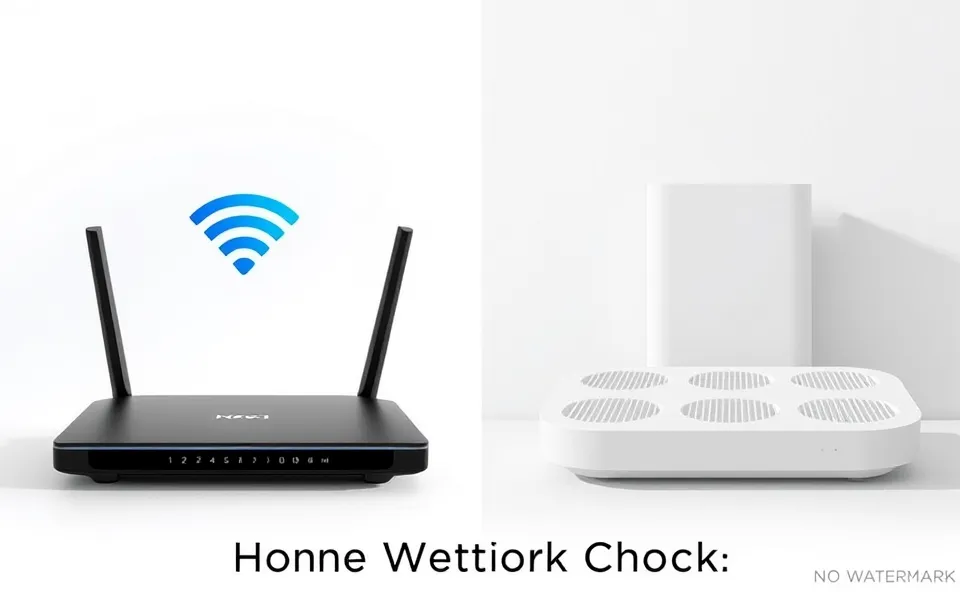
The Great Wi-Fi Debate: Router or Mesh, What’s Best for Your Home Network?
Ever feel like your internet is playing hide-and-seek in your own house? One minute you’ve got blazing fast speeds in the living room, the next you’re staring at a buffering wheel of doom in the bedroom. This is a common frustration, and it usually boils down to your home network setup. Today, we’re diving into the big question: is a traditional wi-fi router still king, or has the mesh system truly taken over for delivering whole home wi-fi?
Why This Topic is Hot Right Now
Let’s be honest, our reliance on a strong, stable internet connection has never been greater. We’re not just browsing anymore; we’re streaming 4K movies, attending video calls for work and school, gaming online, and powering a growing number of smart home devices. When your internet connection falters, it impacts almost every aspect of modern life. People are actively searching for solutions to their wi-fi coverage problems, eager to banish those dreaded dead zones and ensure their internet speed is consistent throughout their entire house. This surge in interest means understanding the differences between a standard router and a mesh system is more relevant than ever.
A Little History: How We Got Here
For years, the trusty wi-fi router was the single point of entry and distribution for your home’s wireless network. You plug it into your modem, and it broadcasts a Wi-Fi signal. Simple. Effective, for a while. As homes got larger and filled with more devices, we started encountering limitations. The signal simply couldn’t reach every corner. Enter the “solution” of range extenders or signal boosters. These devices would pick up the existing Wi-Fi signal and rebroadcast it, but often at a reduced speed and with the creation of separate network names, making your wireless network feel clunky and disconnected. It was a bit like trying to shout across a stadium; you might get the message out, but it’s not the clearest or most efficient way. The concept of a mesh network, however, offers a more elegant and integrated approach to tackling these coverage issues, aiming to provide seamless wi-fi coverage everywhere.
What This Means for Your Internet Experience
So, what’s the real difference for you, the user? It comes down to performance, ease of use, and coverage. A traditional wi-fi router is a single unit that broadcasts your Wi-Fi signal. It’s usually placed in a central location to get the best possible reach. However, this can leave far corners of your home with weak signals or no signal at all – the infamous dead zones. This impacts your ability to use your home network reliably for everything from streaming to smart home connectivity.
A mesh system, on the other hand, is a collection of devices that work together to create a single, unified wireless network. Typically, you have a main router unit that connects to your modem, and then one or more satellite “nodes” placed around your home. These nodes communicate with each other and with the main router, intelligently routing your internet traffic. This means the signal is strong and consistent no matter where you are in the house. The biggest advantage here is seamless roaming; as you move from room to room, your device automatically connects to the strongest node without you noticing a drop in connection or having to manually switch networks. This is crucial for video calls, gaming, and any application that requires a stable connection. This unified network setup offers superior wi-fi coverage and can significantly boost your perceived internet speed throughout your home.
The Case for the Classic Wi-Fi Router
Pros:
- Cost-Effective: Generally, a single, good-quality wi-fi router is less expensive than a multi-unit mesh system.
- Simpler for Small Spaces: If you live in a smaller apartment or home, a powerful router might be perfectly adequate to cover the entire area.
- Fewer Devices to Manage: It’s just one piece of hardware to set up and manage.
Cons:
- Limited Coverage: The biggest drawback. It struggles to provide consistent wi-fi coverage in larger homes or homes with multiple floors and thick walls.
- Dead Zones: Inevitably leads to areas with weak or no Wi-Fi signal.
- Signal Degradation: If you use older signal boosters, you often lose significant speed.
The Rise of the Mesh Network
Pros:
- Superior Whole Home Wi-Fi Coverage: This is their main selling point. Mesh systems are designed to eliminate dead zones and provide a strong, consistent signal everywhere.
- Seamless Roaming: Your devices automatically connect to the strongest signal as you move, offering an uninterrupted experience.
- Easy Network Setup: Most mesh systems are designed with user-friendly mobile apps that guide you through the setup process, often making it easier than configuring a traditional router.
- Scalability: You can often add more nodes to expand coverage if needed.
- Smarter Traffic Management: They often employ advanced technology for better performance, especially with multiple devices and smart home connectivity. Many support the latest standards like wi-fi 6 for faster speeds and better capacity.
Cons:
- Higher Cost: Mesh systems are typically more expensive upfront than a single router.
- More Devices: You have multiple units to place and potentially manage, though the apps simplify this.
- Slight Overhead: In very small spaces, the complexity of a mesh system might be overkill, and a powerful single router could perform just as well or better without the added overhead.
What’s Next for Your Home Network?
The trend clearly points towards more integrated and intelligent ways of delivering internet access. For consumers, this means better wi-fi coverage and a more reliable home network experience. As technology advances, we’ll likely see mesh systems become even more powerful, more affordable, and easier to manage. We can expect further improvements in protocols like wi-fi 6 and beyond, which will benefit both router and mesh technologies, but mesh systems are best positioned to take full advantage of these advancements for widespread coverage. The evolution will likely focus on making them even more seamless and integrated with the growing ecosystem of smart home devices, ensuring robust smart home connectivity throughout the entire house.
Got Questions About Your Wi-Fi? We’ve Got Answers!
What’s the main difference between a wi-fi router and a mesh system for my home network?
The primary difference lies in how they provide coverage. A traditional wi-fi router is a single device broadcasting a signal, which can struggle with range and create dead zones. A mesh system uses multiple devices that work together to create a single, unified network, offering consistent whole home wi-fi and eliminating those problematic areas.
Will a mesh system really improve my internet speed throughout my entire house?
Yes, a mesh system is designed to significantly improve your perceived internet speed by providing strong and consistent wi-fi coverage everywhere, unlike a single router that might have weak spots. This means your devices will maintain faster connections no matter their location.
Is a mesh network system difficult to set up for my wireless network?
Most modern mesh systems are designed for user-friendliness. They typically come with intuitive mobile apps that guide you through the entire network setup process, often making it simpler than configuring a traditional wi-fi router, especially for those less tech-savvy.
When should I consider a wi-fi router over a mesh system for my home network needs?
You might stick with a traditional wi-fi router if you live in a smaller space, like an apartment or a smaller single-story home, where a single powerful router can effectively cover the entire area. If you experience dead zones or have a larger, multi-story home, a mesh system is usually the better choice for robust wi-fi coverage.
Can a mesh system help with my smart home connectivity and multiple devices?
Absolutely. Mesh systems are excellent for supporting a large number of connected devices and are ideal for smart home connectivity. Their ability to provide strong, consistent wi-fi coverage across your entire home ensures all your smart devices, from thermostats to security cameras, have a reliable connection.











