

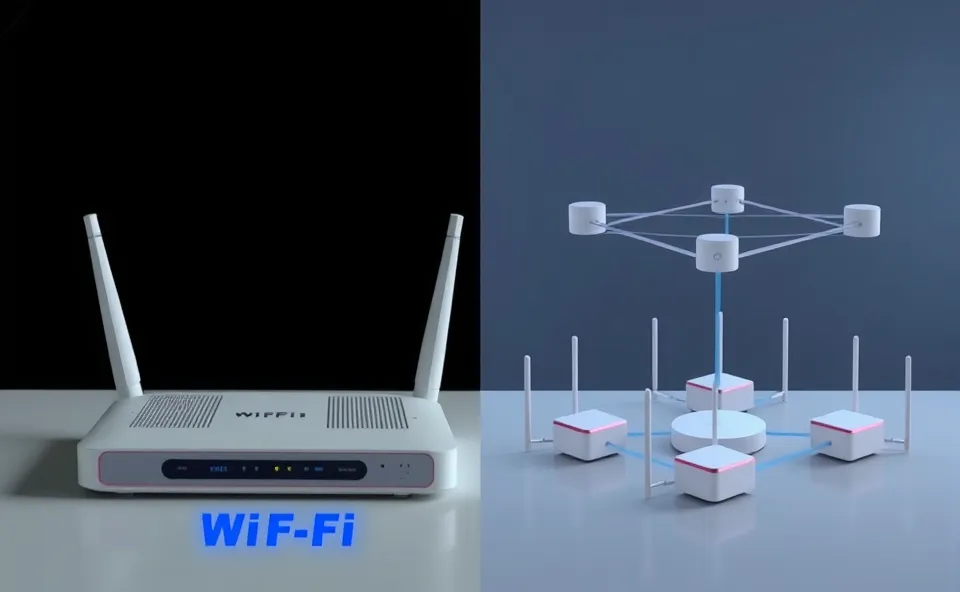
Is Your Home Wi-Fi a Hot Mess or a Smooth Sail? Router vs. Mesh Explained
Ever feel like your internet connection is playing hide-and-seek with you? One minute it’s blazing fast, the next it’s crawling slower than a snail on vacation. You might be wrestling with your current Wi-Fi setup. Today, we’re diving deep into the world of home networks to untangle the mystery between a trusty Wi-Fi router and the newer, sleeker mesh system. Think of it as upgrading from a single, powerful spotlight to a network of coordinated lights, all working together to banish those dead zones.
Why Are We Talking Wi-Fi Now?
It seems like everyone is suddenly upgrading their internet game. From streaming our favorite shows in stunning 4K to keeping a dozen smart home gadgets humming along, our demand for seamless wireless coverage has exploded. This surge in connected devices means more people are experiencing the frustration of weak Wi-Fi signals and searching for solutions. It’s no wonder that understanding the difference between a traditional Wi-Fi router and a modern mesh system has become a hot topic. People are actively looking for a Wi-Fi upgrade that can actually keep up with their digital lives.
A Quick Trip Down Memory Lane: The Rise of the Router
Remember when getting internet in your home meant plugging a wire into a box that blinked a lot? That box was your gateway to the online world, your humble Wi-Fi router. For years, this single device was the king of the castle, broadcasting your Wi-Fi signal from its central location. It did a decent job for smaller homes or apartments. However, as houses got bigger and more walls went up, the Wi-Fi signal started to struggle. That once-strong signal would weaken with every obstacle, leaving you with frustratingly slow internet speeds in far-off rooms. This led to people strategically placing their router in a central spot and hoping for the best, or dealing with those annoying dead zones.
The Impact: What This Means for Your Internet Speed and Smart Home
So, what’s the big deal when you choose between a Wi-Fi router and a mesh system? It boils down to your home network and how reliably you get that precious internet speed everywhere. A single Wi-Fi router is great for smaller spaces. It’s generally more affordable and simpler to set up. You plug it in, connect your devices, and you’re mostly good to go. The router benefits are clear: ease of use and a lower entry cost. However, if you live in a larger home, have multiple floors, or simply have a lot of devices demanding attention, that single router might become a bottleneck. Your Wi-Fi signal can become patchy, leading to dropped video calls, buffering during movie nights, and your smart home devices acting up.
Enter the mesh system. A mesh system uses multiple units, or “nodes,” placed strategically around your home. One node acts as your main router, connecting to your modem, while the other nodes communicate with each other wirelessly. This creates a single, strong Wi-Fi network that blankets your entire home. The mesh benefits are undeniable when it comes to wireless coverage. You get a consistent, strong Wi-Fi signal everywhere, eliminating dead zones. This means smoother streaming, more reliable connections for your smart home devices like thermostats and security cameras, and a much better overall user experience. The network setup for a mesh system is designed to be user-friendly, often guided by a simple app on your phone, making it less intimidating than you might think. This kind of network comparison clearly shows where mesh systems shine for modern, connected homes.
What’s Next on the Wi-Fi Horizon?
The evolution of home networking isn’t slowing down. We’ll likely see mesh systems become even more integrated with smart home ecosystems, perhaps offering enhanced security features or more intelligent traffic management. For traditional Wi-Fi routers, expect them to continue offering robust performance for smaller spaces and budget-conscious users, possibly with advanced features becoming more standard. The ongoing innovation in Wi-Fi technology, like Wi-Fi 6 and Wi-Fi 7, will continue to push the boundaries of speed and capacity for both routers and mesh systems. The future is about faster, more reliable, and more intelligent wireless coverage for everyone.
Your Burning Wi-Fi Questions Answered
What is the main difference between a Wi-Fi router and a mesh system for my home network?
A traditional Wi-Fi router is a single device that broadcasts your Wi-Fi signal. A mesh system uses multiple devices, called nodes, that work together to create a single, unified network that provides wider wireless coverage throughout your home.
When is a Wi-Fi router a better choice than a mesh system?
A Wi-Fi router is generally a good choice for smaller homes, apartments, or single-floor living spaces where a single device can adequately cover the area. They are often more affordable and simpler to set up for basic needs.
What are the main benefits of using a mesh system for my home network setup?
The primary mesh benefits include superior wireless coverage, eliminating dead zones in larger or multi-story homes, providing a consistent and strong Wi-Fi signal everywhere, and generally offering a more seamless experience for many connected devices and smart home gadgets.
How does a mesh system affect my internet speed compared to a traditional Wi-Fi router?
While a single Wi-Fi router’s speed can degrade significantly the further you are from it, a mesh system aims to maintain consistent internet speed across all its nodes, ensuring you get a strong connection and good Wi-Fi signal throughout your home.
Is a mesh system the best Wi-Fi upgrade for a smart home?
For homes with many smart devices, a mesh system is often the ideal Wi-Fi upgrade because it ensures all your devices have a stable and robust connection, which is crucial for their reliable operation and overall network performance.











