

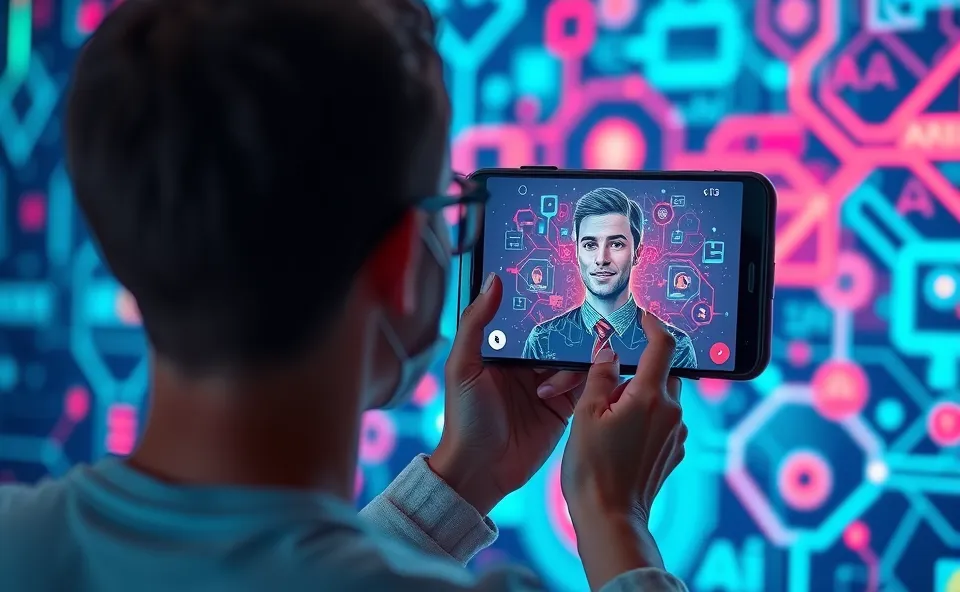
Your Face, But Not Quite: YouTube Shorts Gets an AI Makeover
So, picture this: You’re scrolling through YouTube Shorts, chuckling at funny clips and amazing talents. Suddenly, you see someone who looks eerily like you, dancing, singing, or telling a joke, but it’s definitely not your own face up there. That’s the magic, or perhaps the, well, strangeness, that YouTube is now playing with thanks to a fresh AI avatar feature. Essentially, they’re letting you deepfake yourself. It’s a way to create a digital clone of yourself that can then be used to generate new video content. Think of it as a supercharged selfie that can now perform for you.
Why Are We Talking About This Right Now?
This new AI avatar capability on YouTube Shorts is buzzing because, frankly, artificial intelligence is moving at lightning speed, and the idea of easily creating AI generated content that looks like you is both fascinating and a little mind bending. We’re constantly seeing new advancements in generative AI, and this is one that directly impacts how individuals can create content. The public’s interest is piqued because it touches on the very personal notion of identity and representation in the digital space. Every time these sophisticated AI tools become accessible to the masses, especially on a platform as huge as YouTube, it sparks a conversation about what’s possible and what it means for us.
A Quick Look Back: The Rise of Digital Selves
For a while now, we’ve been getting used to seeing ourselves in different digital ways. From filters that change our appearance in real-time on social media apps to more complex digital avatars in gaming and virtual reality, our online personas have been evolving. Remember when those apps first came out that could cartoonify your selfies? This is like that, but on steroids. The idea of a digital clone has been around in science fiction for ages, but the technology to make it a reality for everyday content creation is only now becoming truly accessible. Generative AI has really been the engine driving this forward, allowing for the creation of incredibly realistic images and videos from simple prompts or existing data.
What Does This Mean for All of Us?
The impact of this AI avatar feature on YouTube Shorts could be pretty significant, touching on a few different areas. For everyday users, it opens up a whole new playground for content creation. Imagine effortlessly starring in funny skits or educational videos without needing complex editing skills or even being on camera yourself. It democratizes content creation even further, making it easier for anyone to produce engaging videos that might have previously seemed out of reach. This could lead to a surge in creative and quirky AI generated content on the platform.
For businesses and creators, this is a powerful new AI tool. Brands could potentially use AI avatars of themselves or their representatives to create marketing content that’s consistent and scalable. Influencers might experiment with having their digital clones interact with fans or present different facets of their personality. It offers a way to stand out and experiment with formats that were once too costly or time-consuming to produce.
From a technological standpoint, it’s another leap forward for generative AI. It shows how sophisticated these AI tools are becoming in understanding and replicating human likeness and expression. This capability for deepfake yourself technology, when used ethically, can be incredibly powerful. However, it also brings forward important discussions around the nature of authenticity and the potential for misuse, like with impersonation. The line between real and AI generated content, already blurred, gets even finer.
Where Do We Go From Here?
Looking ahead, the trajectory of AI avatars on platforms like YouTube Shorts seems geared towards greater realism and broader applications. We can expect these AI tools to become even more refined, perhaps allowing for more nuanced expressions and actions from your digital clone. The potential for interactive content, where your AI avatar might respond to viewer comments or questions in real-time, could also become a reality.
The ongoing development of artificial intelligence will likely see these features become even more integrated into various creative workflows. We might see AI avatars used not just for quick, fun Shorts, but for more elaborate storytelling or even personalized educational content. As the technology matures, the focus will likely shift to ensuring that these powerful AI tools are used responsibly, fostering a creative environment while mitigating risks associated with deepfake yourself capabilities and impersonation.
Frequently Asked Questions About AI Avatars on YouTube Shorts
What exactly are AI avatars on YouTube Shorts?
AI avatars on YouTube Shorts are digital representations of users, powered by artificial intelligence, that can be used to create video content. Essentially, you can deepfake yourself, allowing an AI to generate videos using your likeness without you necessarily having to film it yourself. It opens up new avenues for content creation with AI tools.
How does the AI create a deepfake yourself on YouTube Shorts?
The process typically involves training the AI model with a user’s voice and facial data. The generative AI then uses this information to create a digital clone that can mimic expressions, lip movements, and even voice patterns to generate videos. This sophisticated artificial intelligence allows for realistic AI generated content.
Is this feature going to lead to more impersonation or fake content?
While the technology for AI avatars and the ability to deepfake yourself is impressive, there are valid concerns about its potential for impersonation. YouTube and other platforms are likely to implement safeguards and policies to address misuse, but it’s an ongoing challenge with AI generated content. Responsible use of these AI tools is crucial.
Who can use these AI avatars for YouTube Shorts content creation?
This feature is being introduced to YouTube Shorts users, making advanced AI tools more accessible. The goal seems to be enabling a wider range of people to experiment with content creation, turning their digital clone into a unique way to share their ideas and creativity on the platform.
What is the main benefit of using AI avatars for content creation?
The primary benefit is enhanced content creation capabilities. AI avatars on YouTube Shorts allow users to produce videos more easily, experiment with different scenarios, and overcome some of the technical barriers of traditional video production. It’s a powerful way to leverage artificial intelligence for creative expression and engage audiences with novel AI generated content.











