

The Rise of the Participatory Consumer
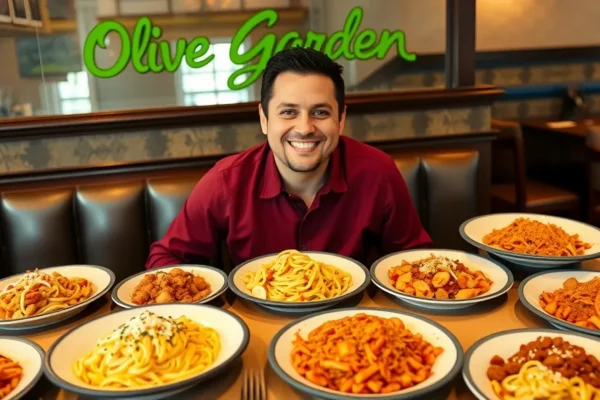
In the modern digital landscape, the line between a consumer and a creator is increasingly blurred. We are witnessing a shift from passive brand consumption to a model of active, participatory engagement. A prominent example of this phenomenon is the story of Braden Sinclair, an individual who has become a central figure in a unique intersection of dining and digital influence. Sinclair is one of only 50 people globally to hold the Olive Garden Lifetime Pasta Pass, a highly exclusive lifetime membership that grants the holder access to unlimited pasta.
While a restaurant promotion might seem like a simple marketing tactic, Sinclair’s experience represents a deeper technological and sociological shift. This is not just about a restaurant loyalty program; it is about the mechanics of the attention economy. Through his social media presence, Sinclair has turned a physical perk into a digital ecosystem. He has transitioned from a mere customer to an internet celebrity, using his access to drive a viral food story that keeps a massive community engaged every single day.
This development is significant because it demonstrates how brands can leverage “scarcity-based assets” to create long-term engagement. According to recent trends in digital marketing analysis, the value of a brand is no longer just in the product itself, but in the “storytelling potential” the product offers to influencers. The Olive Garden promotion serves as a catalyst for this, providing Sinclair with a consistent, daily content loop that thrives on community interaction.
Decoding the Engagement Loop
To understand how Braden Sinclair maintains his influence, one must look at the core mechanism of his content: the decentralized menu. Instead of simply eating a meal and filming it, Sinclair has implemented a participatory feedback loop. He presents his followers with a choice, allowing the community to decide his daily menu. This turns every meal into a collective decision-making event.
Think of it like a decentralized governance system, similar to how some digital communities use voting mechanisms to decide on the future of a project. In Sinclair’s case, the “voters” are his followers, and the “proposal” is his next bowl of pasta. The mechanism works in three distinct steps:
- The Prompt: Sinclair presents several options from the Olive Garden menu via his social media platforms.
- The Consensus: The community engages in a period of voting, often using polls or comments to reach a consensus.
- The Execution: Sinclair visits the restaurant, fulfills the community’s choice, and shares the results, creating a sense of shared achievement among his audience.
This process transforms the pasta pass challenge from a solo experience into a group activity. By handing over the “control” of his diet to his audience, Sinclair creates a high level of psychological investment. His followers are no longer just watching a video; they are participating in a daily ritual. This is the “how” behind his ability to maintain relevance in a crowded market of food influencers.
The Current State of Viral Food Content
Today, the intersection of dining and digital content is a mainstream phenomenon. We see this across various platforms, from TikTok to Instagram, where creators use specific “gimmicks” or exclusive access to build massive, loyal audiences. Sinclair’s use of the Olive Garden Lifetime Pasta Pass is a prime example of “niche-to-mainstream” content. What started as a unique personal perk has evolved into a structured content series that garners millions of views.
The maturity of this model is evident in how rapidly brands are now integrating with creator workflows. We are moving past the era of the “celebrity endorsement” and into the era of “integrated lifestyle participation.” In this stage, the influencer does not just hold the product; they live through the product in a way that is interactive and continuous. Sinclair is currently in the “active adoption” phase of this model, where his daily engagement creates a predictable and repeatable content stream.
This content is available globally through digital platforms, making a local restaurant experience feel like a universal event. The scalability of this model is what makes it so potent. While Sinclair can only eat one meal at a time, his digital “menu votes” can reach hundreds of thousands of people simultaneously, creating a global dining room experience.
Traditional Loyalty vs. The Creator Model
To understand the significance of Sinclair’s approach, we must compare it to the traditional restaurant loyalty program. Most major chains, such as Starbucks or McDonald’s, utilize a “transactional loyalty” model. In these systems, the user performs an action (a purchase), and the brand provides a reward (points or a free item). This is a linear, one-to-one relationship designed to encourage repeat spending.
The Sinclair model, powered by the Olive Garden Lifetime Pasta Pass, operates on a “relational engagement” model. The advantages and differences are stark:
- Objective: Traditional programs aim for retention and spend increase. The creator model aims for attention and community building.
- Direction of Value: In traditional models, value flows from the brand to the customer. In the creator model, value is co-created between the influencer and the audience.
- Scalability of Engagement: Traditional loyalty is limited to the individual customer. The creator model scales the experience to a global audience through digital distribution.
While traditional programs have the advantage of high-volume data collection and direct revenue impact, the creator model has the advantage of “organic reach.” A traditional loyalty app rarely goes viral, but a viral food story involving a unique challenge can generate free, massive-scale marketing that traditional advertising budgets cannot match. Sinclair holds the advantage here because his “product” is the engagement itself, not just the pasta.
Shifting Business Models and Social Dynamics
The success of individuals like Braden Sinclair suggests a broader reshaping of the economic landscape for food and beverage industries. We are seeing the emergence of the “Attention-Based Dining Economy.” In this model, the value of a menu item is partially determined by its “shareability” and its ability to drive digital conversation.
The economic implications are significant. Brands may begin to allocate more budget toward “extreme loyalty” perks—items so exclusive that they become content engines—rather than broad-based discounts. This shifts the marketing focus from the “average consumer” to the “high-engagement creator.” For the market, this means a potential increase in the valuation of niche influencers who can provide consistent, interactive content.
Socially, this creates a new form of digital community. These groups are bonded by shared rituals, such as the daily pasta vote. However, there is a potential for “consumption fatigue,” where the pressure to constantly participate in digital trends can lead to a superficial relationship with the actual physical experience of dining. The short-term impact is a surge in brand visibility, while the long-term impact may be a fundamental change in how we perceive the “value” of a restaurant visit.
The Risks of Decentralized Brand Management
Despite the benefits, there are significant limitations and challenges to this model. For the brand, the primary concern is “brand safety.” When an influencer like Sinclair allows their audience to choose their menu, the brand effectively loses control over the narrative. If a community chooses to highlight a controversial menu item or uses the platform to criticize the restaurant, the brand is tethered to that negative content.
There are also practical and technical challenges:
- Scarcity vs. Scalability: The Olive Garden Lifetime Pasta Pass works because it is rare. If the brand attempted to offer unlimited pasta to everyone, the economic model would collapse, and the “prestige” of the content would vanish.
- Physical vs. Digital Friction: There is a gap between the digital vote and the physical reality of a restaurant kitchen. Coordinating a massive community’s “whims” with the actual operational capacity of a restaurant chain is a logistical nightmare that has not yet been solved at scale.
- Content Longevity: The “novelty factor” is a major risk. Once the novelty of the pasta pass challenge wears off, the creator must find new ways to maintain engagement, or the community will move on to the next viral trend.
Furthermore, the “creator economy” is highly volatile. An influencer’s ability to drive value is tied to platform algorithms. If a social media platform changes its delivery mechanism, the entire business model of a creator like Sinclair could be disrupted overnight.
The Future of Algorithmic Dining
As we look toward the future, the trajectory of this trend suggests a move toward even deeper integration between digital participation and physical consumption. We are likely heading toward a world of “Algorithmic Dining,” where real-time data from social media sentiment and community voting could influence restaurant menus in near real-time.
Key developments to watch include:
- Hyper-Personalized Loyalty: Moving beyond simple points to digital assets (like NFTs or specialized digital passes) that grant unique, content-generating privileges.
- Direct-to-Community Menus: Restaurants that host their own micro-communities to decide seasonal offerings, bypassing traditional market research.
- AI-Driven Engagement: The use of artificial intelligence to manage the “feedback loop,” helping creators like Sinclair predict which menu choices will generate the most engagement before the vote even begins.
While we are currently in the era of manual, human-led engagement, the next milestone will likely be the automation of this participatory experience. The timeline for this is estimated to be within the next five to ten years, as augmented reality (AR) and advanced social data analytics become more deeply embedded in the hospitality industry.
Frequently Asked Questions
What exactly is the Olive Garden Lifetime Pasta Pass?
The Olive Garden Lifetime Pasta Pass is an extremely rare and exclusive lifetime membership that allows a very small number of individuals to enjoy unlimited pasta at Olive Garden restaurants. It serves as both a dining perk and a powerful tool for digital storytelling.
Who is Braden Sinclair?
Braden Sinclair is an internet celebrity and content creator known for his unique way of engaging his community. He uses his exclusive access to the pasta pass to let his followers decide his daily meals, turning his dining experience into a viral food story.
How does the pasta pass challenge work?
The pasta pass challenge involves Sinclair presenting his audience with different menu options through social media polls. His followers then vote on what he should eat, creating a highly interactive and participatory experience for the community.
Is this a standard restaurant loyalty program?
No, this is much more than a standard restaurant loyalty program. While traditional programs focus on rewards for spending, this model focuses on using a unique perk to drive massive social media engagement and community interaction.
Is this type of influencer marketing sustainable?
The sustainability of this model depends on the creator’s ability to maintain novelty and the brand’s ability to manage the risks of decentralized content. While it is highly effective for generating attention, it requires constant innovation to avoid audience fatigue.
Note: The analysis provided here is based on current social media trends and marketing observations. The long-term economic impact of participatory brand models is still being studied by industry experts.











