

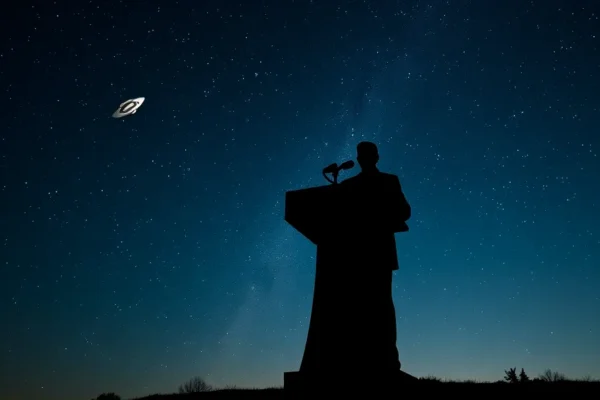
What’s Fueling the Trump Alien Disclosure Rumors?
A persistent buzz is building around the possibility of a presidential announcement regarding extraterrestrial life. While once confined to niche forums and late-night talk shows, the idea of official US government acknowledgment of UFOs and potential alien disclosure has entered the mainstream conversation with renewed vigor. This surge in speculation is closely tied to a series of increased disclosures by the US government concerning unidentified aerial phenomena, often referred to as UFOs. These developments, coupled with a historical fascination surrounding former President Donald Trump’s administration and its approach to sensitive information, have created a fertile ground for rumors of a monumental Trump alien disclosure.
For decades, the subject of UFOs has been shrouded in secrecy and skepticism. However, recent years have seen a significant shift. In 2021, the Pentagon released a long-awaited report on Unidentified Aerial Phenomena (UAP), the modern government term for UFOs. This report, while not confirming alien origins, acknowledged a multitude of unexplained sightings by military personnel that defied conventional explanation. This official validation opened the door for further discussions and investigations, making the prospect of a presidential announcement less far-fetched than ever before. The current fever pitch of these rumors is a direct consequence of this evolving narrative, moving from conspiracy theory to a subject of serious public and governmental debate.
How the UFO Disclosure Narrative is Unfolding
The core of the current movement towards greater transparency on UFOs stems from a desire to understand potential national security threats and to demystify unexplained observations. The mechanism behind this shift involves several key actions by the US government. Firstly, the establishment of dedicated UAP task forces and offices within the Department of Defense and intelligence agencies has signaled a more structured approach to collecting and analyzing data on these phenomena. Think of it like a detective agency finally taking a cold case seriously after years of ignoring anonymous tips.
Secondly, there has been a gradual declassification and public release of previously restricted documents and footage related to military encounters with UAP. For instance, the U.S. Navy released three videos in April 2020 showing “unidentified aerial phenomena” that pilots had encountered. This move, while seemingly small, is significant. It moves information from behind closed doors into public view, allowing for broader scrutiny and discussion. The objective is not necessarily to prove the existence of aliens, but to provide a more comprehensive understanding of what is being observed, moving beyond the realm of pure speculation and into data-driven analysis. This systematic, albeit slow, release of information is what fuels the anticipation for a definitive statement, perhaps even a presidential one.
Current State of UFO Disclosures and Real-World Interest
The current state of UFO disclosures can be characterized as one of increasing openness but continued ambiguity. The U.S. government, through its various agencies, is now more willing to acknowledge and investigate UAP sightings than ever before. This isn’t a widespread, mainstream application in the sense of a consumer product, but rather a governmental and scientific endeavor. For example, the All-domain Anomaly Resolution Office (AARO), established within the Department of Defense, is actively working to detect, identify, and attribute UAP. This office acts as a central hub, consolidating reports and analyses from across military branches and intelligence agencies.
Beyond official channels, private organizations and researchers are also contributing to the public discourse. Groups like the Scientific Coalition for UAP Studies (SCU) are working to apply scientific methodologies to analyze UAP data. The public’s interest is evident in the sustained media coverage, increased online search traffic related to UFOs, and the growing number of documentaries and podcasts dedicated to the subject. While official confirmation of extraterrestrial visitors remains elusive, the increased transparency has made the topic a subject of serious news and ongoing public fascination.
The Competitive Landscape of Disclosure and Information
The landscape of UFO information and potential disclosure is complex, involving various actors with different motivations and approaches. On one side, you have government entities like the Pentagon’s AARO, which are focused on national security and scientific analysis. Their approach is characterized by official reports, declassified documents, and controlled investigations. This is a methodical, albeit slow, process driven by defense and intelligence priorities.
On the other side are independent researchers, investigative journalists, and civilian advocacy groups. These entities often work with less access to classified information but can be more agile in pursuing leads and publicizing findings. For example, publications like The Debrief have consistently reported on leaked information and insider perspectives regarding UAP investigations. Then there are the “whistleblowers” – individuals who claim to have insider knowledge, often sharing their testimonies through platforms like YouTube or news outlets. The former President Trump himself, during his term, made some statements that were interpreted by some as hinting at classified knowledge. While not direct disclosure, his administration did oversee some of the initial steps toward greater UAP transparency, creating a unique point of interest for those seeking a definitive “Trump alien disclosure.” The advantage lies with government agencies in terms of access to official data, but the public and media’s role is crucial in pushing for greater transparency and shaping the narrative.
Implications of a Potential Alien Disclosure Announcement
The implications of a formal announcement regarding extraterrestrial life would be profound, reshaping industries, influencing societal beliefs, and sparking a global conversation. Economically, such a disclosure could trigger massive investment in space exploration, new energy technologies, and perhaps even novel forms of communication or propulsion if alien technology were to be revealed. Imagine entire new sectors of the economy emerging overnight, driven by the need to understand and interact with a non-human intelligence. This could also lead to shifts in energy markets, potentially making fossil fuels obsolete if advanced alien energy sources were understood or shared.
Socially, the impact would be immeasurable. It would challenge long-held philosophical and religious beliefs, potentially leading to a re-evaluation of humanity’s place in the universe. For individuals, it could foster a sense of global unity as humanity collectively grapples with this new reality. However, there are also potential concerns: societal disruption, public anxiety, and the ethical considerations of first contact. Short-term impacts could include widespread curiosity and a surge in interest in science and astronomy. Long-term, it could fundamentally alter our understanding of life itself and our responsibilities as a species.
Limitations and Challenges in UFO Disclosure
Despite the increasing openness, significant limitations and challenges remain in the realm of UFO disclosures. The primary bottleneck is the nature of the evidence itself. Many UAP sightings are fleeting, recorded with imperfect equipment, or experienced by individuals whose testimonies, while sincere, are difficult to corroborate with definitive, irrefutable proof. The “unidentified” aspect is key – many phenomena can be explained by known objects or atmospheric conditions once more data is available, but some stubbornly defy conventional analysis. This leads to the challenge of providing concrete, scientific evidence that satisfies a skeptical public and scientific community.
Another major hurdle is the potential for misinterpretation and the proliferation of misinformation. In the absence of clear answers, speculation runs rampant, often blurring the lines between factual reporting and elaborate conspiracy theories. The fear of mass panic or social unrest also acts as a powerful deterrent for governments considering full disclosure. Furthermore, the technical challenges of analyzing advanced, potentially non-terrestrial technology are immense. We lack the frameworks and tools to fully comprehend or replicate objects that might operate on principles far beyond our current scientific understanding. This means that even if such objects were recovered, understanding them would be a monumental, long-term undertaking.
The Future Trajectory of UFO Investigations
The future trajectory of UFO investigations appears to be one of continued, albeit cautious, exploration and analysis. We can expect to see more governmental bodies like AARO dedicating resources to UAP research. Technological advancements in sensor technology, artificial intelligence for data analysis, and improved satellite imaging will likely lead to better detection and tracking of anomalous phenomena. It’s plausible that in the coming years, we might witness the development of more sophisticated aerial and space-based observation platforms specifically designed to capture high-resolution data on UAP.
The push for greater transparency is also likely to persist, driven by public interest and the ongoing work of watchdog organizations and investigative journalists. While a full, dramatic “alien disclosure” might be a distant prospect, the trend is towards incremental release of verified data and more nuanced explanations of what is being observed. Key developments to watch will include further congressional hearings on UAP, the release of more unclassified data, and advancements in the scientific community’s engagement with the subject. A realistic timeline for significant breakthroughs is hard to pinpoint, but the current momentum suggests that the UAP conversation will remain a prominent feature of the technological and governmental landscape for the foreseeable future.
Key Questions and Answers About Trump Alien Disclosure Rumors
What exactly are the rumors about a Trump alien disclosure?
The rumors suggest that during his presidency, Donald Trump may have been privy to or even planned to reveal information about extraterrestrial life or advanced alien technology, a notion often fueled by discussions surrounding his administration’s limited but notable steps toward UAP transparency.
Are there any official US government statements confirming UFOs or aliens?
The US government, through the Pentagon’s AARO office, has officially acknowledged the existence of Unidentified Aerial Phenomena (UAP) that cannot be immediately explained. However, these statements do not confirm extraterrestrial origins or alien life, focusing instead on unexplained aerial events.
Is the technology behind UFOs understood by the US government?
The government has stated that many UAP sightings defy conventional explanations, but this does not imply an understanding of alien technology. The challenges lie in analyzing phenomena that operate beyond current known physics and engineering principles.
What evidence supports the idea of Trump alien disclosure?
Evidence is largely circumstantial, based on Trump’s past statements that hinted at classified information and the actions of his administration which saw an increase in official UAP reporting and a declassification of some related documents. There is no direct evidence of a planned disclosure announcement.
How long until we get definitive alien disclosure, if ever?
There is no definitive timeline, and it’s possible that definitive disclosure may never occur due to a lack of conclusive evidence or potential geopolitical concerns. The current trend suggests continued investigation and gradual information release rather than a sudden announcement.
Who benefits from the current increase in UFO disclosures and rumors?
Transparency advocates and the public benefit from increased access to information and a more open dialogue about unexplained phenomena. Researchers and scientists also benefit from more data to study. The government benefits from a more informed populace and potentially identifying genuine national security threats.
This article discusses a rapidly evolving area of public interest. While official government disclosures and increased investigation into UFOs are factual, the speculation surrounding a specific presidential announcement, particularly related to “Trump alien disclosure,” remains in the realm of rumors and public discussion.











