

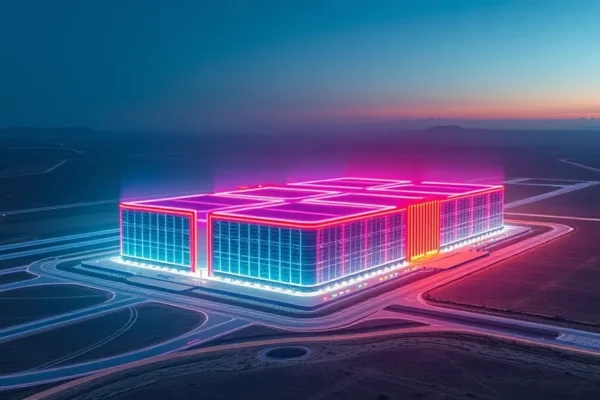
The Foundation of the Future China’s AI Data Center Expansion
At its heart, the concept we’re exploring is AI infrastructure. Think of it like building the roads, power grids, and pipelines that a country needs to function. Just as a nation needs physical infrastructure for transportation and energy, it also needs digital infrastructure to power the modern economy. AI infrastructure, specifically, refers to the powerful computers, storage systems, and high-speed networks that are essential for developing and running artificial intelligence applications. These are the massive digital factories, often called China AI data centers, that do the heavy lifting for AI.
Why should you care? Because the race to build this digital infrastructure is a race for global economic and technological leadership. The countries and companies that control the most advanced AI infrastructure will be better positioned to innovate, create new industries, and shape the future of technology. It’s about who builds the most efficient engines for the digital age.
How Massive Server Farms Power AI
Let’s break down how this works. Imagine you want to train a very smart robot to recognize different types of fruit. You wouldn’t just show it a few apples; you’d show it thousands, millions of pictures of apples, bananas, oranges, and so on. This process requires immense computing power to process all those images, learn the patterns, and refine the robot’s understanding.
This is where China AI data centers and their supporting computing infrastructure come in. These are not your average computer rooms. They are vast complexes filled with thousands of specialized computers, known as servers. These servers are packed with powerful processors, especially graphics processing units (GPUs), which are incredibly good at handling the complex calculations needed for AI.
These server farms are connected by incredibly fast networks, allowing data to flow in and out rapidly. They also need massive amounts of electricity to run and sophisticated cooling systems to prevent the super-powerful computers from overheating. Inner Mongolia, for instance, offers vast, sparsely populated land and access to electricity, making it an ideal location for building these energy-intensive facilities. The process looks something like this:
1. Data Collection: Vast amounts of data, like images, text, or sounds, are gathered from various sources.
2. Training: This data is fed into powerful AI models running on the China AI data centers. The AI learns by identifying patterns and making predictions. This can take days, weeks, or even months.
3. Deployment: Once trained, the AI model can be used for specific tasks, like powering recommendation engines on your favorite streaming service, enabling voice assistants, or driving self-driving cars.
A real-world example is how cloud computing providers, like Amazon Web Services or Microsoft Azure, build enormous data centers to offer computing power and AI services to businesses. China’s investment in Inner Mongolia is a national-level effort to build similar foundational capabilities.
Why This Expansion Matters for the Global Economy
This massive investment has significant implications. For individuals, it means the AI services we use every day could be developed and improved faster. Think about the personalization of online content, the efficiency of logistics, or advancements in medical diagnosis all powered by AI. The location of these AI infrastructure hubs can influence where innovation happens and which countries lead in developing new technologies.
Economically, it impacts the digital economy. Countries with strong AI infrastructure are better positioned to attract investment, foster startups, and create high-skilled jobs in areas like AI research, data science, and cloud computing. It can also create a competitive advantage for industries that can leverage AI effectively, from manufacturing to finance.
There are also potential downsides. The intense competition for AI supremacy could lead to geopolitical tensions. Furthermore, the development of powerful AI raises ethical questions about job displacement, data privacy, and the potential misuse of technology. The semiconductor industry, which manufactures the chips essential for AI, is a critical bottleneck, and the demand driven by these data centers can influence global chip supply and pricing.
The Evolution of Digital Powerhouses
The concept of powerful computing centers isn’t new. Early computing was done on massive, room-sized machines. However, the explosion of data and the development of algorithms that can learn from it have driven the need for exponentially more powerful and specialized infrastructure. The rise of the internet and cloud computing in the early 2000s laid the groundwork, making computing power accessible on demand.
China’s strategic focus on AI has intensified in recent years. Recognizing the transformative potential of artificial intelligence, the Chinese government has made substantial investments in research, development, and, crucially, the underlying computing infrastructure. The initiative in Inner Mongolia is a significant part of this broader strategy, aiming to create a robust foundation for AI development, free from potential disruptions or reliance on foreign technology. This move is a direct response to a global recognition that control over AI capabilities is key to future economic power. According to reports, China plans to significantly expand its data center capacity in the coming years, underscoring the urgency of this investment.
Thinking About China’s AI Data Centers in Your Financial World
For individuals, understanding the scale of China AI data centers and global AI infrastructure development helps explain why tech companies are investing so heavily in AI. It can influence investment decisions in technology sectors, as companies that can leverage AI effectively may see higher growth. It also highlights the importance of digital literacy and understanding how AI impacts the job market.
A common misconception is that AI is a futuristic concept; in reality, it’s already deeply integrated into many services we use daily. The rapid build-out of AI infrastructure suggests this integration will only accelerate. When you hear about countries or companies investing heavily in data centers, it’s a signal of their commitment to leading in the AI race.
One actionable insight is to stay informed about technological trends. Understanding the foundational role of computing infrastructure in AI can help you better evaluate companies and industries that are likely to benefit from or be disrupted by AI advancements.
Connecting AI Infrastructure to Broader Economic Concepts
This topic connects to several other important financial and economic ideas. The development of AI infrastructure is a key driver of the digital economy, influencing how goods and services are produced and consumed. It also has implications for cloud computing services, as these data centers are the backbone of cloud offerings.
Furthermore, the global race for AI supremacy touches upon concepts of tech supremacy, international trade, and national security. Understanding the economics of the semiconductor industry is also vital, as it directly supports the creation of the powerful chips needed for AI. Learning about the economics of innovation and the impact of large-scale infrastructure projects can provide a deeper context.
Frequently Asked Questions About China’s AI Data Center Expansion
How do China AI data centers impact global AI supremacy?
These centers provide the massive computing power needed to train and deploy advanced AI models. Their scale and technological advancement are crucial for China to compete and potentially lead in developing cutting-edge artificial intelligence applications and services, influencing global tech dominance.
What is the role of AI infrastructure in the digital economy?
AI infrastructure, including China AI data centers and computing infrastructure, is the fundamental engine for the digital economy. It enables the creation of new digital services, optimizes existing ones, and drives innovation in areas like automation, big data analytics, and personalized experiences.
Why is Inner Mongolia a focus for China’s AI data center expansion?
Inner Mongolia offers strategic advantages such as vast land availability, lower operational costs, and access to significant electricity resources, which are crucial for power-hungry server farms. This location allows for the construction of large-scale AI infrastructure away from densely populated areas.
What are the economic implications of these large-scale server farms?
The construction and operation of these facilities create jobs in technology and construction, foster innovation, and can attract further investment in related industries. They are key to building a nation’s capacity in the digital economy and its position in global technology competition.
Can individuals influence or benefit from the development of China AI data centers?
While individuals cannot directly control the development of national AI infrastructure, they benefit indirectly through improved AI-powered services. Understanding these developments can inform personal investment choices in technology companies and enhance career prospects in AI-related fields.
What are the risks associated with the rapid growth of AI infrastructure?
Risks include increased energy consumption and environmental impact, potential job displacement due to AI automation, heightened geopolitical competition for technological leadership, and ethical concerns regarding data usage and AI’s societal impact. The reliance on the semiconductor industry also presents supply chain risks.
This information is for educational purposes only and should not be considered financial advice. Financial situations vary greatly from person to person. Consult with a qualified financial professional before making any financial decisions or investments.











