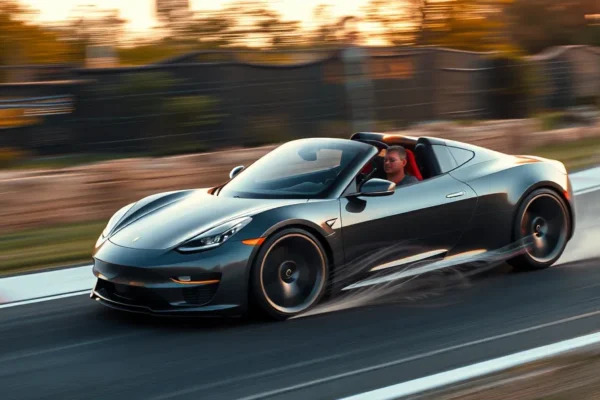
The Tesla Roadster 2 promised mind-bending speeds, and a lot of that buzz came from its incredible aerodynamic engineering. It’s not just about looking sleek; Tesla’s approach to airflow is like a carefully choreographed dance with the wind, designed to make this electric car hug the road, especially at its extreme 230 mph potential. Let’s break down what that actually means for a car and how it works.
What’s the Big Deal with the Tesla Roadster 2’s Aerodynamics?
Imagine pushing a flat piece of cardboard through water versus a sharp knife. The cardboard pushes a lot of water out of the way and slows down quickly. The knife cuts through with much less resistance. The Tesla Roadster 2 is designed to be that knife, but for air. At high speeds, air resistance becomes a massive force trying to push your car backward. Great aerodynamics means less of that push, allowing the car to go faster and more efficiently. It’s essentially about making the car as slippery as possible to the air it’s trying to cut through.
This advanced aerodynamic design is crucial for achieving the supercar-level performance Tesla is aiming for. It’s not just about making it look cool; it’s about making it go faster and handle better, especially when you’re talking about speeds that blur the lines of possibility for a production electric car. For everyday drivers, this extreme engineering trickles down into better efficiency and stability, even if we never hit 230 mph ourselves.
How Does the Tesla Car Use Air to its Advantage?
The core idea behind the Roadster 2’s “flying” capability at high speeds is about generating downforce. Think of it like an airplane wing, but upside down. An airplane wing is shaped to lift the plane up. An upside-down wing shape on a car, when air rushes over it, pushes the car down onto the road. This increased grip is vital for stability and control when you’re going incredibly fast. If a car doesn’t have enough downforce at 200+ mph, it could literally lift off the ground.
Tesla’s unique approach, often described as a “suck and blow” function, is a sophisticated way of managing airflow. The “suck” part involves creating low-pressure areas underneath the car and around its body. Air rushing under the car is forced to travel a longer, curved path compared to the air above, creating suction that pulls the car downwards. The “blow” aspect often refers to carefully managed air channels and spoilers that actively direct air, either to create downforce or to reduce drag. It’s like the car is working with the air, not just fighting against it.
Scenario 1: Hitting the Track
If you were one of the lucky few to take a Tesla Roadster 2 to a race track, this aerodynamic setup would be your best friend. As you accelerate towards those unbelievable speeds, the car would feel planted, not floaty. The downforce generated would allow you to corner much faster and with more confidence, because the tires have more grip on the asphalt. It’s like the car is being magnetically pulled to the track surface.
Scenario 2: Everyday Driving (with a Twist)
Even at highway speeds, the aerodynamic principles at play offer benefits. While you won’t feel the intense suction, the car will be more stable. This means less effort is needed to keep it straight, and it will feel less susceptible to crosswinds or gusts from passing trucks. For a performance supercar like the Roadster, this stable ride is a key part of the driving experience, making it feel more controlled and secure.
Who is This Aerodynamic Marvel For?
Best for: Die-hard performance enthusiasts and collectors who crave cutting-edge automotive innovation and the absolute pinnacle of electric vehicle speed. If you’re someone who appreciates bleeding-edge engineering and the thrill of extreme performance, the Roadster 2 is aimed squarely at you.
Good for: Tech enthusiasts and early adopters who want to experience the future of the automobile. While the extreme speeds are a draw, the underlying aerodynamic principles contribute to a better-driving vehicle for anyone who values advanced technology and efficiency.
Skip if: You’re a budget-conscious buyer or prioritize practicality over extreme performance. The focus here is on pushing boundaries, not necessarily on family road trips or cargo capacity. If you’re looking for a more conventional electric car for daily commuting, this isn’t it.
How Does It Stack Up Against Other Supercars?
The Tesla Roadster 2 aims to compete in a very exclusive club of hypercars, many of which have decades of aerodynamic expertise built into their designs. Traditional supercar manufacturers like Ferrari, Lamborghini, and McLaren have long mastered creating downforce through complex wings, diffusers, and bodywork. The Roadster 2’s key difference is achieving this with electric powertrain packaging and a potentially simpler, yet highly effective, aerodynamic philosophy. It’s a challenge to directly compare as the Roadster 2 is still in its highly anticipated release phase, but its claim of 230 mph puts it in contention with some of the fastest gasoline-powered cars on the planet. The value proposition is in achieving such performance with zero tailpipe emissions, a significant differentiator in the supercar world.
Getting Up to Speed: Setup and Ease of Use
For a vehicle as advanced as the Tesla Roadster 2, the “setup” is primarily about familiarizing yourself with its operation. Like other Tesla vehicles, expect a highly digital interface. The learning curve involves understanding the car’s performance modes and how to safely explore its capabilities. There’s no complex installation process; you get in and drive. However, mastering the handling at extreme speeds will require significant driver skill and potentially specialized training. For most everyday users, the core driving experience will be intuitive, but unlocking its full potential is a serious undertaking.
Real-World Pros: What You’ll Actually Experience
- Unmatched Stability at Speed: The advanced aerodynamics mean the car feels incredibly stable and planted, even when pushing limits. This translates to confidence-inspiring handling.
- Cutting-Edge Efficiency: While designed for speed, clever aerodynamics also reduces drag, meaning the electric car can achieve impressive range for its performance class.
- Visually Striking Design: The sleek, low-slung profile isn’t just functional; it’s a statement of advanced automotive design.
- Potential for Smooth Ride: Even at moderate speeds, the engineered airflow can contribute to a quieter and more refined ride compared to less aerodynamically optimized vehicles.
Real-World Cons and Limitations
- Extreme Speed is Not for Public Roads: The 230 mph capability is theoretical and cannot be safely or legally utilized on public roads. This performance is primarily for track use or specialized events.
- Downforce Can Affect Low-Speed Maneuvering: While great for high speeds, the significant downforce could potentially make the steering feel heavier or less responsive at very low speeds.
- Requires Expert Driving Skills: Achieving and controlling speeds of this magnitude demands exceptional driver proficiency, making it inaccessible for casual drivers.
- Limited Practicality: As a supercar, expect compromises in cargo space and passenger comfort compared to more mainstream vehicles.
Price, Value, and Affordability
The original pricing for the Tesla Roadster 2 was announced as starting around $200,000 for the base model and going up to $250,000 for the Founders Series. However, with ongoing development and the inclusion of the SpaceX package, which further enhances its performance metrics, the final price is anticipated to be higher. This positions it firmly in the ultra-luxury supercar segment. The value is subjective, driven by its groundbreaking electric performance claims and status as a technological marvel. For those who can afford it, the value lies in owning a piece of automotive history that pushes the boundaries of what’s possible with an electric car. Budget alternatives would be significantly slower, less technologically advanced electric vehicles or traditional gasoline supercars.
The Verdict: Is This “Flying” Tesla Car for You?
The Tesla Roadster 2 is not a car for everyone. Its aerodynamic brilliance is engineered for extreme performance, aiming to redefine the supercar landscape. If you’re a performance aficionado who appreciates cutting-edge engineering and has the means and desire for a groundbreaking electric supercar, the Roadster 2 is a tantalizing prospect. However, for the vast majority of drivers, its extreme capabilities are largely theoretical and impractical for daily life. It represents the pinnacle of automotive aspiration, showcasing what’s possible when you blend electric power with visionary aerodynamics. If your needs lean towards practicality, comfort, or affordability, you should look elsewhere.
Common Questions About the Tesla Roadster 2
What does “flying” mean for the Tesla Roadster 2?
It refers to the car’s ability to generate significant downforce through its aerodynamic design. This keeps it planted on the road at extreme speeds, preventing it from lifting off the ground, rather than literally flying like an aircraft.
Is the Tesla Roadster 2 really going to be 230 mph?
Tesla has claimed this top speed, and its advanced aerodynamic engineering is designed to make it achievable. However, this speed is intended for track use and requires specific conditions and driver skill.
How does the SpaceX package affect the car’s performance?
The SpaceX package reportedly includes thrust vectoring and other enhancements that could further improve acceleration, braking, and potentially top speed, leveraging aerospace principles.
Is this Tesla car practical for everyday use?
No, the Roadster 2 is a high-performance supercar. While it’s an electric car, its focus is on extreme speed and handling, making it impractical for typical daily commuting needs like carrying groceries or multiple passengers.
Where can I buy the Tesla Roadster 2?
The Tesla Roadster 2 is available for pre-order through Tesla’s official website. Availability and production timelines can vary, so checking Tesla’s site for the latest updates is recommended.
Does the aerodynamic design improve the car’s range?
Yes, while designed for extreme performance, efficient aerodynamics reduce air resistance. This helps the electric car achieve better range and efficiency, even when not driven at its absolute limits.
Product prices and availability vary by region. Verify current pricing before purchase.