Jamie Dimon Warns of Five Looming Economic Threats
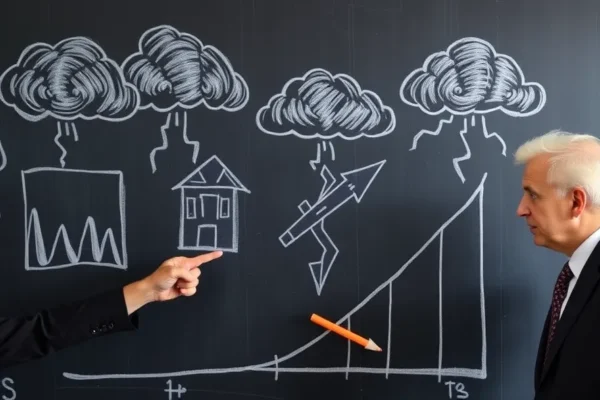
Jamie Dimon, the long-serving CEO of JPMorgan Chase, a titan in the global financial industry, has recently sounded an alarm regarding five significant economic threats that could impact the U.S. economy and beyond. These warnings, delivered in various public forums and interviews, highlight a period of heightened uncertainty for businesses and investors alike. Dimon’s pronouncements are closely watched given his extensive experience and JPMorgan Chase’s central role in the financial system. He has pointed to a complex interplay of factors, including persistent inflation, rising interest rates, potential geopolitical instability, the ongoing energy transition, and the nation’s growing debt burden, as key concerns that could derail economic growth.
Why Jamie Dimon is Sounding the Alarm Now
The timing of Dimon’s warnings is crucial. Following a period of unprecedented fiscal and monetary stimulus aimed at combating the economic fallout from the COVID-19 pandemic, policymakers are now grappling with the consequences. Inflation, which had been relatively subdued for years, surged significantly, prompting central banks, including the U.S. Federal Reserve, to aggressively raise interest rates. Dimon’s rationale appears to be that the cumulative effect of these factors, coupled with existing structural challenges, creates a more fragile economic environment than many anticipate. He has frequently cited the need for businesses and individuals to prepare for a range of potential outcomes, emphasizing that the ‘soft landing’ narrative, while desirable, is not guaranteed. This proactive stance by a leading CEO serves as a strategic signal to the market to reassess risk appetites and contingency planning.
JPMorgan Chase Amidst Shifting Competitive Sands
Dimon’s perspective from JPMorgan Chase places him at the nexus of these economic currents. As one of the largest and most diversified financial institutions globally, the bank’s performance is intrinsically linked to the health of the U.S. economy and global markets. Competitors, including other major banks like Bank of America, Citigroup, and Wells Fargo, as well as investment firms and fintech companies, are also navigating this complex landscape. While Dimon highlights macro-level threats, each institution is simultaneously assessing its own balance sheet, capital reserves, and risk management frameworks. The competitive implication is a potential divergence in performance based on how well each entity anticipates and adapts to these economic headwinds. Those with stronger capital positions and more diversified revenue streams may find themselves better insulated, potentially gaining market share as less resilient players falter.
Broader Industry Implications of Economic Headwinds
The collective impact of the threats identified by Dimon signals a potential recalibration of the entire financial services industry and, by extension, the broader economy. Persistent inflation and higher interest rates, for instance, can dampen consumer and business spending, leading to slower loan growth and increased credit risk for banks. The energy transition, while a long-term necessity, presents its own set of challenges and opportunities, requiring significant capital investment and potentially impacting traditional energy sector financing. The specter of financial instability and market volatility means that investment banking and trading revenues could become more unpredictable. Industry peers are likely to respond by focusing on cost efficiencies, strengthening capital buffers, and perhaps re-evaluating their exposure to more cyclical or interest-rate-sensitive business lines. The overall trend could lean towards a more cautious, risk-averse environment, potentially slowing down innovation and expansion in certain sectors.
Financial and Operational Impact on JPMorgan Chase and Others
From a financial perspective, the economic threats Dimon has identified could have multifaceted impacts. Higher interest rates generally benefit banks’ net interest margins – the difference between what they earn on loans and pay on deposits. However, this benefit can be offset by a slowdown in loan demand and an increase in loan defaults if the economy weakens significantly. For JPMorgan Chase, a diversified business model that includes investment banking, asset management, and consumer banking, the effects might be mixed. Investment banking activities, for example, can be sensitive to market volatility. Operationally, the bank, like its peers, may need to invest more in risk management technologies and talent. The timeline for these impacts is also varied; some, like interest rate sensitivity, are immediate, while others, such as the long-term effects of the energy transition, will unfold over years. Financial reports from institutions like JPMorgan Chase will be closely scrutinized for their resilience and strategic adjustments in response to these evolving conditions.
Execution Risks and Challenges in Navigating These Threats
Despite Dimon’s astute observations, the execution of strategies to mitigate these economic threats is fraught with challenges. The primary risk is misjudging the timing and severity of any of these five factors. For instance, if the Federal Reserve raises interest rates too high or too quickly, it could inadvertently trigger a more severe recession than anticipated, leading to significant losses. Conversely, if policymakers ease too soon, inflation could re-accelerate. For JPMorgan Chase, adapting to rapid changes in market conditions, managing a global workforce through potential economic downturns, and ensuring compliance with evolving regulations all present substantial operational hurdles. Historically, major financial institutions have faced significant challenges during periods of economic stress, as seen in the 2008 financial crisis. While regulatory reforms have strengthened the system, unexpected shocks can still expose vulnerabilities. The success of any strategic response hinges on robust forecasting, agile decision-making, and effective risk management.
Stakeholder Implications: From Employees to Investors
These looming economic threats have significant implications for a wide range of stakeholders. For employees at JPMorgan Chase and across the financial sector, increased economic uncertainty could translate into slower wage growth, hiring freezes, or even layoffs if economic conditions worsen. Customers, both retail and corporate, might face tighter lending standards and higher borrowing costs. For investors, the outlook suggests a need for careful portfolio diversification and a heightened awareness of market volatility. Shareholder sentiment towards financial institutions could become more cautious, impacting stock valuations. Culturally, a prolonged period of economic stress often leads to a more conservative, risk-averse corporate culture, prioritizing stability over aggressive growth initiatives. The challenge for leadership will be to balance prudent risk management with the need to continue serving clients and pursuing long-term strategic objectives.
Outlook and Next Steps: Monitoring the Economic Landscape
If Dimon’s warnings prove prescient, the next steps for businesses and policymakers will involve a continued focus on resilience and adaptability. For JPMorgan Chase, this likely means reinforcing its capital position, closely monitoring credit quality, and strategically allocating resources to areas that offer stability or growth amidst uncertainty. Key milestones to watch will include future inflation reports, Federal Reserve policy decisions, geopolitical developments, and corporate earnings across various sectors. Measurable outcomes could include changes in loan growth rates, asset quality metrics, and the bank’s profitability relative to its peers. The timeline for these outcomes is fluid; some may manifest within quarters, while others will play out over years. Investors will be looking for evidence that institutions like JPMorgan Chase are effectively navigating these complex headwinds, with their strategic positioning and financial health serving as key indicators.
Key Questions and Answers About the Economic Outlook
What are the five economic threats Jamie Dimon is warning about?
Jamie Dimon has identified five key economic threats: persistent inflation, rising interest rates, geopolitical instability, the energy transition, and the U.S. national debt, all of which pose risks to U.S. economic growth.
How might inflation and interest rates impact the U.S. economy?
Persistent inflation erodes purchasing power, while rising interest rates increase borrowing costs for businesses and consumers, potentially slowing down economic activity and increasing recession risks.
What is JPMorgan Chase’s role in this economic environment?
As a major global financial institution, JPMorgan Chase is deeply exposed to economic trends, influencing and being influenced by market volatility, lending activity, and overall financial stability.
Will these threats lead to a recession?
While Dimon’s warnings highlight significant recession risks, they do not guarantee a recession; the actual outcome depends on how these threats evolve and how policymakers and businesses respond.
How is JPMorgan Chase preparing for these economic threats?
While specific preparations are internal, institutions like JPMorgan Chase typically focus on strengthening capital reserves, enhancing risk management, and diversifying revenue streams to navigate potential financial instability and market volatility.
What is the strategic rationale behind Dimon’s public warnings?
Dimon’s warnings serve as a strategic communication to prepare stakeholders, encourage proactive risk management across the industry, and position JPMorgan Chase as a prudent and foresighted leader in uncertain times.
Please note that all business outcomes are subject to execution risk and unforeseen market changes.