Understanding the Concept of a Corporate Merger
At its simplest level, a corporate merger happens when two separate companies decide to combine their business operations, assets, and ownership into one single entity. Instead of competing or working as partners, they become one organization. Imagine two neighbors who both run small landscaping businesses. One neighbor has the best lawnmowers, and the other has the best gardening tools and a larger list of clients. If they merge, they no longer have to rent tools from each other or compete for the same customers. They pool their resources to become a stronger, more efficient business.
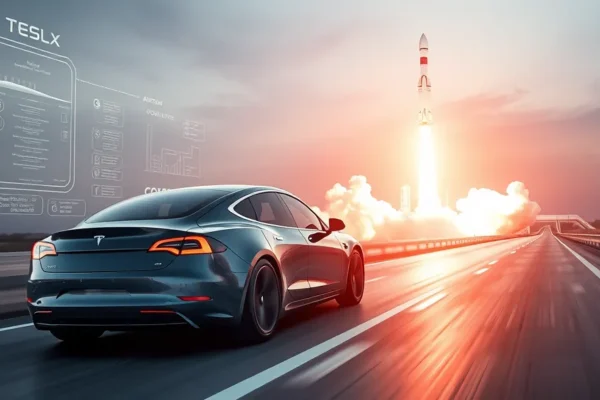
In the case of a potential SpaceX Tesla merger, we are looking at two companies that seem very different on the surface. One builds electric vehicles and robots, while the other builds rockets and satellites. However, from a financial and strategic perspective, merging these entities would create a massive “conglomerate.” A conglomerate is a large corporation made up of several smaller companies that operate in completely different industries.
Understanding this concept is important because when giant companies merge, it can shift the entire economy. It changes how stocks are valued, how thousands of people are employed, and how technology is developed. For the average person, these moves can signal where the world is heading, such as a shift toward a future dominated by artificial intelligence and space exploration.
How a Merger Between a Public and Private Company Works
To understand how a SpaceX Tesla merger would actually function, we first need to define two key terms: public companies and private companies.
- Public Company: This is a company that sells shares of its ownership to the general public on a stock exchange. Anyone with a brokerage account can buy a piece of the company. Tesla is a public company.
- Private Company: This is a company owned by a small group of founders or private investors. Its shares are not traded on an open exchange. SpaceX is a private company.
Merging these two is more complex than merging two public companies. Think of it like this: Imagine Person A owns a lemonade stand that is open to the whole neighborhood for investment (public). Person B owns a secret bakery that only a few friends have invested in (private). If they want to merge, they cannot simply swap shares on a public board because the bakery’s shares aren’t listed publicly.
In a real-world scenario, the process would likely look like this. First, the leadership of both companies would agree on a valuation. Valuation is the process of determining how much a company is worth. Because SpaceX is private, its valuation is based on private funding rounds. According to reports from financial news outlets like Bloomberg, SpaceX has reached valuations exceeding 180 billion dollars in private markets.
Next, Tesla (the public entity) would likely issue new shares of its own stock to the owners of SpaceX. For example, if a SpaceX investor owns 1% of SpaceX, they might receive a specific amount of Tesla stock in exchange for their SpaceX shares. Once the deal is finalized, the new, combined company would be public, meaning the former SpaceX owners could eventually sell their new Tesla shares on the open market.
Why a Tech Giants Merger Matters to You
When companies of this scale discuss merging, the ripple effects touch many different groups of people, from individual investors to global consumers.
Personal Financial Impact
For individuals who hold Tesla stock, a merger would fundamentally change what they own. Currently, a Tesla shareholder owns a piece of an electric vehicle and energy company. If the companies merged, that same shareholder would suddenly own a piece of the aerospace industry. This provides “diversification,” which is the financial strategy of spreading investments across different industries to reduce risk. If the car market slows down but space tourism booms, the investor’s portfolio might remain stable.
Economic and Market Impact
A merger of this magnitude could create a powerhouse of intellectual property. By combining Tesla’s work in AI and robotics with SpaceX’s materials science and satellite connectivity, the new entity could dominate several sectors at once. This could lead to faster innovation in autonomous transport and global internet access. However, it could also raise concerns about a monopoly, which happens when one company has so much power that it can stifle competition or dictate prices.
Who Wins and Who Loses?
The primary beneficiary would be the leadership and the long-term investors who believe in the combined vision of AI and space. Conversely, investors who bought Tesla specifically because they wanted a “pure play” electric vehicle company might be unhappy. They might feel that the focus on Mars or satellites distracts from the goal of selling more cars on Earth.
The Context of AI Singularity and Corporate Strategy
The rationale behind a SpaceX Tesla merger is not just about money; it is tied to a concept called the AI singularity. The AI singularity is a theoretical future point where artificial intelligence becomes so advanced that it surpasses human intelligence, leading to rapid, unpredictable changes in civilization.
Elon Musk has often discussed the intersection of his companies. In his view, Tesla is not just a car company; it is a robotics and AI company. SpaceX is not just a rocket company; it is an infrastructure company for the future of humanity. The strategic logic is that to survive and thrive during the AI singularity, a company needs three things: advanced intelligence (Tesla’s AI), a physical way to interact with the world (Tesla’s robots), and a way to expand beyond a single planet (SpaceX’s rockets).
Historically, we have seen this pattern with other tech giants. For example, Alphabet (the parent company of Google) operates a diverse range of businesses, from search engines to self-driving cars through Waymo. The trend is moving toward “ecosystems” where one company provides the software, the hardware, and the connectivity for a user’s entire life.
Practical Implications for Your Financial Thinking
When you see news about a potential SpaceX Tesla merger, it is helpful to filter the hype through a few financial lenses.
Beware of the “Hype Cycle”: In the tech world, news of a merger often causes stock prices to jump based on excitement rather than actual value. This is known as speculation. A common misconception is that a merger automatically makes a company more valuable. In reality, many mergers fail because the two company cultures do not mix well or the cost of combining them is too high.
Consider Key Man Risk: Both companies are heavily tied to the vision and leadership of Elon Musk. In finance, this is called “key man risk.” This means the value of the companies is deeply linked to one individual. If that person steps away, the valuation could drop regardless of how good the technology is.
Actionable Insight: When tracking such events, look for official SEC (Securities and Exchange Commission) filings rather than social media posts. The SEC is the government agency that regulates public companies in the United States. Official filings provide the legal facts about valuations and share exchanges that social media often ignores.
Related Financial Concepts
To get a deeper understanding of this topic, it is useful to explore a few other financial ideas. Understanding Market Capitalization helps you compare the size of Tesla to the estimated value of SpaceX. Market cap is simply the total value of all a company’s shares of stock.
Another related concept is Synergy. In a merger, synergy is the idea that the combined value of two companies is greater than the sum of their individual parts (1+1=3). For instance, if Tesla’s AI can help SpaceX land rockets more efficiently, that is a synergy.
Finally, studying Diversification will help you understand why some investors would love a merger while others would fear it. Learning how to balance a portfolio across different sectors is a cornerstone of long-term financial health.
Common Questions About the SpaceX Tesla Merger
How would a SpaceX Tesla merger affect Tesla stock?
The impact could be volatile. Some investors might drive the price up due to the added value of SpaceX, while others might sell their shares because they prefer Tesla to stay focused on electric vehicles.
Why is the AI singularity mentioned in this merger?
The AI singularity refers to the point where AI exceeds human intelligence. Combining Tesla’s AI and robotics with SpaceX’s aerospace capabilities is seen by some as a way to build a comprehensive infrastructure for that future.
Can an individual buy shares in SpaceX before a merger?
Because SpaceX is a private company, individuals cannot buy shares on a public exchange. Only accredited investors or employees typically hold SpaceX equity through private secondary markets.
What are the risks of a tech giants merger like this?
The primary risks include regulatory hurdles from the government (antitrust laws), the difficulty of merging two different corporate cultures, and the high level of dependency on a single leader.
Would this merger create a monopoly?
While it would create a massive company, a monopoly usually refers to dominating one specific market. Since Tesla and SpaceX operate in different industries, it is less of a traditional monopoly and more of a powerful conglomerate.
Disclaimer: This article is for educational purposes only and does not constitute personal financial advice. Financial situations vary based on individual goals, risk tolerance, and timelines. Please consult a certified financial professional before making any investment decisions. Financial outcomes are never guaranteed and involve inherent risks.