Understanding Economic Growth in Developing Nations
Gross Domestic Product, commonly known as GDP, is the total value of all goods and services produced within a country over a specific period. Think of it as the scoreboard for a nation’s economy. If a country is a household, GDP is like the total income of everyone living there. When economists talk about GDP growth, they are measuring whether the economy is getting larger—meaning more jobs, more business activity, and more wealth creation.
Why should you care about a country’s economic growth if you live thousands of miles away? Because the global economy is deeply interconnected. When a large region experiences rapid economic development, it influences everything from the price of the goods you buy at the grocery store to the stability of the retirement funds in your investment portfolio. Understanding these trends helps you grasp why money moves the way it does across the globe.
How Economic Growth Mechanisms Function
Growth usually happens when a country moves from relying on simple trade to building more complex systems. Imagine a small village that only grows and sells one type of crop. If a drought hits, the village loses its entire income. Now, imagine that same village starts building roads, opening small factories, and training people to provide services like technology or banking. As they diversify—or add variety to—their income sources, the village becomes wealthier and more resilient.
Africa economic growth is currently undergoing a similar transformation. This shift is driven by a few key mechanisms:
- Demographics: Much of the African continent has a young, growing population. A larger workforce can lead to increased productivity, provided those people have access to education and jobs.
- Digital Transformation: Mobile technology has allowed many African nations to “leapfrog” older technologies. For example, instead of waiting for landline telephone infrastructure, many countries moved directly to mobile banking and digital payments.
- Resource Management: Many nations are moving from simply exporting raw materials to processing those materials locally, which keeps more profit within the country.
Think of it like a business startup. When a company is small, it can often grow much faster than a massive, established corporation that is already at its peak. This is often why emerging markets—developing economies with high growth potential—can sometimes outpace mature economies like China.
Why the Shift Matters for the Global Economy
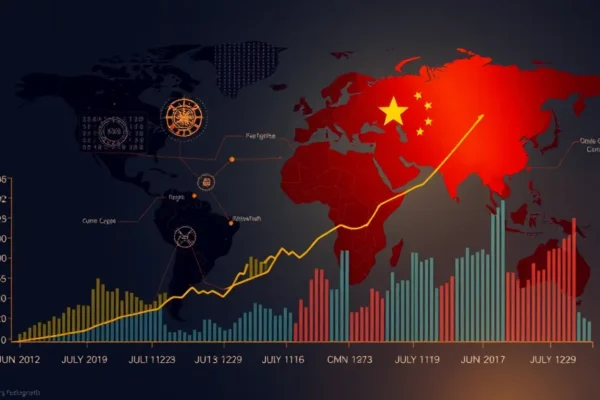
The recent IMF forecast suggesting that growth in parts of Africa may outpace Chinese GDP growth is a signal that the center of gravity in the global economy is shifting. For decades, China was the primary engine of global growth, acting as the “world’s factory.” As China’s population ages and its economy matures, it naturally slows down.
This shift affects your financial life in several ways:
- Supply Chains: As companies look for new places to manufacture goods, the costs of those goods may change. If production moves to countries with lower labor costs and better infrastructure, your everyday items might become more affordable or change in quality.
- Investment Opportunities: Many global mutual funds and retirement accounts hold shares in companies operating in emerging markets. If these regions grow, it can lead to higher potential returns for investors, though it also comes with higher volatility, or price swings.
- Global Inflation: When developing nations grow, their citizens start buying more energy, food, and technology. This increased demand can push up prices for these resources globally, which influences the inflation you see in your own home country.
Historical Context and Current Trends
For the last forty years, China experienced unprecedented economic expansion, lifting hundreds of millions of people out of poverty. According to the World Bank, China’s growth rates were often in the double digits during the early 2000s. However, as of recent IMF predictions, that rate has moderated to a more stable, lower level. This is a common pattern in economic history: rapid early growth followed by a “cooling off” period as an economy reaches a certain level of development.
In contrast, the current interest in Africa economic growth is triggered by a combination of a massive trade bloc known as the African Continental Free Trade Area (AfCFTA) and improved political stability in key regions. Data from the African Development Bank suggests that despite global challenges like rising interest rates and inflation, the continent remains one of the fastest-growing regions in the world.
Applying This Knowledge to Your Financial Decisions
When you hear news about global growth forecasts, it is easy to feel overwhelmed. The most important thing is to focus on what you can control. You do not need to become an expert on every African nation to manage your finances, but you should understand that a globally diversified portfolio—one that includes assets from both established and emerging economies—often handles market shifts better than a portfolio concentrated in just one area.
A common misconception is that “fast growth” always means a “safe investment.” In reality, fast-growing economies often carry higher risks, such as political instability, currency fluctuations, or weaker legal protections for investors. When you read headlines, always look for the “risk” side of the story. If a headline sounds too good to be true, it likely ignores the risks associated with the volatility of developing markets.
Connecting to Other Financial Concepts
The study of Africa economic growth and Chinese GDP trends connects to several other core financial ideas:
- Diversification: Spreading your investments across different regions helps protect you if one economy slows down while another speeds up.
- Foreign Exchange Rates: As economies grow, their currencies may fluctuate in value compared to the US Dollar or Euro, which impacts the cost of international trade.
- Inflation: Understanding how global demand for resources drives up prices is essential to grasping why the cost of living changes over time.
Learning about these topics helps you build a more complete picture of how the global financial machine operates.
Common Questions About Global Growth
How does Africa economic growth compare to China’s current performance?
While China remains a massive global economic powerhouse, its growth rate has slowed as its economy has matured. According to IMF predictions, several African nations are expected to see higher percentage growth rates because they are starting from a smaller economic base and have younger, expanding populations.
What are the primary risks associated with investing in emerging markets?
The primary risks include political instability, volatile currency exchange rates, and less developed financial infrastructure. These factors can cause the value of investments in these regions to swing much more dramatically than investments in stable, mature markets.
Can individuals influence these global economic shifts?
While individual investors cannot control the GDP of a country, their investment choices do influence which markets receive capital. By choosing to invest in broad, global index funds, you provide the “fuel” for companies in these growing regions to expand and create jobs.
How do IMF forecasts impact financial markets?
Financial institutions, governments, and investors use IMF predictions to make decisions about where to move money. If the IMF issues a positive growth forecast for a region, it can lead to increased investment, which may boost local business activity and employment.
What should I watch for when reading economic news?
Look for the source of the data, the timeframe being discussed, and whether the article mentions risks. Reliable news will explain both the potential for growth and the specific hurdles that might prevent that growth from happening.
Disclaimer: This article is for educational purposes only and does not constitute financial, investment, or legal advice. Economic conditions are complex and change rapidly. Financial situations vary significantly from person to person, and what is appropriate for one investor may not be for another. Please consult with a qualified financial advisor or professional before making any significant financial decisions. Past performance of an economy or investment is not indicative of future results.