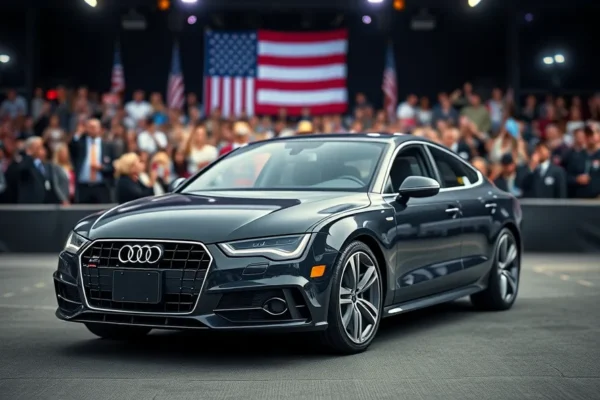
Audi CEO’s Appearance at Trump Rally Sparks Controversy and Brand Reputation Concerns
The automotive industry, often seen as a sector focused on engineering and market share, has recently been drawn into a political firestorm. The public appearance of Audi CEO Gernot Döllner at a rally supporting former U.S. President Donald Trump during the midterm campaign season has ignited significant backlash, particularly from labor unions and advocacy groups. This event raises critical questions for investors about corporate leadership’s role in politics and its potential impact on a global brand’s reputation and market standing.
What’s Driving the Conversation
The core of the controversy centers on Audi CEO Gernot Döllner’s attendance at a political rally held in support of Donald Trump’s midterm campaign efforts. While specific details of his presence, such as the exact date of the rally and the nature of his participation, are still being clarified by various media outlets, the mere fact of a high-profile executive from a major global automaker being associated with a political campaign has drawn sharp criticism. This development is particularly sensitive given the often polarized political landscape in the United States and globally.
The criticism has been notably vocal from IG Metall, a powerful German labor union representing millions of workers, including many employed in the automotive sector. A spokesperson for IG Metall, as reported by Reuters, expressed strong disapproval, stating that such appearances by corporate leaders can be detrimental to the company’s image and its relationship with its workforce. The union’s stance underscores a broader concern within organized labor regarding the perceived alignment of corporate leadership with specific political figures or ideologies, especially when those figures are associated with policies that could impact worker rights or economic stability.
This corporate controversy is not isolated to political affiliations alone. It highlights a persistent challenge for global brands: navigating the intersection of business and politics. In an increasingly interconnected and socially conscious market, consumer and employee sentiment can be significantly influenced by the perceived values and actions of a company’s leadership. An executive’s public political engagement, especially at a partisan event, can inadvertently alienate a portion of the customer base, employees, and even business partners.
Understanding the Financial Context
Audi, a subsidiary of the Volkswagen Group (VWAGY), is a significant player in the premium automotive segment. The company has been investing heavily in electrification and digital services to compete in a rapidly evolving industry. As of the latest available financial reports, for example, Audi reported a substantial increase in its operating profit in the first nine months of 2023, reaching €4.3 billion, up from €3.2 billion in the same period of 2022, according to the official Audi interim report. This financial performance demonstrates the company’s underlying strength and its ability to navigate market challenges. Revenue for the first nine months of 2023 also saw an increase, reaching €46.2 billion, up from €42.4 billion in the prior year period.
However, the automotive industry is characterized by intense competition, high capital expenditure requirements for research and development, and complex supply chains. Brands like Audi compete directly with other established luxury manufacturers such as BMW, Mercedes-Benz, and increasingly, with new entrants in the electric vehicle (EV) space. The company’s strategic direction, focused on transitioning to electric mobility and digital services, is a crucial factor for its long-term success. Reports from market research firms, such as Statista, indicate a projected growth in the global electric vehicle market, highlighting the importance of Audi’s strategic pivot.
Historically, Audi has strived to maintain an image of sophisticated engineering, innovation, and a certain level of corporate neutrality in its public communications. This approach has generally served to appeal to a broad demographic of affluent consumers. The current situation represents a deviation from this established brand positioning, introducing a layer of political association that could potentially dilute its carefully cultivated image.
Analysis of the Impact
The appearance of Audi’s CEO at a political rally introduces a significant element of corporate controversy that can have tangible effects on brand reputation and, by extension, financial performance. While the direct financial impact on Audi’s stock price is not immediately discernible from this single event and is subject to numerous market factors, the underlying concerns for investors are manifold.
Firstly, brand reputation is a critical intangible asset for luxury brands like Audi. A perception of political partisanship, especially if it alienates a significant customer segment or employee base, can lead to reduced sales, boycotts, or a decline in brand loyalty. This can translate into lower revenue growth and potentially impact market share over the medium to long term. Investors often scrutinize a company’s brand health as an indicator of its future earning potential. Metrics to watch include consumer sentiment surveys, social media sentiment analysis, and brand valuation reports.
Secondly, the criticism from IG Metall signals potential labor relations challenges. Strong unions play a significant role in the automotive sector, influencing wage negotiations, working conditions, and employee morale. An executive’s political actions that are perceived negatively by union leadership can complicate these relationships, potentially leading to labor disputes or reduced productivity. The market capitalization of Volkswagen Group, of which Audi is a part, is a significant indicator of investor confidence in the overall business. Changes in market sentiment due to such controversies can affect investor appetite.
From a fundamental perspective, Audi’s P/E ratio, a common valuation metric, reflects investor expectations of future earnings. If the brand reputation damage leads to concerns about future sales or profitability, this could put downward pressure on the P/E ratio. Similarly, trading volumes on the stock can sometimes spike around significant news events, indicating increased investor attention and potential shifts in ownership.
Related Opportunities and Competitive Landscape
This development within Audi also casts a spotlight on the broader automotive industry and its interactions with political and social landscapes. Competitors within the premium automotive segment, such as BMW (BMWYY) and Mercedes-Benz (MBGYY), may find themselves indirectly affected by shifts in consumer sentiment or by the general perception of the German automotive sector. If Audi faces significant reputational damage, consumers might re-evaluate their preferences, potentially benefiting competitors who are perceived as more politically neutral or aligned with different values.
The electric vehicle market, a key battleground for all major automakers, is also subject to policy changes and public perception. Companies that can successfully navigate these sensitivities while delivering innovative products may gain a competitive edge. For instance, EV startups that have built their brand around specific social or environmental missions might see their positioning strengthened if established players are embroiled in political controversies.
Furthermore, this situation highlights the increasing importance of corporate social responsibility (CSR) and Environmental, Social, and Governance (ESG) factors for investors. Companies that demonstrate strong ethical leadership and a commitment to a diverse and inclusive stakeholder base are often viewed more favorably. The controversy surrounding Audi’s CEO could lead investors to scrutinize the ESG practices and public engagement policies of other automotive executives more closely.
Future Outlook and Key Watchpoints
Looking ahead, several factors will be critical in assessing the longer-term impact of this controversy on Audi and its parent company, Volkswagen. Firstly, the company’s response to the criticism from IG Metall and other stakeholders will be closely watched. A transparent and well-articulated stance on corporate political engagement, coupled with a reaffirmation of its commitment to employees and customers, could help mitigate potential damage.
Secondly, upcoming quarterly earnings reports will provide crucial data on Audi’s financial performance. Investors will be looking for any indications of a slowdown in sales, a decline in profit margins, or negative trends in key markets that could be linked to reputational issues. Monitoring sales figures in key regions, particularly North America where the political context is most sensitive, will be important.
Thirdly, regulatory developments and market trends within the automotive sector will continue to shape Audi’s future. The ongoing transition to electric vehicles, advancements in autonomous driving technology, and evolving emissions standards are all significant factors. The company’s ability to execute its strategic plan in these areas, irrespective of the political backdrop, will ultimately be a primary driver of its long-term success.
The timeline for any significant shifts in market perception or financial performance related to this specific event is uncertain. Market volatility means that events can have immediate but short-lived impacts, or they can contribute to more gradual shifts in investor sentiment. Investors should monitor official statements from Audi and Volkswagen, as well as reports from reputable financial news outlets and market analysis firms, for evolving information.
Risk Disclaimer: Past performance does not guarantee future results. Markets are volatile and subject to unpredictable events. This article is for informational purposes only and does not constitute financial advice. Readers should consult with a qualified financial advisor before making any investment decisions.
Frequently Asked Questions
Is Audi’s stock performance directly affected by the CEO’s appearance at the Trump rally?
While the direct, immediate impact on Audi’s stock price or that of its parent company, Volkswagen (VWAGY), is difficult to isolate from broader market movements, such events can influence investor sentiment. A decline in brand reputation or concerns about labor relations could lead to a more cautious approach from investors, potentially affecting stock valuation over time. Specific market data on stock price movements around the event would need to be sourced from financial data providers.
What is the potential impact on Audi’s brand reputation from this corporate controversy?
The potential impact on Audi’s brand reputation is a key concern. A luxury brand like Audi relies heavily on a perception of quality, innovation, and broad market appeal. Political affiliations by its CEO can alienate segments of its customer base, employees, and business partners, potentially leading to a dilution of its brand image and reduced customer loyalty. This could manifest in decreased sales or a need for increased marketing spend to counter negative perceptions.
How does IG Metall’s criticism factor into the analysis of Audi leadership?
IG Metall’s criticism is significant because it represents a powerful voice within the automotive workforce. Their disapproval signals potential labor friction, which can impact employee morale, productivity, and future negotiations. For investors, this highlights a potential risk to operational stability and the company’s relationship with its employees, a crucial element in the automotive industry.
What are the risks for investors regarding CEO public appearances in political campaigns?
The primary risks for investors include potential negative impacts on brand reputation, customer boycotts, employee dissatisfaction, and shareholder backlash. A CEO’s political engagement can create a perception of partisanship that is at odds with the company’s diverse customer base or global operations, leading to unpredictable market reactions and potentially affecting financial performance. This highlights the importance of understanding a company’s corporate governance and leadership communication strategies.
How does this situation compare to other automotive industry news or competitor actions?
Compared to typical automotive industry news, which often focuses on product launches, technological advancements, or earnings reports, this event introduces a political dimension. Competitors like BMW and Mercedes-Benz typically aim to maintain a neutral public stance to appeal to a broad international market. If Audi faces sustained negative repercussions, its competitors who manage political associations more cautiously might see a relative advantage in terms of brand perception and market stability.
What factors should investors watch to gauge the future outlook for Audi amidst this controversy?
Investors should monitor Audi’s official communications regarding the controversy, their responses to labor union concerns, and their upcoming financial reports for any indications of impact on sales and profitability. Additionally, tracking consumer sentiment surveys, social media discourse, and developments in the competitive landscape, particularly in the EV market, will be important for assessing the company’s long-term trajectory.